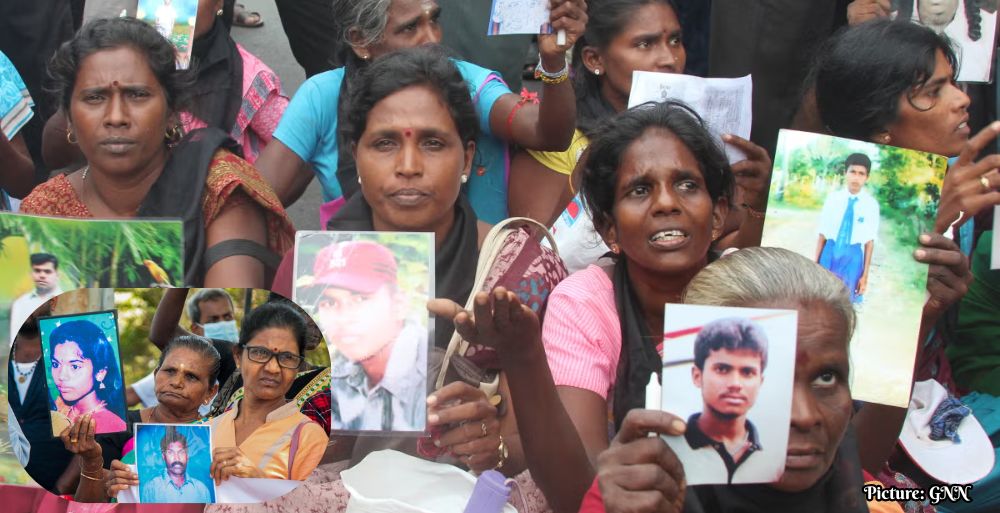
Sri Lanka faces increasing pressure from the United Nations to strengthen its commitment to human rights and accountability, as the government grapples with a legacy of impunity and ongoing economic challenges.
Sri Lanka is under scrutiny from the United Nations regarding its human rights practices, as the UN Human Rights chief has called for enhanced actions to address the country’s longstanding issues of impunity. This appeal was made public in a report released by the Office of the High Commissioner for Human Rights (OHCHR) on September 3, 2026, ahead of the upcoming 63rd session of the UN Human Rights Council in Geneva.
The report emphasizes that while the Sri Lankan government, led by President Anura Kumara Dissanayake, has taken steps to address issues such as racism and national unity, significant challenges remain in achieving accountability for human rights violations that have occurred over decades of conflict. The report noted, “Wider efforts to ensure truth and justice risk being stalled and the momentum for transformative change being lost.”
Government Commitments and Progress
President Dissanayake, who has completed two years in office following his election in September 2024, campaigned on a platform that included promises to tackle the nation’s economic crisis and combat racism. His administration has made some progress, including high-profile arrests and police investigations into political killings, enforced disappearances, and the 2019 Easter Sunday attacks. However, the OHCHR report indicates that “meaningful progress” in holding accountable those responsible for international crimes remains elusive.
The report examines the government’s pre-election commitments and actions taken since Dissanayake’s election. While acknowledging some positive steps, it stresses that accountability for abuses committed by both state security forces and the Liberation Tigers of Tamil Eelam (LTTE) during the nearly three-decade civil conflict has not been adequately addressed. The lack of a comprehensive strategy to pursue accountability for these crimes continues to be a significant concern for human rights advocates.
Economic Context and Challenges
As Sri Lanka continues to navigate economic difficulties following its default on debt in 2022, the government has maintained its focus on economic recovery as a priority. President Dissanayake’s administration has opted to continue with an International Monetary Fund (IMF) program that imposes stringent austerity measures. The report highlights how external shocks, such as unilateral trade measures and natural disasters like Cyclone Ditwah in 2025, have compounded the economic struggles facing the population. The ongoing economic distress has led to increased public discontent, with many citizens expressing frustration over the government’s handling of both economic and human rights issues.
The report also recalls the National People’s Power (NPP) party’s election promises, including the introduction of a new constitution that would guarantee equality and devolve power to local governments. Yet, the report points out that provincial council elections have been pending for over a decade, raising concerns about the government’s commitment to democratic governance and the devolution of power, which are critical for addressing ethnic grievances, particularly among the Tamil population.
Concerns Over Legislative Actions
Another major focus of the UN report is the Prevention of Terrorism Act (PTA), which has been criticized for leading to arbitrary arrests and prolonged detentions without charge. The report urges the government to impose a moratorium on the PTA, expedite its repeal, and ensure that any new legislation complies with international human rights standards. The OHCHR noted that information from Sri Lanka’s Human Rights Commission indicated 46 PTA-related detentions in 2025 and 12 cases as of March 2026. This continued use of the PTA raises alarms regarding the government’s commitment to upholding human rights and the rule of law in Sri Lanka.
International Observations on Human Rights
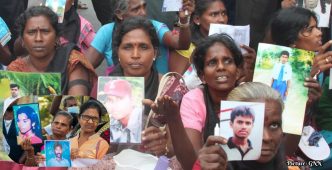
In a related development, Human Rights Watch published a report asserting that the Dissanayake administration demonstrates a “lack of will” to prosecute past human rights abuses. The report referenced the Chemmani mass grave site near Jaffna, where over 580 skeletons have been uncovered, highlighting the continuing demand for justice from families of those affected by the conflict. The Chemmani case, emblematic of larger issues surrounding accountability, has drawn international attention and underscores the need for a transparent investigation into war crimes and enforced disappearances.
Bhavani Fonseka, a prominent Sri Lankan human rights activist and lawyer, authored the Human Rights Watch report, noting that while there have been some positive developments regarding the Chemmani case and the Easter Sunday bombings, the outcomes remain “mixed.” The report, based on input from victims and their families, stresses that the government’s actions thus far are only initial steps, with substantial obstacles to achieving genuine accountability still in place. This mixed record of progress has led to skepticism among civil society and human rights organizations regarding the government’s commitment to meaningful reform.
As the UN Human Rights Council session approaches, the Sri Lankan government faces mounting pressure to fulfill its commitments to human rights and accountability, amid ongoing economic recovery efforts and the need for comprehensive reforms to address the historical injustices that continue to affect many in the nation. The international community is watching closely, as the outcomes of these discussions could have significant implications for Sri Lanka’s future both domestically and on the global stage. The pressure from the UN and human rights organizations may serve as a crucial catalyst for the Dissanayake administration to take more decisive actions towards addressing the grievances of marginalized communities and ensuring justice for victims of past abuses.