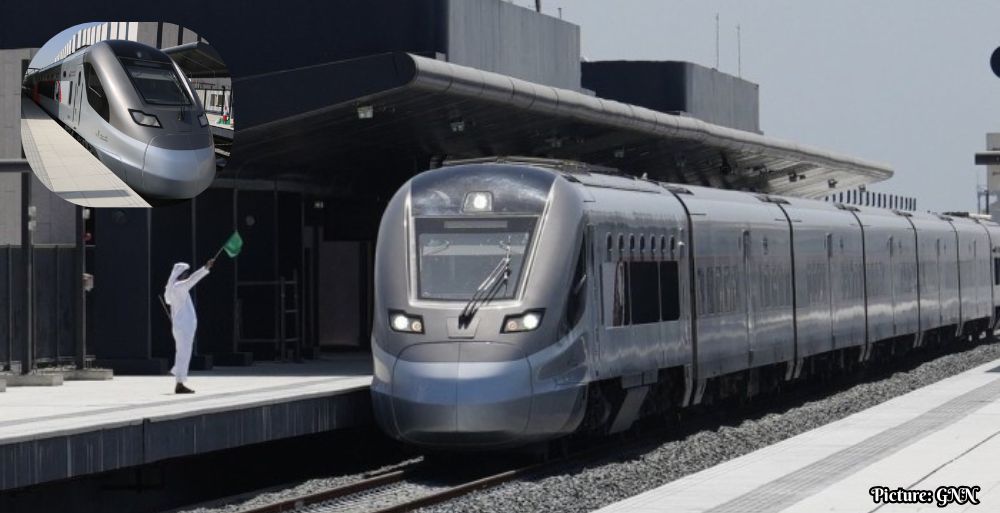
The United Arab Emirates has launched trial operations of its first passenger railway, a significant infrastructure project backed by Chinese state-owned enterprises, which aligns with China’s broader ambitions for enhanced connectivity across Eurasia.
The United Arab Emirates (UAE) has officially commenced trial operations of its inaugural passenger railway, known as Etihad Rail, marking a transformative step in the nation’s transportation infrastructure. The trial phase began on Tuesday, highlighting the UAE’s commitment to improving regional connectivity and reducing travel times. This railway initiative is not only a local development but also a crucial component of China’s expansive Belt and Road Initiative (BRI), which aims to enhance infrastructure and connectivity across Eurasia.
The initial segment of the Etihad Rail will connect Abu Dhabi, the UAE’s capital, to the eastern emirate of Fujairah. This route is expected to cover the distance in approximately 105 minutes, providing a significant improvement over existing travel options. As reported by the Chinese state media outlet Xinhua, the completed railway network is projected to include 11 cities, among them Dubai, with full operations anticipated by March 2026. The service will feature a fleet of 13 trains, each with a capacity of 400 passengers and capable of reaching speeds of up to 200 kilometers per hour (124 miles per hour).
Projected Passenger Growth and Economic Opportunities
Xinhua has projected that by 2030, the UAE railway could accommodate approximately 36 million passengers annually. This projection underscores the anticipated demand for efficient public transportation systems in the UAE, particularly as the country continues to serve as a major economic hub in the Middle East. The growing population and increasing tourism in the region further contribute to the expected rise in railway usage.
The construction and development of the Etihad Rail project have involved several prominent Chinese state-owned firms, including China Railway International Group, CRRC Corp, Power Construction Corp of China, and China Civil Engineering Construction Corp. Yu Hao, the project director from China Railway International Group, expressed confidence in the capabilities these firms have brought to the project, particularly in areas of engineering design, construction, and sustainable development. He noted that such collaborations exemplify China’s growing influence in the region.
Strategic Significance of Etihad Rail
The Etihad Rail project serves not only local transportation needs but also aligns with China’s broader strategic objectives in the Middle East. Jayant Menon, a visiting senior fellow at the ISEAS – Yusof Ishak Institute in Singapore, emphasized that this railway advances Beijing’s goal of improving transport connectivity between its borders and other countries in Eurasia. The railway is positioned as an integral component of the Belt and Road Initiative, which was launched more than a decade ago to foster economic ties through infrastructure development.
Menon further highlighted the significance of the UAE as a reliable economic partner for China, particularly in light of the country’s stability and its low risk of default on loans. He remarked, “I think China is in competition with the US and others to woo the Middle East as a strategic part of the world,” indicating the geopolitical importance of the region, especially amidst ongoing tensions, such as those involving Iran.
Strengthening China-UAE Relations
Zeng Jixin, China’s ambassador to the UAE, referred to the Etihad Rail as a “landmark outcome” of the cooperation between China and the UAE under the Belt and Road Initiative. He emphasized that the project reflects the growing practical cooperation and mutual benefits arising from the comprehensive strategic partnership established between the two nations.
In the context of expanding trade ties between China, Central Asia, and the Middle East, the Etihad Rail project is anticipated to play a vital role in facilitating access to the abundant natural resources of these regions. Moreover, it aims to enhance connections to the lucrative European consumer market. The implications of this railway extend beyond mere transportation, with the potential to reshape economic dynamics and alliances in a region that is increasingly recognized for its strategic importance.
Future Outlook and Regional Impact
As the trial phase of the Etihad Rail progresses, stakeholders will be closely monitoring its operational effectiveness and passenger uptake. The railway’s debut represents a pivotal moment not only for the UAE’s transportation infrastructure but also for its international economic relations, particularly with China. The success of this project could pave the way for similar initiatives in the region, emphasizing the need for improved connectivity and infrastructure in the face of rapid urbanization and economic growth.
Furthermore, the Etihad Rail could serve as a model for future infrastructure projects in the Gulf and beyond, demonstrating the potential benefits of international collaboration in achieving ambitious development goals. As the UAE continues to position itself as a central player in global trade and connectivity, the implications of the Etihad Rail project may reverberate throughout the entire region, fostering deeper economic integration and cooperation.