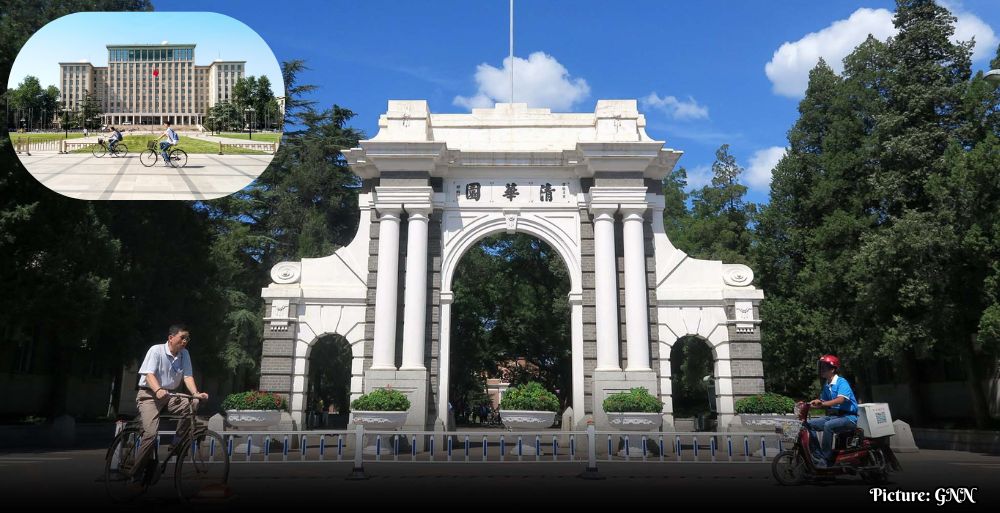
Tsinghua University has been recognized as the world’s leading institution for engineering in the latest U.S. News Best Global Universities rankings, reflecting the growing influence of Chinese universities in the global academic landscape.
Tsinghua University, located in Beijing, has achieved a significant milestone by being ranked as the best university in the world for engineering in the latest U.S. News Best Global Universities subject rankings for the 2026–2027 academic year. This achievement not only underscores Tsinghua’s academic excellence but also highlights the increasing prominence of Chinese institutions in global higher education.
Outstanding Performance Indicators
In the U.S. News rankings, Tsinghua University received a perfect overall engineering score of 100. It excelled in six key performance indicators, including publications, conference papers, total citations, and the number of highly cited papers. This comprehensive evaluation illustrates Tsinghua’s strong research output and its substantial impact within the global academic community. The rankings assessed universities based on their research performance from 2020 to 2024 and considered citations through November 25, 2025. To qualify for these rankings, universities were required to publish at least 250 engineering papers over the five-year period, demonstrating a robust commitment to research.
Interestingly, the top 10 list was dominated by Asian institutions, with no universities outside of Asia making the cut. Mainland China alone accounted for seven of the top ten spots, illustrating a significant regional strength in engineering education. The rankings also featured Singapore’s Nanyang Technological University and National University of Singapore, which secured the second and eighth positions, respectively. Hong Kong Polytechnic University was ranked sixth, further solidifying Asia’s prominence in this critical academic field.
Top 10 Engineering Universities
The complete list of the top ten universities for engineering, according to the U.S. News rankings, is as follows:
- 1. Tsinghua University, Beijing, China
- 2. Nanyang Technological University, Singapore
- 3 (tie). Shanghai Jiao Tong University, Shanghai, China
- 3 (tie). Zhejiang University, Hangzhou, China
- 5. Harbin Institute of Technology, Harbin, China
- 6. Hong Kong Polytechnic University, Hong Kong
- 7. Tongji University, Shanghai, China
- 8. National University of Singapore, Singapore
- 9. Southeast University, Nanjing, China
- 10. Huazhong University of Science and Technology, Wuhan, China
Global Context and Implications
The engineering discipline is the largest of the 51 subject rankings published by U.S. News, encompassing 1,614 universities worldwide. This ranking framework evaluates a wide range of factors that contribute to the overall performance of institutions globally. Tsinghua University’s success in the engineering category adds to its already impressive academic portfolio, where it has also ranked first globally in nine additional subjects, including artificial intelligence, computer science, chemistry, materials science, and environmental engineering. Furthermore, Tsinghua placed second in four disciplines and ranked among the world’s top ten in eight others, showcasing its broad scope of academic excellence.
In the overall Best Global Universities rankings, Tsinghua University maintains its position as the top institution in Asia, the leading university in China, and ranks sixth worldwide. This consistent performance across multiple disciplines reinforces its reputation as a premier center for higher education and research.
Historical Significance and Future Outlook
The recognition of Tsinghua University as a leader in engineering is particularly significant considering China’s extensive educational reforms and substantial investments in higher education over recent decades. As the Chinese government has prioritized technological advancements and innovation, universities like Tsinghua have emerged as key players in the global academic landscape. This trend is expected to persist, as more Chinese institutions strive to enhance their research output and foster international collaborations.
The increasing prominence of Asian universities in global rankings may alter traditional paradigms of higher education, prompting institutions in other regions to reassess their strategies for academic excellence and global competitiveness. Tsinghua University’s latest achievement serves as a testament to the effectiveness of these initiatives and sets a high standard for universities worldwide.
The Broader Impact on Global Education
The implications of Tsinghua’s ranking extend beyond the university itself, resonating throughout the global education sector. As universities in Asia, particularly in China and Singapore, continue to rise in prominence, they challenge long-held perceptions about the dominance of Western institutions in higher education. This shift may encourage a more diverse and competitive academic environment, which could lead to innovations in teaching, research methodologies, and international collaborations.
Moreover, Tsinghua’s achievements may inspire other universities worldwide to invest in research capabilities, recruit top talent, and foster interdisciplinary studies to enhance their standings in global rankings. As universities adapt to an increasingly interconnected world, the focus on engineering and technology education will likely play a crucial role in shaping future academic landscapes.
In conclusion, Tsinghua University’s recognition as the world’s best university for engineering is a significant milestone that reflects both its excellence in research and the broader trends in global higher education. As the university continues to lead in various academic disciplines, it not only reinforces its position within Asia but also elevates China’s standing in the global education system. This development marks a pivotal moment in the evolution of higher education and underscores the importance of fostering academic innovation and collaboration in a rapidly changing world.