In an extensive interview published Thursday by Time magazine, President Donald Trump declined to rule out declaring a national emergency or invoking the Insurrection Act of 1807 in connection with the upcoming November midterm elections. Stating that he is “not committing to anything” regarding the outer boundaries of his executive authority, Trump signaled that his actions will depend on upcoming judicial rulings. The stance comes amid heightening partisan tension as White House advisers quietly prepare for potential legislative divided government should Democrats regain control of Congress. Critics warn that deploying military forces or altering voting administration under emergency powers poses a severe challenge to democratic norms, while administration allies defend executive flexibility amid persistent civil unrest.
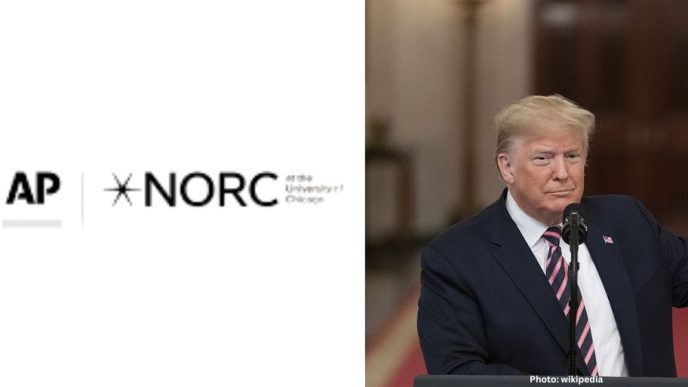
WASHINGTON — President Donald Trump signaled Thursday that he retains the option to deploy extraordinary presidential powers—including the declaration of a national emergency or the invocation of the Insurrection Act of 1807—as the nation prepares for pivotal midterm elections in November.
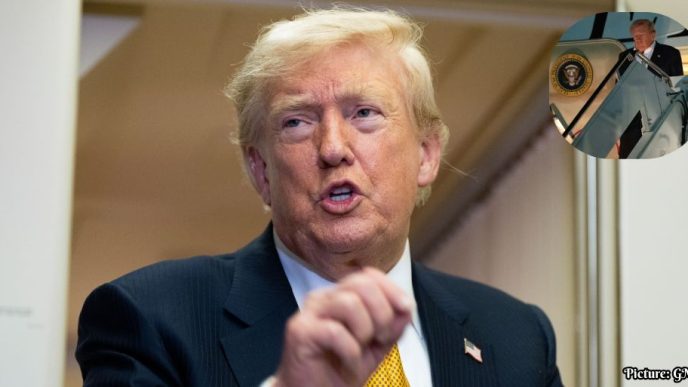
Speaking with reporters in a wide-ranging interview published by Time magazine, the president steadfastly refused to establish hard parameters regarding his executive authority surrounding the election season. When directly asked about the limits of his constitutional power and whether he might declare a national emergency or deploy military troops on domestic soil near polling windows, Trump maintained an ambiguous posture.
“I’m not committing to anything,” Trump said during the interview, responding to inquiries about the boundaries of presidential powers. “We’re going to see how it plays out in court.”
The president added that while he has not formally invoked the 19th-century military statute during his tenure, “a lot of people think I should use it sometimes.” He reiterated that any decision would hinge in part on pending legal challenges and judicial reviews currently navigating federal appellate circuits.
The comments have injected new uncertainty into an already contentious political environment, sparking immediate pushback from legal scholars, civil rights advocates, and congressional Democrats who argue that using emergency authorities or federal military units around an election threatens to intimidate voters and subvert democratic processes.
White House Strategy and Fear of Impeachment
According to reporting from Time, White House advisers have spent recent weeks quietly contemplating how the administration will navigate its final two years if Democrats successfully reclaim either the House of Representatives, the Senate, or both chambers in November.
Inside the West Wing, aides acknowledge that losing one or both chambers of Congress would drastically reshape executive operations. One administration official, speaking on the condition of anonymity, acknowledged that an opposition-controlled Congress would force a sharp pivot in legislative strategy. The official noted that the administration would “be forced to think more bipartisan” to pass basic appropriations and keep government agencies operational.
“I would hope that if we win, we can still do that, because for two years we’ve run a completely partisan play,” the official told Time. “When you’re looking back on your time, I don’t think that’s what you should be proud of, even if it was successful.”
President Trump, however, offered a far less conciliatory assessment of a potential Democratic victory. The president publicly warned that if Democrats reclaim power in Capitol Hill, their immediate legislative priority will be to launch a third impeachment inquiry against him.
Simultaneously, Trump forcefully dismissed a series of recent national and battleground state polls showing Republicans facing steep electoral headwinds and low presidential approval ratings. The president characterized unfavorable polling figures—including recent public surveys showing broad dissatisfaction with the administration’s economic and trade policies—as fundamentally corrupt.
“They’re fake numbers,” Trump asserted during the interview, rejecting data that points to widespread voter discontent. “I would beat anybody running today by 20 points. Your numbers, that you have, are fake. The pollsters are corrupt. They’re almost as corrupt as the writers.”
Historical Threats and the Insurrection Act
President Trump’s willingness to invoke emergency powers and military force for domestic enforcement has been a defining feature of his political rhetoric and policy strategy across both of his presidential terms.
The Insurrection Act of 1807 empowers the chief executive to deploy the active-duty Armed Forces or federalize state National Guard units inside the United States under specific, narrowly defined circumstances. Specifically, statutory text permits deployment “in all cases of insurrection, or obstruction to the laws, either of the United States, or of any individual state or territory,” for the direct purpose of “suppressing such insurrection, or of causing the laws to be duly executed.”
Throughout his second administration, Trump has repeatedly threatened to activate the law in response to civil unrest and protests directed at federal agencies.
In January 2026, Trump threatened to send active-duty troops into Minneapolis after an Immigration and Customs Enforcement (ICE) officer shot and killed a 37-year-old U.S. citizen, Renée Good, during an immigration enforcement operation. The killing triggered widespread local protests and civil unrest across the Twin Cities. Trump ultimately backed down from deploying military troops under the statute, later acknowledging that there was no immediate necessity to invoke the law.
The Minneapolis incident was part of a pattern of executive threats regarding civil demonstrations:
- Los Angeles Protests (June 2025): Trump stated he would “certainly” invoke the Insurrection Act to quell widespread protests sparked by expanded federal ICE enforcement actions across Southern California.
- Portland Demonstrations (October 2025): The president renewed threats to deploy federalized military units against anti-ICE demonstrations in Oregon, explicitly categorizing local street clashes as an ongoing “insurrection.”
- Minneapolis Civil Unrest (May 2020): Toward the end of his first term, Trump publicly considered deploying active-duty troops to Minnesota following the murder of George Floyd by a Minneapolis police officer, which touched off nationwide racial justice protests.
Despite these frequent declarations, Trump has relied primarily on Title 10 of the United States Code to place federal law enforcement and National Guard units in supporting positions alongside local authorities. Title 10 grants the president statutory authority to mobilize Guard personnel for federal service to assist civil law enforcement in specific supporting capacities, without crossing the legal and procedural thresholds required by the Insurrection Act.
Legal Foundations and Historical Precedents
The statutory framework of the Insurrection Act carries deep historical roots connected to early American constitutional crises. The law was originally enacted by Congress in March 1807 under President Thomas Jefferson, directly following a conspiracy led by former Vice President Aaron Burr.
Burr had organized an armed expeditionary force in the western territories with the intended goal of establishing an independent empire in the newly acquired Louisiana Territory and parts of Mexico. After Burr was apprehended in Alabama and indicted for treason, Jefferson requested formal statutory authority from Congress to deploy military forces internally to suppress domestic conspiracies and enforce federal laws without waiting for state legislative requests.
Over the past two centuries, fifteen U.S. presidents have formally invoked the Insurrection Act a total of 30 times, typically during moments of extreme civil breakdown or to enforce federal civil rights mandates against state-level resistance:
- Civil Rights Era Enforcements: President Dwight D. Eisenhower invoked the act in 1957 to send the 101st Airborne Division to Little Rock, Arkansas, to enforce public school desegregation orders. President John F. Kennedy similarly activated military units in 1962 and 1963 to desegregate state universities in Mississippi and Alabama.
- 1968 Urban Riots: President Lyndon B. Johnson invoked the law to deploy troops to Washington, D.C., Baltimore, and Chicago following the assassination of Dr. Martin Luther King Jr.
- 1992 Los Angeles Riots: The law was last invoked in May 1992 by President George H.W. Bush. Following the acquittal of four Los Angeles Police Department officers in the videotaped beating of Rodney King, widespread civil disturbance erupted across Southern California. At the express request of California Governor Pete Wilson, Bush deployed thousands of active-duty U.S. Marines, Soldiers, and federalized National Guard troops to restore order.
Electoral Implications and Congressional Oversight
The prospect of declaring a national emergency or activating military forces in the lead-up to an election raises unprecedented legal and administrative questions. Federal law strictly prohibits active-duty military personnel from interfering in civilian election administration or physically guarding polling places, a statutory restriction reinforced by the Posse Comitatus Act of 1878 and Title 18 of the U.S. Code.
However, constitutional scholars note that an emergency declaration under the National Emergencies Act of 1976 unlocks sweeping executive powers, granting the president access to dozens of statutory authorities that bypass standard administrative procedures.
“Any move to deploy federal military personnel or assert emergency controls over voting environments would face immediate, emergency legal challenges in federal court,” noted legal analysts reviewing the administration’s comments.
With the midterm elections just weeks away, Congress remains sharply divided over executive oversight. House Democrats have repeatedly drafted legislation aimed at curbing executive emergency powers and amending the Insurrection Act to require explicit congressional authorization for domestic military deployments lasting longer than 14 days. However, with Republicans retaining control of both legislative chambers through the election, such proposals have stalled in committee.
As voters prepare to head to the polls in November, Trump’s refusal to close the door on emergency measures underscores the high stakes of the upcoming election—a contest that will not only determine the legislative control of Capitol Hill but also test the structural boundaries of presidential power.