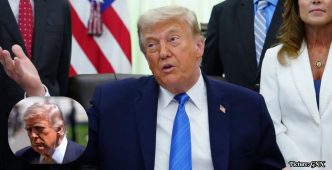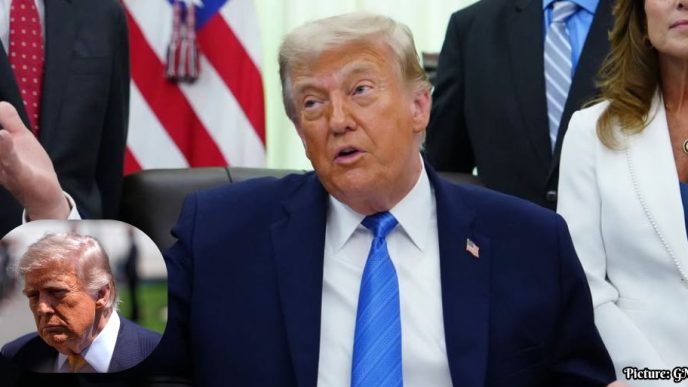
In an interview with NBC News, President Donald Trump addressed various pressing topics including the ongoing conflict in Iran, the economy, and allegations of election fraud, leading to a contentious exchange with host Kristen Welker.
President Donald Trump participated in a wide-ranging interview with NBC News’s Kristen Welker that aired on Sunday, reflecting on several major issues as he approaches the 18-month mark of his second term. The interview, conducted on Friday in Chippewa Falls, Wisconsin, covered topics such as U.S.-Iran relations, economic policies, and his controversial claims regarding the integrity of elections.
U.S. Stance on Iran Conflict
One of the notable discussions centered on the ongoing war in Iran, which recently reached its 100-day mark. This conflict has seen both the U.S. and Iranian militaries engaged in a ceasefire since early April, although exchanges of strikes have persisted. Trump asserted that the Iranian regime has been significantly weakened by military actions, stating that it has been “largely decapitated” as a result of U.S. and Israeli operations.
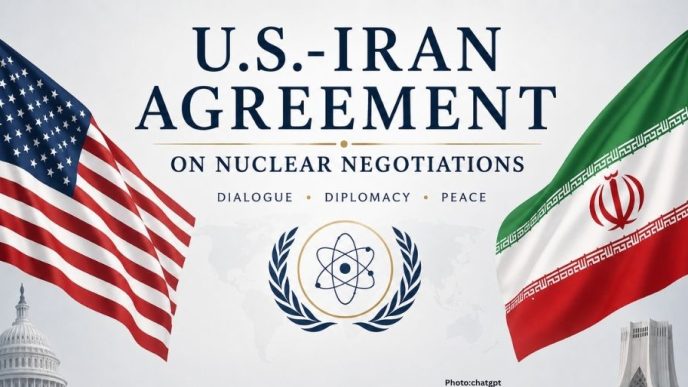
Despite ongoing negotiations, peace talks have stalled, with Trump claiming that a resolution is “very close.” The president highlighted the primary contention in the discussions: Iran’s nuclear program. He mentioned a proposed clause in a peace agreement that would prevent Iran from developing or acquiring nuclear weapons. “I want to put the word, if they buy or purchase or acquire … You’ve got to have that in there too because that’s not developing,” Trump explained, emphasizing his desire for comprehensive concessions from Tehran.
Trump additionally issued a warning regarding potential military action, stating, “I think that we’ll either have something done fairly quickly, or we’ll finish it out militarily.” This statement underscores the administration’s positioning amid ongoing tensions and the complex nature of international diplomacy in the region.
Israel’s Role in the Conflict
The interview also touched on Israel’s military actions against Hezbollah, which have intensified since the commencement of the conflict in Iran. Trump expressed a desire for more precise military operations, stating, “I’d like to see a more surgical attack on Hezbollah.” He indicated a willingness to support Israel in this regard, proposing that the U.S. could assist in refining their strategy.
On June 1, Iranian Foreign Minister Abbas Araghchi warned that any violation of the ceasefire, particularly regarding Lebanon, would be considered a breach across all fronts. The Lebanese Health Ministry has reported significant casualties from Israeli strikes, with over 3,600 deaths and more than 11,000 injured since March 2.
Economic Policy and Interest Rates
Transitioning to domestic issues, Welker raised questions about the economy, referencing the Bureau of Labor Statistics’ report indicating a surprising addition of 172,000 jobs in May. While many economists argue that the Federal Reserve may need to cut interest rates to prevent overheating, Trump took a contrary stance, asserting that raising rates would be “unfair.”
“We had a great report. We’re doing great, and it’s unfair that whenever you do great, they want to raise interest rates,” Trump commented. The Federal Open Market Committee (FOMC) is scheduled to meet soon to determine its course of action regarding interest rates, which have been held at 3.50 to 3.75 percent since December.
Trump’s views on economic management reflect his administration’s broader approach. He previously criticized former Fed Chair Jerome Powell for not implementing more aggressive rate cuts. However, he expressed confidence in the current chair, Kevin Warsh, stating, “I want him to do whatever he wants.” Nonetheless, Trump reiterated his belief that raising rates could hinder economic progress.
Contentious Exchange on Election Integrity
The interview took a contentious turn when Trump reiterated his claims regarding the 2020 presidential election, describing it as “rigged” in favor of Joe Biden. He speculated that similar issues were occurring in the California gubernatorial primary, where vote counting was still underway. As of Sunday morning, 73 percent of the vote had been counted, with Democrat Xavier Becerra advancing to the November general election.
When Welker attempted to fact-check Trump’s assertions regarding election fraud, he dismissed her comments and accused her and the media of dishonesty. “They’re crooked, just like you’re crooked, your press is crooked,” he said, reflecting longstanding tensions between Trump and the media. Welker responded, “To be fair. I’m not crooked,” but the dialogue escalated until Trump abruptly ended the interview, expressing frustration with the coverage and the questions posed.
“A country can never be great with a dishonest press,” Trump remarked before leaving the interview. This incident highlights the ongoing friction between Trump and media outlets, which often results in contentious exchanges over coverage of his administration.
The interview encapsulates several key issues facing the Trump administration as it navigates complex international relations, domestic economic challenges, and persistent controversies surrounding electoral integrity.