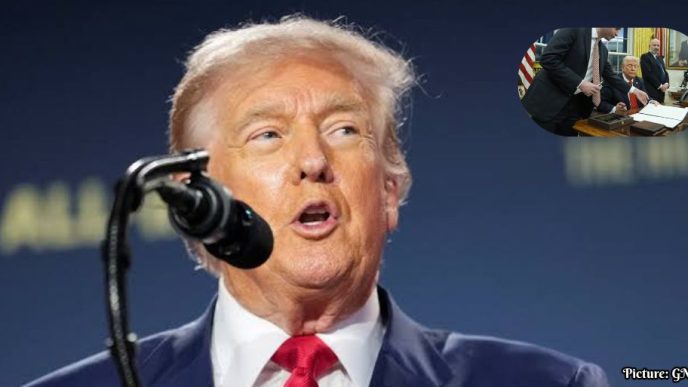
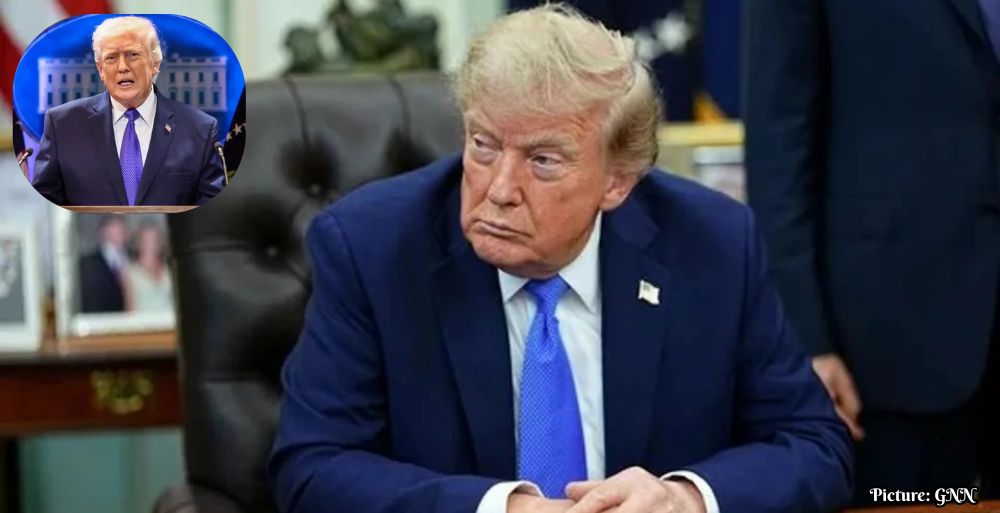
President Donald Trump has reiterated his call for the passage of the SAVE America Act, drawing parallels with India’s electoral system and emphasizing the necessity of voter identification in the United States.
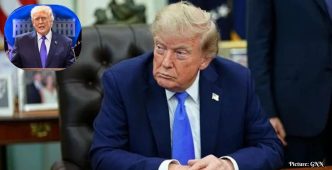
Washington, DC – On August 18, 2026, President Donald Trump renewed his push for the Safeguard American Voter Eligibility (SAVE) America Act, linking his campaign for the legislation to comments made by India’s Chief Election Commissioner, Gyanesh Kumar, regarding voter identification practices. This marks a continuation of Trump’s efforts to reform voting laws in the United States, a topic that has been at the forefront of political discourse in recent years.
In a post shared on Truth Social, Trump recalled Kumar’s inquiry directed at the U.S. administration, questioning, “How can you have Elections in the US without a valid Photo ID?” This statement underscores a central theme of Trump’s advocacy for stricter voting regulations, which he believes are essential for preserving the integrity of American elections. The former president’s focus on voter ID laws reflects a broader Republican narrative that emphasizes the need for stringent measures to prevent electoral fraud, despite a lack of substantial evidence supporting widespread fraud in U.S. elections.
India’s Election System as a Model
Trump pointed to the logistical success of India’s recent general election, which saw a turnout of approximately 646 million voters. He noted that “less than 1 percent voted by mail, and every single Voter had to have a VALID Photo Identity Document.” These assertions serve to bolster his argument for requiring voter IDs in the U.S. electoral process, suggesting that the absence of such measures compromises the electoral system’s integrity.
By invoking India’s electoral framework, Trump aims to draw a contrast between the two nations’ voting practices, positing that American elections are less secure without robust identification requirements. His remarks come amid ongoing debates about mail-in voting, which gained traction during the COVID-19 pandemic as a means of ensuring voter safety. Trump’s comments reflect a clear stance against expanding mail-in voting, emphasizing that it should be limited to specific circumstances, such as illness, disability, military service, or travel.
Details of the SAVE America Act
The SAVE America Act, which was introduced in Congress on January 29, seeks to ensure that only U.S. citizens are eligible to vote in federal elections. The White House emphasizes that “American citizens — and only American citizens — should decide American elections,” framing the legislation as a “common sense, bipartisan bill” aimed at enhancing electoral integrity.
According to the proposed legislation, voters would be required to present valid identification before registering for federal elections, alongside proof of citizenship. In addition, the Act proposes restrictions on mail-in ballots, allowing them only in specific cases like those mentioned earlier. The legislation also directs states to remove non-citizens from their voter rolls, reinforcing the administration’s commitment to stricter voter eligibility requirements.
In discussing the legislation, the White House stated, “If you want to register to vote in the United States, you have to be a citizen in the United States.” This assertion encapsulates the administration’s focus on reinforcing the concept of citizenship as a prerequisite for participation in the democratic process.
Comparative Analysis with Other Nations
The Trump administration has drawn comparisons between U.S. election procedures and those in other countries, arguing that the United States is lagging behind in implementing essential election protections. The White House highlighted that countries like India and Brazil utilize biometric databases to link voter identification, contrasting this with the U.S. reliance on self-attestation for citizenship. This comparison is intended to illustrate what the administration perceives as a need for modernization and enhancement of American voting systems.
Such comparisons form part of a broader narrative that the Trump administration has sought to promote, suggesting that enhanced voter identification measures are not only necessary but also commonplace in many democracies worldwide. Supporters of the SAVE America Act argue that these measures will help restore public confidence in the electoral process and ensure that elections are conducted fairly and transparently.
Potential Implications and Criticism
As Trump continues to advocate for the SAVE America Act, the implications of such legislation are likely to be significant. Proponents argue that it will strengthen electoral integrity and restore public confidence in the voting process. However, critics contend that such measures could disproportionately affect marginalized communities, potentially disenfranchising eligible voters who may face barriers in obtaining the required identification.
Opponents of voter ID laws often cite studies indicating that these requirements can lead to decreased voter turnout among low-income individuals, minorities, and the elderly, who may have difficulty accessing the necessary forms of identification. As a result, the debate surrounding the SAVE America Act is not solely about election security but also about the accessibility of the democratic process for all citizens.
Legislative Landscape
The SAVE America Act has met with a mixed reception in Congress, reflecting the polarized nature of American politics regarding voting rights and election security. Proponents within the Republican Party view it as a necessary step toward safeguarding elections, while many Democrats and voting rights advocates express concern about its potential impacts on access to the ballot.
The legislative landscape surrounding voting rights is further complicated by ongoing legal battles in various states over similar voter ID laws. Many states have enacted their own versions of voter ID legislation, often facing challenges in court that argue such laws violate the Voting Rights Act or disproportionately affect certain demographics.
As discussions surrounding the Act progress, the debate is likely to focus on balancing the need for secure elections with the imperative of ensuring that all eligible citizens can exercise their right to vote. The outcome of this legislative effort will undoubtedly influence the future landscape of voting rights and electoral processes in the United States, as well as the broader conversation about the role of identity verification in democracy.