Congressman Ro Khanna emphasizes the need for a new economic agenda for the Democratic Party, focusing on workers, reindustrialization, and the equitable impact of artificial intelligence.
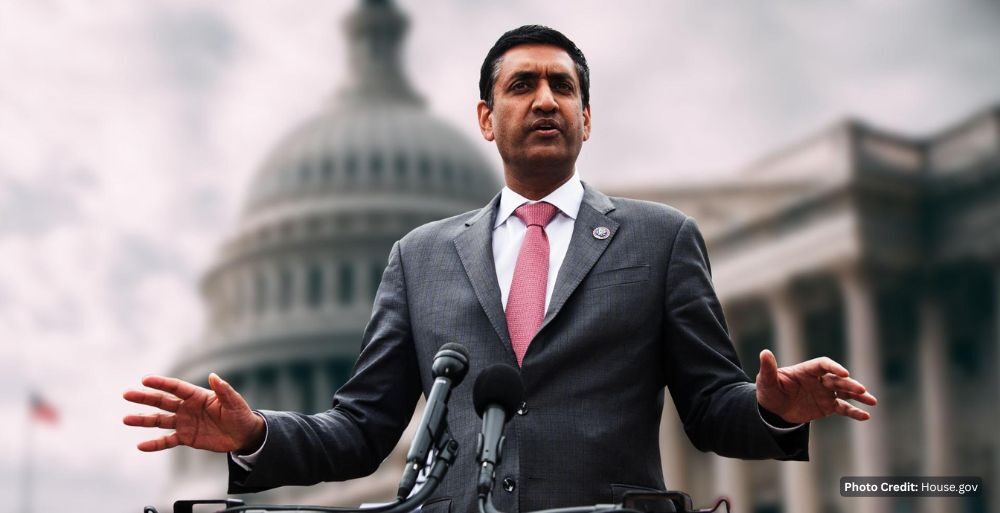
WASHINGTON — As speculation mounts regarding a potential presidential run in 2028, Congressman Ro Khanna, a Democratic representative from California’s Silicon Valley, has articulated a vision for a national economic agenda that prioritizes workers, addresses industrial decline, and ensures that advancements in artificial intelligence (AI) benefit a broad swath of American communities.
During an interview with NBC News on Sunday, Khanna did not formally announce his candidacy but stressed the importance of what he terms “economic patriotism.” He described this approach as essential for revitalizing the Democratic Party’s appeal to working-class voters who feel neglected. “For me, I’m most focused on a national economic vision for this country,” Khanna stated, highlighting the disconnect between the current economic system and the experiences of many Americans.
Current Economic Landscape
Khanna’s remarks come at a time when economic disparities are increasingly prominent across the United States. While Silicon Valley is home to some of the world’s most valuable technology firms, including Apple, Google, and Facebook, Khanna pointed out that this wealth concentration does not extend to the broader population. “It’s working for a few billionaires in a few places. But it’s not working for people I grew up with,” he noted, reflecting on the economic struggles faced by many constituents in his district.
The congressman believes that one of the primary reasons for the Democratic Party’s recent electoral challenges is its failure to adequately address the concerns of working-class communities, particularly those impacted by deindustrialization. “The Democrats’ path back out of the wilderness is to have a clear national economic message,” he asserted. “We shafted too many communities that were de-industrialised. We left out the working class.”
Vision for a New Economic Agenda
In further articulating his vision, Khanna proposed several key policy initiatives that he argues are crucial for a revitalized Democratic platform. He reiterated his support for Medicare for All, describing it as “arguably the most important priority” and indicated that he believes a majority of House Democrats would support the proposal if it were brought to a vote.
Khanna also called for the introduction of a tax on billionaires and emphasized the need for an end to foreign military engagements. He expressed concern over the implications of AI and technology developments, stating that it is vital to ensure that these advancements benefit the communities affected by economic decline rather than merely enriching a select few in the tech industry. “How can we ensure that AI benefits communities affected by deindustrialization?” he asked, stressing the need for a broad-based approach to economic growth.
Proposed Regulatory Measures
In addition to his healthcare and taxation proposals, Khanna introduced the idea of a “data centre bill of rights.” This legislation would empower local communities to have a say in the placement of data centers, which he argues should not be located in residential areas or on farmland. “We can’t be putting data centres in residential communities. We can’t be putting data centres in farmland,” he said, highlighting the need for regulatory measures to oversee the expansion of data infrastructure, particularly as the U.S. aims to compete in the global AI landscape.
Khanna’s focus on these issues reflects a broader trend within the Democratic Party, where there is a growing recognition of the need to balance technological advancement with community interests. He has positioned himself as a prominent voice on technology and economic policy, leveraging his background as the son of Indian immigrants and his representation of a district that is a hub for technological innovation.
Positioning for 2028
As potential contenders for the Democratic nomination in 2028 begin to emerge, Khanna’s emphasis on a new economic vision may resonate with party members seeking to re-engage with working-class voters. When asked about his relationship with fellow progressive Congressman Alexandria Ocasio-Cortez, Khanna praised her as “a phenomenal talent” and emphasized that the progressive movement encompasses a diverse array of voices. He refrained from positioning himself against Ocasio-Cortez, instead redirecting the conversation back to his economic agenda.
Khanna’s remarks indicate a strategic approach to the evolving political landscape as he navigates the complexities of a potential presidential campaign. With the Democratic Party facing significant challenges ahead, his proposed economic reforms may serve as a cornerstone for a broader party dialogue in the lead-up to 2028.