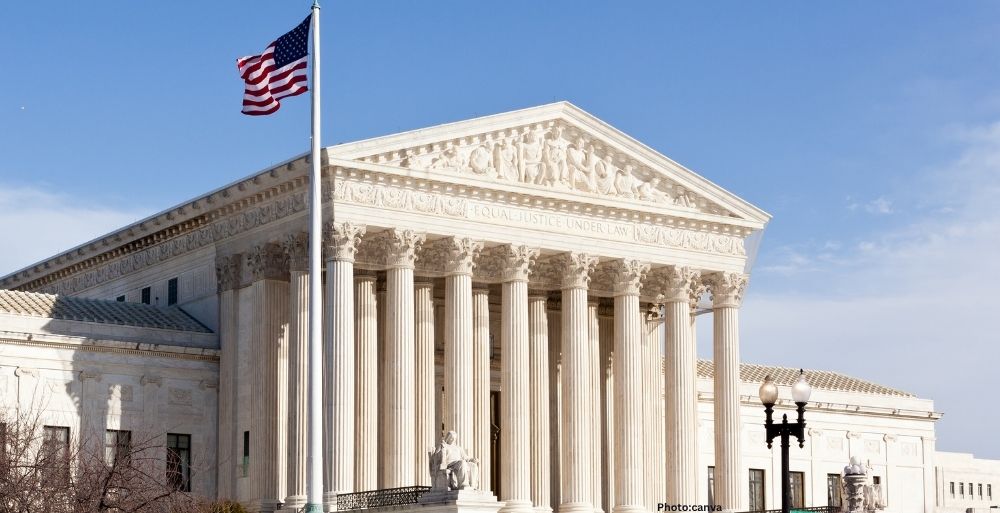
As the Supreme Court prepares to issue significant rulings that may impact President Trump’s agenda, the relationship between the administration and the judiciary reveals a complex dynamic of pressure, criticism, and occasional collaboration.
WASHINGTON, D.C. — As the Supreme Court approaches the end of its term with critical decisions pending, President Donald Trump has displayed a complicated relationship with the justices, oscillating between intimidation and attempts at rapport. The court is set to rule on issues that are pivotal to the Trump administration, including immigration policies and economic measures, placing the justices in a unique position amid the tension.
Last week, Vice President JD Vance made an unannounced visit to the Supreme Court for a private dinner hosted by Chief Justice John G. Roberts Jr. This gathering included several of the chief justice’s former law clerks and was characterized as a social event. However, observers noted that this visit underscored the delicate dance between the Trump administration and the Supreme Court, which has faced both overt criticism and attempts at camaraderie from the president.
Throughout his presidency, Trump has exhibited a volatile attitude towards the judiciary, particularly towards the Supreme Court. His administration has relied on the court to uphold or invalidate key policies, leaving the justices with significant influence over the president’s legislative agenda. Trump’s approach has shifted from overt hostility to attempts at reconciliation, reflecting a broader tension over the court’s role as an independent branch of government.
Recent Tensions Over Key Court Decisions
Following a February ruling that struck down his sweeping tariffs, Trump publicly vented his frustrations, labeling the justices who voted against him as “fools and lap dogs.” This marked an unprecedented moment in presidential rhetoric, as past presidents have typically expressed frustration with the court without resorting to personal attacks. The ruling required the administration to begin refunding approximately $160 billion in tariffs, a move that underscored the court’s authority to check the executive branch.
Despite his anger, Trump attempted to maintain a civil demeanor during a subsequent State of the Union address, where he refrained from criticizing the justices directly. However, his tone has fluctuated, with recent social media posts indicating his growing dissatisfaction as the court prepares to rule on the contentious issue of birthright citizenship.
“It would be a disgrace if the Supreme Court of the United States allows that to happen,” Trump remarked during an Oval Office event. The impending ruling on birthright citizenship, expected by late June or early July, has prompted the president to intensify his scrutiny of the court.
The Role of Justices Amid Political Pressure
Trump’s attendance at oral arguments for the birthright citizenship case marked a historic first for a sitting president. Critics interpreted this as an attempt to exert pressure on the justices. Following his abrupt departure from the session, Trump expressed disappointment that the court had “not even recognized or acknowledged” his presence, further illustrating the tensions at play.
In contrast to Trump’s confrontational style, the justices have largely refrained from direct engagement with his criticisms. Justice Neil M. Gorsuch has publicly reaffirmed the independence of the judiciary, stating, “My loyalty is to the Constitution, the laws of the United States.” Chief Justice Roberts has also indirectly criticized the hostile rhetoric aimed at justices, emphasizing the dangers of such language.
Implications for Judicial Independence
Legal experts have commented on the potential ramifications of Trump’s approach to the courts. Richard Lazarus, a law professor at Harvard, noted that the president’s personal attacks could undermine the integrity of the court and generate threats to individual justices. “It does damage to the court as an institution,” he said, highlighting the unprecedented nature of the president’s rhetoric.
Colleen Sinzdak, a former law clerk to Chief Justice Roberts, emphasized that the justices appear to be striving to maintain their position as impartial arbiters, rather than political actors responding to presidential pressures. “It’s not supposed to be about you personally,” she said, reflecting a broader commitment to judicial independence.
The recent state dinner hosted by Trump for King Charles III and Queen Camilla, which included justices appointed by Republican presidents, raised additional questions about the optics of the court’s relationship with the administration. Critics argued that the exclusion of liberal justices from the event could further politicize perceptions of the court.
Responses from the Administration
In response to concerns over political violence and the implications of Trump’s rhetoric, White House spokeswoman Abigail Jackson defended the president’s right to express his views. “Any implication that sharing these opinions is akin to making threats is deeply unserious,” she stated, asserting that the administration remains committed to the safety of all members of the judiciary.
As the Supreme Court nears the conclusion of its term, the balance between the executive branch and the judiciary remains precarious. With key rulings on the horizon, the dynamics of power and influence between President Trump and the justices will continue to be scrutinized by legal scholars, political analysts, and the public alike.