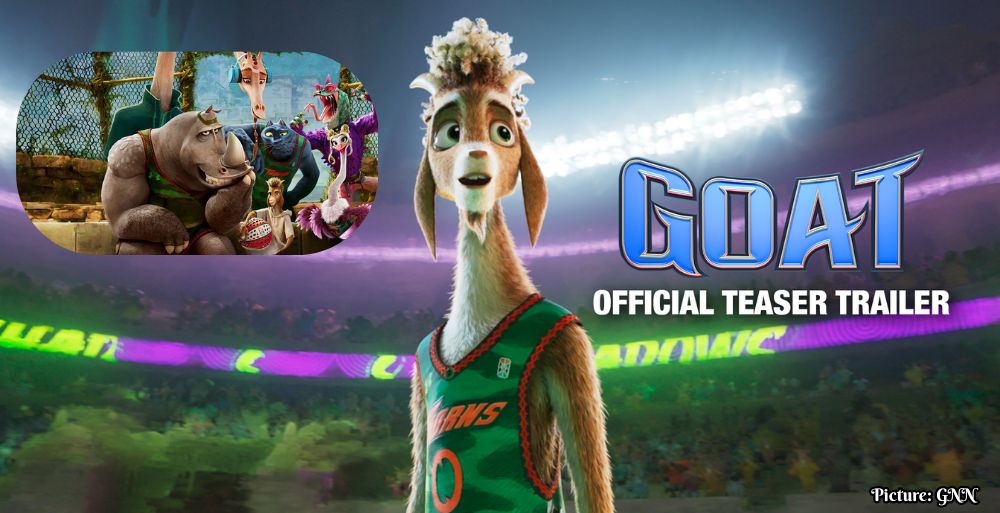
Sony Pictures Animation’s sports comedy Goat has achieved a major commercial milestone by accumulating 1.073 billion viewing minutes during its first week of availability on Netflix. According to recent Nielsen Top 10 Streaming data published by Matthew Belloni of Puck News, the film topped the movie-specific charts for the week of May 11 to May 17, 2026. This surge follows a modest domestic and international theatrical run that began in February 2026, driven by a long-term licensing contract between Sony Pictures and Netflix. The data highlights a growing trend where mid-budget theatrical releases find substantial secondary audiences on subscription video-on-demand (SVOD) systems, reshaping how studios calculate overall profitability and project long-term production schedules.
Streaming Metrics and the Nielsen Leaderboard
LOS ANGELES — The transition from traditional cinema screens to digital living rooms has yielded a significant audience spike for Sony Pictures Animation’s Goat. According to the latest data compiled by Nielsen Streaming Content Ratings for the week ending May 17, 2026, the animated feature collected approximately 1.073 billion viewing minutes within its first four days of streaming availability, having premiered on Netflix on May 14.
The data indicates that Goat was the most-watched movie on any streaming infrastructure during this specific frame, ranking second overall across all television platforms, just behind Netflix’s live-action original comedy special, The Roast of Kevin Hart, which registered 1.348 billion minutes. Audience demographic breakdowns from Nielsen reveal a diverse viewer profile: children aged 2 to 11 made up 39% of the total watch time, adults aged 18 to 49 contributed another 40%, and Hispanic households accounted for roughly 32% of the total viewership.
The film’s performance outpaced several of Netflix’s own high-profile in-house releases. During the same May 11 to May 17 tracking window, the Netflix original drama Remarkably Bright Creatures held the second position on the movie charts with 871 million viewing minutes, while the streamer’s original feature Swapped secured third place with 514 million viewing minutes. Competitor platforms trailed significantly in the movie category during this timeframe; the highest-charting non-Netflix feature film was Hulu’s Send Help, which occupied sixth place with 261 million minutes viewed.
This rapid accumulation of watch time marks a sharp turnaround from previous months, when other high-profile titles took considerably longer to hit the 1-billion-minute threshold. While recent internal Netflix metrics highlighted success for Alan Ritchson’s action feature War Machine and the Jennifer Lopez-led romantic comedy Office Romance, Goat has outpaced contemporary licensed content by drawing millions of viewers immediately upon its digital debut.
Theatrical Economics and the Sony-Netflix Pipeline
The substantial home-viewing audience stands in contrast to the film’s conventional theatrical window, which began with a wide release on February 13, 2026, carefully timed to coincide with the NBA All-Star Weekend. Produced on a net budget estimated between $80 million and $90 million, Goat generated $103.3 million domestically and $91.5 million in international territories, concluding its global theatrical run with a combined box office total of $194.8 million.
Under standard industry formulas, which assume theaters retain roughly 50% of ticket sales alongside substantial global marketing outlays, a project with an $80 million budget typically requires a theatrical gross of approximately $200 million to $225 million to break even during its first window. Industry analysts noted that while the domestic legs were sturdy—achieving a 3.8x multiple from its $27.2 million opening weekend—underwhelming international returns initially kept the film just below the traditional profitability mark.
The film’s transition to profitability highlights the financial cushion provided by the multi-year output deal signed between Sony Pictures and Netflix. Under the terms of this arrangement, Netflix holds exclusive domestic streaming rights to Sony’s theatrical slate during the “Pay-1” window, which typically commences several months after theatrical distribution.
“The modern box office report is no longer the final ledger for mid-budget features,” noted a senior media entertainment analyst during a recent industry conference panel in Los Angeles, speaking on condition of anonymity due to corporate compliance policies. “A domestic theatrical gross of $103 million builds the necessary cultural footprint and consumer awareness. When that asset hits an ecosystem with over 280 million global subscribers, the licensing revenue effectively guarantees that a project which appeared to be a financial wash in theaters transforms into a highly profitable venture for the studio.”
Narrative Background and Production Logistics
Goat was developed through a corporate partnership involving Columbia Pictures, Sony Pictures Animation, Stephen Curry’s Unanimous Media, and the production outfit Modern Magic. Directed by veteran animator Tyree Dillihay, the film features a screenplay written by Aaron Buchsbaum and Teddy Riley, based on a story concept crafted by Nicolas Curcio and Peter Chiarelli, which was in turn inspired by a chapter from Chris Tougas’ unpublished book Funky Dunks.
The narrative unfolds within a fictional world populated entirely by anthropomorphic animals where “roarball”—a highly stylized, fast-paced variant of professional basketball—serves as the dominant cultural and economic force. The plot follows Will Harris, a young goat voiced by Stranger Things star Caleb McLaughlin, who harbors aspirations of becoming the “Greatest Of All Time” (G.O.A.T.) within the professional roarball league. After securing an unexpected spot on a major franchise roster, the protagonist faces structural and cultural hurdles, centering the story on themes of inclusivity, perseverance, and institutional skepticism toward unconventional athletes.
The production assembled an expansive voice cast to appeal across multiple consumer demographics. McLaughlin is supported by prominent entertainment figures including Gabrielle Union, Aaron Pierre, Nicola Coughlan, David Harbour, Nick Kroll, Jenifer Lewis, Patton Oswalt, and Jennifer Hudson. Notably, the film features the voice acting and cinematic debut of four-time NBA champion Stephen Curry, who also oversaw critical elements of the project’s sports-themed choreography and sound design in his role as a primary producer.
Critical reception to the project was favorable prior to its streaming debut. The film currently maintains an 84% critical approval rating on the review aggregator platform Rotten Tomatoes, alongside a 92% audience score from verified users. Reviewers frequently cited the movie’s stylistic choices and its subversion of traditional sports tropes. For example, trade publication ScreenRant awarded the picture a 7-out-of-10 rating, characterizing the narrative as “an underdog story… for a new generation that is ready for a new, more inclusive kind of game.”
Long-Term Implications for Sony’s Animation Slate
The immediate audience engagement generated by Goat on digital platforms validates Sony Pictures Animation’s broader corporate and creative strategy, which focuses on stylized, non-traditional visual design and sports-adjacent narratives. This approach allows the studio to maintain production budgets well below the $150 million to $200 million figures frequently associated with rival animation divisions at Disney, Pixar, or DreamWorks, minimizing overall financial exposure while retaining high consumer engagement.
The financial framework established by Goat is expected to guide the rollout of Sony’s upcoming animated theatrical slate over the next several years. The studio’s next major theatrical release, the highly anticipated Spider-Man: Beyond the Spider-Verse, is scheduled to debut in theaters on June 18, 2027. Additionally, the studio has confirmed that development is actively continuing on Wish Dragon 2, which is projected for a summer 2027 release window, followed by a planned sequel to K-Pop: Demon Hunters, currently slated for a 2029 theatrical launch.
As digital tracking platforms continue to expand their scope, the 1.073 billion minutes recorded by Goat inside its introductory week underscores a fundamental shift in consumer habits. Audiences are increasingly choosing to engage with family-oriented, mid-budget features inside the home, turning what used to be secondary window syndication into a primary source of modern media consumption.