WASHINGTON — The historic initial public offering (IPO) of Space Exploration Technologies Corp. (SpaceX) on the Nasdaq exchange has fundamentally transformed the financial landscape of the commercial aerospace industry, minting corporate windfalls not only for executives but also for foundational working-class staff. Trading under the ticker symbol SPCX, the record-setting public debut raised $75 billion at an initial set price of $135.00 per share, ultimately closing its first day of open-market trading on Friday at $160.95—surging 19 percent. This market capitalization, which now hovers near $2.1 trillion, solidified SpaceX as the sixth most valuable publicly traded firm in the United States and officially elevated founder Elon Musk to the status of the world’s first trillionaire. Crucially, the equity-heavy compensation structures long utilized by the once-private aerospace pioneer have created unexpected, life-altering wealth for early blue-collar laborers, including specialized welders, technicians, and assembly line workers who helped build the physical infrastructure of modern private spaceflight.
The Mechanics of a Historic Wall Street Debut
The public listing of SpaceX on June 12, 2026, bypassed traditional Wall Street price-discovery mechanisms, with the company utilizing an absolute fixed-price book-built framework managed by a massive syndicate of primary underwriters, led by Goldman Sachs & Co. LLC and Morgan Stanley. By selling 555,555,555 shares of Class A common stock at $135.00, the company raised $75 billion in gross proceeds, completely earmarked for institutional growth initiatives and capital-intensive infrastructure pipelines, such as the Starship deep-space launch system and the Starlink satellite broadband network.
The market response on Friday morning was marked by historic trading volumes that closely mirrored the scale of major historical tech listings. Open-market bidding commenced at 9:30 AM Eastern Time at $150.00 per share—an immediate 11 percent premium over the IPO floor—before a wave of institutional and retail buy orders pushed the stock to its closing price of $160.95. Total transaction volume crossed 500 million shares during the single session, approaching the all-time opening-day records established by Facebook during its 2012 public debut.
To maintain operational autonomy, the corporate share framework is bifurcated into a dual-class structure. Public market participants hold Class A shares, which confer exactly one vote per share. Conversely, Class B shares, largely retained by internal executives, carry ten votes per share. Following the transaction’s closing on June 15, Elon Musk retains 42 percent of total corporate equity but controls an absolute 82.4 percent of the aggregate voting power, insulating the company’s aggressive colonization and research goals from short-term public shareholder pressures.
From the Weld Shop to a Million-Dollar Valuation
The massive inflation of corporate value has brought the long-term reality of employee stock ownership programs (ESOPs) into sharp focus. For individuals like Juan Hernandez, a specialized welder who joined SpaceX during its early operational scaling phase in 2015, the transition from a private entity to a highly liquid public stock has yielded sudden, significant personal capital.
Hernandez, who currently works at the competitive aerospace firm Blue Origin, retained an equity cache of roughly 6,500 SpaceX shares accumulated during his decade-long tenure at the company’s manufacturing installations. With Friday’s market close at $160.95, Hernandez’s personal portfolio reached an objective valuation of $1,046,175.
Reflecting on his recruitment in a broadcast interview with CBS News correspondent Jo Ling Kent, Hernandez described a highly casual entry into an industry he did not fully understand at the time. “It was just another contract job for me at the time,” Hernandez remarked, maintaining a calm, matter-of-fact demeanor while sitting in a neutral broadcast setting. “I thought in my head, I don’t know what SpaceX is, but let’s go.”
When Hernandez was onboarded over ten years ago, the company supplemented his standard hourly wages with an initial sign-on equity grant valued at $10,000. At that stage of development, the private shares lacked any public liquidity, rendering them secondary to immediate hourly cash compensation in the minds of many industrial workers. “It wasn’t a big deal. I didn’t know anything about it then,” Hernandez added, shaking his head slightly. “I didn’t know it was gonna be this big, at this point.”
Labor Dynamics and the Corporate Culture of “Skin in the Game”
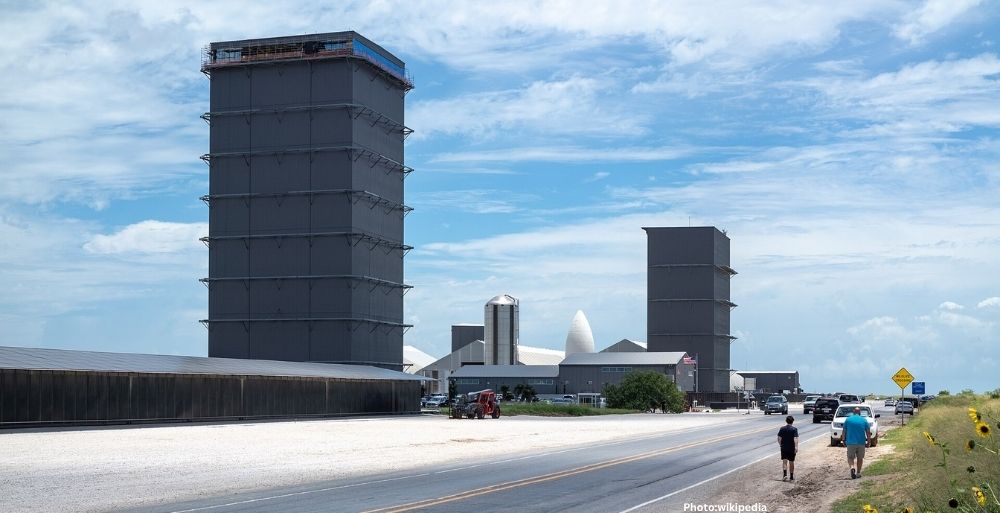
During his ten-year career trajectory at SpaceX, Hernandez worked directly on the heavy industrial frontlines, fabricating the load-bearing metal frameworks, ground support equipment (GSE), and high-pressure fluid lines required to secure multi-ton rockets onto launch pads prior to ignition. He eventually rose through the operational ranks from an hourly contract welder to a salaried floor supervisor.
According to labor analysts, the widespread distribution of equity options across all tiers of the manufacturing workforce—including mechanics, electricians, and culinary staff—served as a primary psychological driver during the company’s intense, high-turnover production sprints.
Hernandez noted that providing blue-collar laborers with a literal stake in the underlying asset altered how individual teams approached quality control and operational efficiency. “They will perform a lot better because, I mean, it is, it’s their company as well,” he explained, emphasizing the connection between broad-based equity allocation and micro-level factory output.
Despite the sudden accumulation of independent wealth, Hernandez emphasized that his personal identity remains anchored in a strict immigrant work ethic. Rather than retiring from the industrial sector, he continues to work standard production shifts while using his financial windfall to establish generational stability and financial literacy for his three children. His 16-year-old daughter has already begun actively managing a minor investment portfolio that includes equity positions in Meta Platforms Inc. and other blue-chip technology firms. “She’s a little entrepreneur herself,” Hernandez noted with clear paternal pride.
Financial Reality vs. Growth Projections
While early employees celebrate significant personal windfalls, institutional market analysts urge caution regarding the long-term sustainability of the current $2.1 trillion valuation. The S-1 registration statement filed with the Securities and Exchange Commission (SEC) in May 2026 revealed a complex, heavily polarized corporate balance sheet.
Since its formal inception in 2002, the aerospace giant has logged an aggregate net loss of $41.3 billion, driven by the astronomical research and development costs required to construct reusable booster fleets and launch facilities.
| Business Division / Unit | Q1 2026 Segment Revenue | Net Profitability Status | Core Primary Drivers |
| Starlink Broadband | $3.3 Billion | Profitable (69% of Total Rev.) | Global consumer/enterprise subscriptions across 164 nations |
| Commercial Launch Services | $1.1 Billion (Q1 Pace) | Operational Loss | Falcon 9 reusability, heavy government & defense contracts |
| SpaceXAI (Formerly xAI) | N/A (Pre-Revenue Stage) | Net Cash Burn (~$1B / Month) | Proprietary Colossus data centers, Grok model integration |
The financial data highlights that Starlink remains the sole engine of current corporate profitability, bringing in $3.3 billion in the first quarter of 2026 alone. Conversely, the core rocket launch division, which booked $4.1 billion in revenue across the entirety of 2025, continues to run at an operational loss due to the ongoing capital demands of the un-monetized Starship program.
Furthermore, the company’s recent February 2026 all-stock acquisition of Elon Musk’s artificial intelligence venture, xAI—now fully integrated and operating as SpaceXAI—has added an estimated $1 billion monthly cash burn to the consolidated ledger. Wall Street’s current valuation represents a speculative bet on the convergence of low-Earth-orbit satellite footprints with terrestrial AI compute networks rather than a reflection of steady, diversified industrial cash flows.
Nevertheless, for the working-class personnel who executed the physical welding, machining, and assembly that made reusability viable, the IPO marks an unprecedented validation of structural equity distribution. When asked what he would convey directly to Elon Musk if given the opportunity, Hernandez expressed an overarching sense of gratitude for an unconventional financial model that opened corporate equity to non-traditional market participants. “He made it a possibility for somebody like us, you know, the cook or … electrician,” Hernandez said. “He’s making all these lives much better and meaningful for their families as well.”