
U.S. higher education institutions reached a historic benchmark by hosting 1.18 million international students during the 2024/25 academic year, representing approximately 6% of total domestic postsecondary enrollment. However, fresh snapshot data signals a sharp contraction in the international academic pipeline, driven by a 17% plunge in new international student enrollments in fall 2025. While India expanded its margin as the top sender of foreign scholars—surpassing China for the second consecutive year—overall growth figures were bolstered significantly by postgraduate employment programs rather than incoming matriculations. Compounding geopolitical friction, regulatory visa uncertainties, and documented reports of on-campus discrimination, American universities face growing headwinds in maintaining their global market share against competing international destinations.
Record Topline Figures Mask Emerging Shifts in Pipeline
WASHINGTON — The global footprint across American university campuses reached an all-time peak during the 2024/25 academic calendar, even as underlying demographic and operational metrics signal an impending slowdown in foreign student recruitment.
According to the Open Doors 2025 Report on International Educational Exchange, published by the Institute of International Education (IIE) in partnership with the U.S. Department of State, 1,180,000 international scholars were enrolled at higher education institutions nationwide. This milestone represents a 5% year-over-year expansion, bringing international representation to roughly 6% of the total U.S. higher education student body.
However, policy researchers and university administrators emphasize that the topline total presents a misleading picture of long-term institutional health. The record headline figure was disproportionately sustained by post-graduation work authorizations rather than new classroom arrivals. Participation in Optional Practical Training (OPT)—a regulatory framework allowing nonimmigrant degree holders to work temporarily in their fields of study—surged by 21% year-over-year to 294,253 individuals. Concurrently, first-time international student enrollments fell by 7% during the 2024/25 period.
The underlying contraction deepened significantly in late 2025. A broader snapshot survey conducted by IIE across 828 U.S. postsecondary institutions revealed that new international student enrollments plummeted by 17% in fall 2025 compared to the prior year. The decline was heavily concentrated at the advanced degree level, with new graduate student enrollment contracting by 12%. Undergraduates saw a modest 2% uptick, while active OPT participation rose another 14%, continuing to inflate overall headline numbers while the entry-level pipeline contracted.
Regional Demographics: India Expands Lead Over China
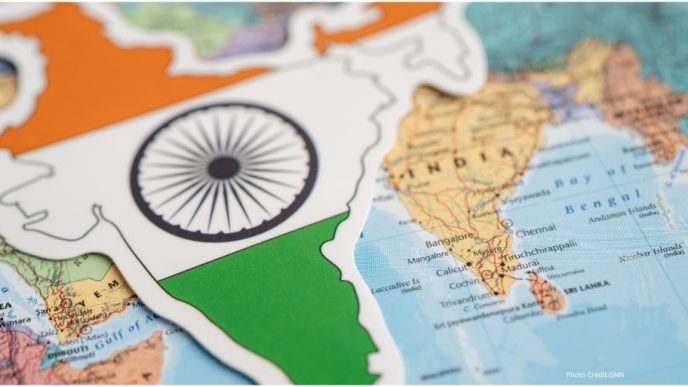
The shifting composition of international scholars highlights a substantial geographic rebalancing. For decades, Mainland China served as the primary feeder nation for U.S. classrooms. However, enrollment trends established a decisive pivot as India widened its margin as the largest source of international students in the United States.
During the 2024/25 academic cycle, Indian student representation expanded by 9.5% to reach 363,019 individuals. In contrast, student numbers from China fell 4.1% to 265,919. Together, the two Asian nations accounted for 53% of the entire foreign student population in American academia.
Growth was also recorded across smaller, rapidly emerging markets across South Asia and West Africa. Student enrollment from Nepal recorded an extraordinary 48.7% surge, while Ghanaian enrollment increased by 36.5% and Pakistani student participation climbed 19.8%.
Higher education economists point out that both Indian and Chinese scholars place immense strategic value on post-study work authorization via the OPT program. For graduates in science, technology, engineering, and mathematics (STEM) fields, OPT provides up to 36 months of employment eligibility in the domestic labor market, serving as a primary stepping stone toward temporary H-1B specialty worker visas and permanent employer-sponsored residency.
Socio-Political Drivers and Policy Uncertainties
The pullback in incoming international matriculations coincides with heightened political scrutiny surrounding immigration, federal visa screening, and the domestic campus environment. Over successive years, immigration policy has transitioned from a routine administrative mechanism into a central component of national population growth and economic planning across numerous U.S. states.
Policy uncertainty has increased alongside regulatory shifts and legislative proposals aimed at tightening entry screening and restricting foreign worker pathways. While several restrictive executive orders and state-level policy proposals faced legal challenges in federal court, the ongoing debate has created noticeable friction for prospective applicants evaluating long-term educational investments.
Simultaneously, qualitative campus climate surveys point to interpersonal and systemic challenges faced by enrolled students. A 2024 study cited by the Migration Policy Institute surveyed 1,252 Chinese graduate students—primarily enrolled in advanced STEM programs—and revealed that 60% of respondents reported experiencing discrimination on American campuses. Although respondents continued to rate U.S. educational quality and research infrastructure exceptionally high, safety concerns and perceived hostility have influenced prospective families to weigh alternative options.
Furthermore, international universities across Australia, Canada, the United Kingdom, and continental Europe have aggressive, streamlined post-graduation work pathways designed to intercept prospective talent. As federal policy debates surrounding international student employment rights continue in Washington, American university leaders face a dual challenge: addressing campus inclusivity while managing severe operational risks tied to declining foreign tuition revenues.