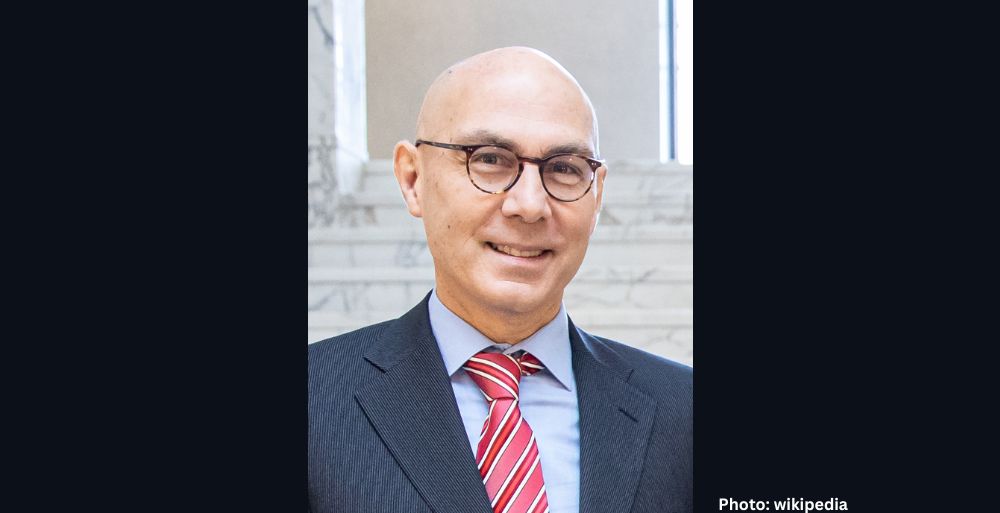
At an AI and Human Rights Summit in Oxford, UN rights chief Volker Türk emphasized the pressing need for regulation of artificial intelligence, warning that the technology poses risks to equality, privacy, and public discourse.
Oxford, UK – At the AI and Human Rights Summit held on Monday, Volker Türk, the United Nations High Commissioner for Human Rights, delivered a stark warning regarding the rapid development and deployment of artificial intelligence (AI). He called for immediate action to establish regulatory frameworks that can adequately address the potential dangers posed by AI, which he described as both transformative and perilous.
Türk highlighted the dual-edged nature of AI, noting its capacity to drive significant advancements in various fields, including healthcare, education, and human rights advocacy. However, he cautioned that this powerful technology remains largely controlled by a small number of entities, often without sufficient public oversight or accountability.
Concerns Over Unchecked AI Development
During his address, Türk expressed concerns that the unchecked proliferation of AI technologies could subtly undermine fundamental rights such as equality, privacy, and freedom of expression. He emphasized that the potential for AI to adversely affect societal structures is growing, stating, “Dystopia could creep in unnoticed.” Türk warned that entire populations might find themselves disconnected from essential services—including communication, clean water, and financial resources—with alarming ease.
Further elaborating on the implications of AI, Türk raised ethical concerns associated with AI’s integration into military applications. He urged caution against allowing machines to make life-and-death decisions, stressing that the changing landscape of warfare necessitates a reevaluation of ethical standards governing the use of AI technologies in combat situations.
Educational Impact and Future Implications
Türk also referenced studies suggesting that students who increasingly rely on AI tools for learning may experience reduced retention of information and diminished independent thinking abilities. This raised critical questions about the future of education and whether society is heading toward a reality where individuals lack the ability to understand, question, or guide the technology that plays a growing role in their lives.
As Türk delivered his remarks in Oxford, the New York City Council was concurrently convening a rare Committee of the Whole to examine the implications of AI technology on its residents. The council is currently considering ten proposed bills aimed at regulating AI applications in the nation’s largest city. This session included testimony from major tech companies, including Anthropic, OpenAI, Google, and Meta, reflecting the widespread concern regarding the impact of AI on urban life.
Mandatory Safeguards and Legal Frameworks
In his address, Türk called for the establishment of mandatory human rights safeguards and due diligence in the development and use of AI technologies. He emphasized that countries housing AI companies or influencing their supply chains must ensure these entities operate responsibly and ethically, holding them accountable when they fail to do so. He noted that not every solution can be found within existing legal frameworks and that some areas may require the creation of entirely new legal approaches.
Türk suggested updating existing regulations on liability, cybersecurity, and data protection as interim measures to mitigate risks associated with AI. He conveyed that proactive measures are necessary to ensure that human rights are preserved in the face of rapid technological advancement.
Collaboration and Civil Society Engagement
The UN rights chief also advocated for enhanced collaboration within the AI industry to ensure effective security measures and independent monitoring. He called for civil society, as well as individuals whose rights are impacted by AI developments, to have a more significant role in shaping policies that govern AI technologies. “We can no longer afford to wait or rely on goodwill,” Türk asserted, reinforcing the urgency of his message.
Türk welcomed the establishment of the Global Dialogue on AI Governance and the Independent International Scientific Panel on AI, both initiatives launched by the UN. He highlighted a recent joint call, supported by 29 states and the European Union, for tighter controls on advanced AI models, underscoring a collective recognition of the need for regulation.
Industry Accountability and Future Actions
In his remarks, Türk acknowledged recent developments within the AI industry, including steps taken by industry leaders toward self-regulation and risk assessment. He referred to a voluntary accord signed at the White House on September 29 by President Joe Biden and executives from six AI companies, aimed at fostering collaboration on safety measures. However, he criticized the lack of enforceable penalties associated with this agreement, describing it as “morally binding” but insufficient in terms of accountability.
“Too few are walking the talk,” Türk remarked, expressing frustration over the slow pace of substantial action from both governments and AI developers. He revealed that he had reached out to states and frontier AI companies three weeks prior, urging them to take immediate action to mitigate the risks posed by AI technologies.
“If we fail to move quickly, we risk unforeseeable consequences—for ourselves and future generations,” Türk concluded, reiterating the critical importance of comprehensive and robust regulation of AI to safeguard human rights in an increasingly automated world.