
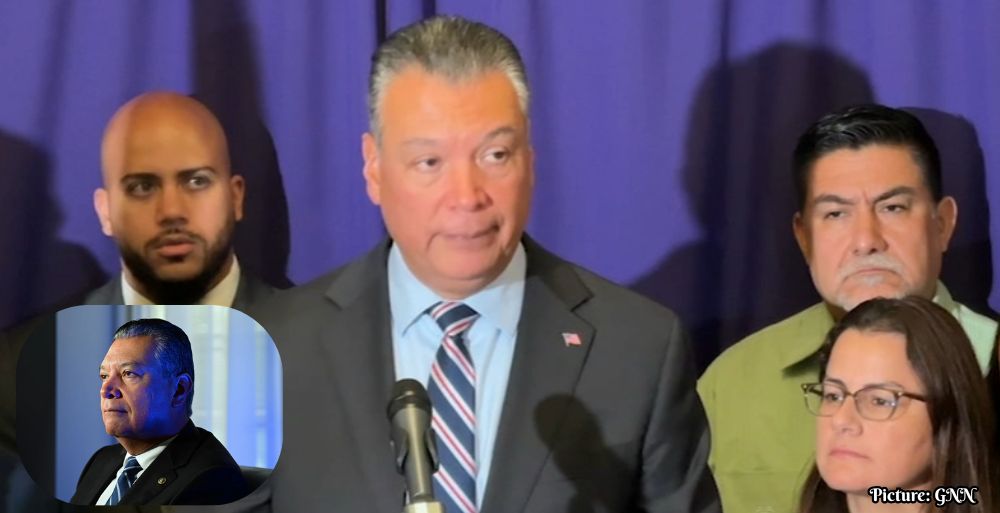
Senator Alex Padilla introduces legislation aimed at providing a pathway to lawful permanent residency for millions of long-term immigrants, addressing what he describes as an outdated immigration system.
US Senator Alex Padilla, representing California, recently unveiled a legislative proposal designed to expand pathways to lawful permanent residency for millions of long-term immigrants residing in the United States. He described the initiative as a “commonsense fix” to the nation’s immigration system, which he believes is in dire need of reform.
The announcement was made during a press conference in Los Angeles, where Padilla emphasized the need to recognize the contributions of immigrants who have established their lives in the U.S. for extended periods. He stated that individuals who have continuously resided in the country for at least seven years, have paid taxes, contributed to their communities, and maintain clean criminal records should be afforded the opportunity to obtain a green card.
Senator Dick Durbin, the Democratic Whip and Ranking Member of the Senate Judiciary Committee, echoed Padilla’s sentiments, asserting, “It’s common sense that immigrants who pose no safety threat and contribute to our country should be able to call America home with certainty.” This bipartisan acknowledgment highlights a growing consensus on the need for comprehensive immigration reform.
Details of the Proposed Legislation
The legislation, titled the Renewing Immigration Provisions of the Immigration Act of 1929, seeks to amend a long-standing provision of U.S. immigration law that has not seen significant updates since 1986. Currently, the law includes a fixed eligibility cutoff date for immigrants seeking permanent residency. Padilla’s bill would replace this static deadline with a rolling seven-year requirement, allowing individuals who meet the criteria to apply for permanent residency based on their continuous presence in the U.S.
Under the proposed framework, immigrants would be eligible for lawful permanent resident status if they have lived in the U.S. for at least seven years before applying, have no criminal record, and meet other existing eligibility criteria for obtaining a green card. This approach would eliminate the necessity for congressional action to update the law periodically, streamlining the process and making it more responsive to the needs of immigrants.
Impact and Scope of the Legislation
Padilla’s proposal is expected to benefit over 8 million individuals, including Dreamers, Temporary Protected Status (TPS) holders, children of long-term visa holders, essential workers, and highly skilled workers who are currently in a state of limbo while waiting for employment-based green cards. The senator noted, “We believe that if you’ve lived here for over seven years, paid taxes for years, contributed to your community for years, and you don’t have a criminal record, then you deserve a pathway to legalization.”
This legislation represents a significant shift towards recognizing the vital role that immigrants play in American society and the economy. Padilla emphasized that the bill aims to update an existing legal pathway rather than establish a new government program, thereby making it a pragmatic solution to the challenges faced by millions of long-term residents.
Historical Context and Future Implications
The proposed changes to immigration law come amidst ongoing debates over immigration policy in the United States, a topic that has been contentious for decades. The last major overhaul of immigration law occurred in 1996, and since then, many have argued that the system has become increasingly outdated and unmanageable.
As the U.S. grapples with labor shortages in various sectors, particularly in healthcare and agriculture, the need for a more responsive immigration system has become ever more critical. By addressing the legal status of long-term residents, Padilla’s bill could alleviate some of the pressures faced by industries reliant on immigrant labor.
While the proposal has garnered support from various quarters, it is also likely to face opposition as immigration remains a polarizing issue in American politics. Critics may argue that the legislation could encourage more unauthorized immigration or challenge the integrity of existing immigration protocols. However, proponents like Padilla assert that the bill is a necessary step towards a fairer and more just immigration system.
In conclusion, Senator Alex Padilla’s bill represents a significant effort to reform the U.S. immigration system, aiming to provide millions of long-term immigrants with a pathway to permanent residency. As discussions continue in Congress, the implications of this proposed legislation could have far-reaching effects on the lives of many individuals and the broader American society.