President Trump’s administration is weighing a potential military escalation against Iran, raising concerns over economic repercussions, geopolitical stability, and domestic political implications.
In a significant development concerning U.S.-Iran relations, President Donald Trump is reportedly contemplating a return to full-scale military action against Iran. This potential shift in strategy comes as the administration seeks to navigate a complex standoff in the Strait of Hormuz, a vital waterway for global oil shipments, amid ongoing nuclear negotiations.
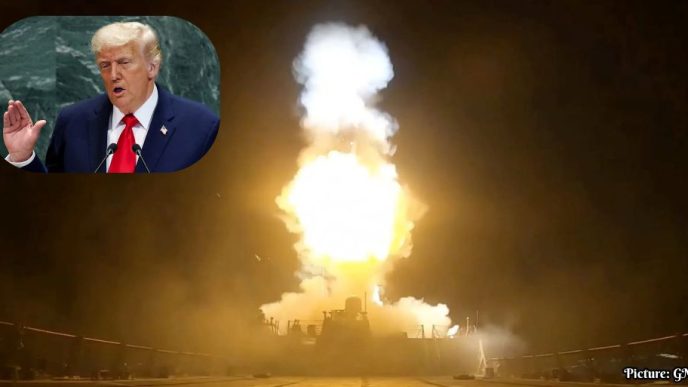
Recent reports indicate that the U.S. military has intensified its operations in the region, conducting strikes targeting Iranian air-defense systems, radar installations, and missile launch sites. According to Axios, Trump convened senior advisors in the Situation Room to discuss potential “devastating strikes on strategic targets in Iran.” The Wall Street Journal further reported that options being considered include deploying ground forces to seize Iranian islands and conducting airstrikes on critical nuclear sites, such as the Pickaxe Mountain facility.
Historical Context of U.S.-Iran Relations
The U.S. engagement in military operations against Iran has a complicated history. Earlier this year, the U.S. engaged in nearly 40 days of intensive military operations before entering a ceasefire in early April. The potential resumption of hostilities raises questions about the effectiveness of diplomacy and the risks associated with military escalation, both domestically and internationally.
Potential Risks of Military Escalation
Experts have identified several significant risks associated with a renewed military campaign against Iran:
Depleting Military Stockpiles
One major concern is the depletion of U.S. military stockpiles. Admiral Brad Cooper, Commander of U.S. Central Command (Centcom), informed the Senate that U.S. forces expended over 13,000 strike munitions during the previous phase of conflict. This included nearly 50% of the Patriot missile stockpile and more than 45% of Precision Strike Missile inventories, as detailed in an analysis by the Center for Strategic and International Studies.
In light of these expenditures, the Pentagon is lobbying Congress for a supplemental funding package to replenish munitions, alongside a record $1.5 trillion budget request for fiscal year 2027. The House leadership recently proposed a budget reconciliation bill committing $60 billion to defense, although its passage remains uncertain.
Economic Repercussions
Another risk involves the potential for economic disruption. Trump acknowledged that part of his motivation for signing a memorandum of understanding (MOU) with Iran to reopen the Strait of Hormuz stemmed from concerns about a looming global recession, exacerbated by dwindling energy reserves. In a statement made in France, Trump warned that the U.S. could run out of reserves in approximately four weeks, indicating that any significant conflict could lead to “bedlam” in energy markets.
Sina Toossi, a senior fellow at the Center for International Policy, highlighted that U.S. strategic petroleum reserves are currently at historically low levels, leaving the country vulnerable to supply disruptions. Fluctuations in oil and gas prices have already demonstrated the delicate balance between geopolitical events and economic stability.
The Organization for Economic Cooperation and Development (OECD) recently noted that ongoing military tensions could significantly impact global economic growth, projecting a decline from 2.1% in 2026 to 1.8% in 2027 if disruptions persist.
Impact on Midterm Elections
Domestically, the conflict has the potential to affect Trump’s approval ratings and the upcoming midterm elections. Polling data indicates that public support for military engagement in Iran remains low. A Quinnipiac University poll indicated that 60% of U.S. voters believe the military actions have not been worth the costs, while a Reuters survey found that 79% of respondents expect a prolonged engagement in the region.
Trump’s recent reimposition of a blockade on Iranian ports, following Iran’s announcement of renewed closures in the Strait of Hormuz, has further complicated the situation. The economic implications of rising gas prices could significantly influence voter sentiment ahead of the November elections.
Alienation of Regional Allies
The ongoing conflict is also straining relations with U.S. allies in the Persian Gulf. Countries such as Bahrain, Qatar, Kuwait, Oman, and Jordan have reported repelling drone and missile attacks from Iran, raising concerns about regional stability. The United Arab Emirates has acknowledged that its tankers were attacked, resulting in fatalities.
While Gulf states have expressed frustration with Iran, there is a shared desire among these nations to de-escalate hostilities. Anna Jacobs, a Gulf regional adviser, noted that despite criticism of the MOU, there is a consensus among regional actors to support efforts to mitigate the conflict.
Moreover, the reliance of Gulf countries on U.S. military support for air defenses adds another layer of complexity to the situation. Trump’s recent comments about charging a fee for cargo moving through the Strait of Hormuz received backlash from Gulf leaders, leading to a retraction and an offer of investment in the U.S. instead.
As tensions continue to rise in the region, President Trump faces a challenging balancing act between military strategy and diplomatic efforts, with significant implications for both domestic political dynamics and international relations.