In a historic comeback after trailing in the first round, Brazilian President Luiz Inácio Lula da Silva won a fourth term in Sunday’s runoff election, but his conservative opponent Senator Flávio Bolsonaro rejected the outcome and pledged a legal challenge over a last-minute voting extension.
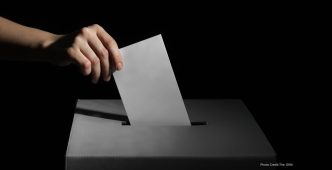
BRASÍLIA — President Luiz Inácio Lula da Silva secured an unprecedented fourth term in office Sunday, pulling off an extraordinary political comeback after trailing in the first round of voting. The victory was immediately contested by his conservative rival, Senator Flávio Bolsonaro, who declared he would not accept the outcome and pledged to pursue legal action to annul the election.
The 80-year-old leftist leader won just over 51% of the vote in the runoff, outpacing Bolsonaro by roughly 4.4 million ballots. Lula’s triumph marks the first time since direct presidential elections resumed in 1989 that a candidate has captured the presidency after finishing second in the initial round. The result also halts—at least within Latin America’s largest economy—a wave of right-wing electoral gains that has swept the region since early 2025.
Celebrations erupted across the country late Sunday. In Rio de Janeiro, jubilant supporters honked horns, embraced, and flashed Lula’s signature “L” hand sign, while crowds in Belo Horizonte, the capital of crucial swing state Minas Gerais, filled the streets in song.
“I can assure you that we are going to change the way we govern this country,” Lula told supporters, dedicating the win to Brazil’s youth who “took to the streets to defend democracy.”
Bolsonaro Camp Challenges Midnight Voting Extension
The victory came at the end of a chaotic election day, overshadowed by a disputed decision to extend polling hours.
Around 5 p.m. in Brasília—precisely when stations were scheduled to shutter—the Supreme Court authorized a two-hour voting extension. Justice Cristiano Zanin approved a petition from Lula’s campaign citing transportation disruptions for voters in multiple states. The Bolsonaro campaign had also filed for localized extensions due to torrential rain, but several voting sites had already begun closing their doors when the order was handed down.
Flávio Bolsonaro seized on the court’s intervention to reject the election results outright.
“It is impossible to recognize the election result given how these events unfolded,” Bolsonaro told a crowd of backers in the capital. “We will take legal action. We will ask for this election to be annulled.”
Bolsonaro’s defeat marks a major failure for his family’s political dynasty, repeating the ballot-box defeat his father, former President Jair Bolsonaro, suffered against Lula in 2022 before being imprisoned over efforts to subvert that transfer of power.
Legal analysts cast heavy doubt on the viability of Flávio Bolsonaro’s challenge. Paulo Sotero of the Wilson Center’s Brazil Institute noted that the extension was officially sanctioned by the Supreme Court to address localized logistical hurdles.
“The Senator has very little space to contest the elections,” Sotero said. “I think this is a done deal.”
From First-Round Upset to Second-Round Mobilization
Lula’s reelection appeared deeply vulnerable just weeks ago. In the opening round, Bolsonaro outperformed the incumbent, leading by 2.2 million votes and exposing broader dissatisfaction with everyday living costs, persistent crime, and voter weariness.
The contest laid bare sharp demographic divides:
- The Gender Divide: Women, who make up nearly 53% of the electorate, served as Lula’s defensive wall. Recent polling showed Lula leading among female voters by nine percentage points (49% to 40%), while Bolsonaro dominated among men (52% to 40%).
- Religion: Religion remained a sharp dividing line, with Bolsonaro carrying evangelical voters 62% to 29%, while Lula retained a 52% to 42% advantage among Catholics.
- Public Safety & Economy: While Bolsonaro promised extreme punitive measures against organized crime—vowing an approach tougher than El Salvador’s crackdown—Lula had to defend past comments criticizing punitive drug policies. On the economic front, despite low unemployment and declining inflation, Lula faced headwinds from working-class voters squeezed by grocery and consumer prices.
Campaign debates turned vitriolic over ethics. Bolsonaro hammered Lula over corruption scandals and allegations surrounding the president’s eldest son, while Lula pressed Bolsonaro to disclose financial ties linked to the collapse of Banco Master.
Global Geopolitics and Domestic Strains
The runoff carried immediate global significance. U.S. President Donald Trump, who closely monitored the race and praised Bolsonaro’s first-round showing, has maintained a tense posture toward Brasília over tariffs and the legal prosecution of the elder Bolsonaro.
A Bolsonaro administration would have realigned Brazil with Washington and expanded security cooperation. Lula’s reelection solidifies Brasília’s non-aligned, sovereign foreign policy, keeping Latin America’s primary economic powerhouse closely tied to China—its top trade partner—and the broader Global South.
While Lula has secured his historic fourth term, he inherits a deeply polarized electorate and a conservative-leaning Congress, setting the stage for an uphill battle to govern the nation.