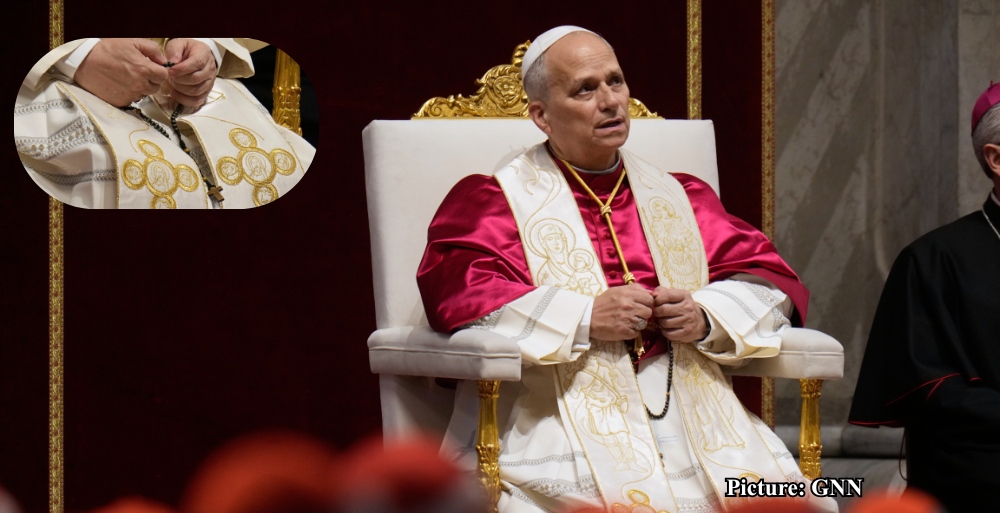
A public disagreement between President Donald Trump and Pope Leo XIV has emerged, marking a significant moment in U.S. political and religious discourse as the first American pope publicly critiques the president’s policies.
In an unprecedented exchange, President Donald Trump has become the first sitting U.S. president to openly clash with the head of the Roman Catholic Church, Pope Leo XIV. The dispute surfaced this week as the pontiff, who is notable for being the first American pope, voiced criticism regarding Trump’s immigration policies and the U.S. military involvement in Iran.
The pope’s remarks came following a series of comments he made about the United States’ approach to the ongoing conflict in Iran, which have been interpreted as veiled criticisms of the Trump administration. In response, Trump took to social media platform Truth Social, labeling the pope as “weak on crime and terrible for foreign policy.” This exchange has drawn significant attention and criticism from various quarters, including political analysts, religious leaders, and international observers.
Political Reactions
Political strategists suggest that Trump’s remarks are unlikely to have a direct negative impact on Republican candidates in the upcoming midterm elections, although they could hinder potential gains. T.W. Arrighi, a Republican strategist and practicing Catholic, stated, “Politics is a game of addition, not subtraction. There’s no addition to be gained by attacking the head of the largest Christian denomination in the world.” Arrighi also noted that while the pope is not infallible, the president’s comments were ill-advised.
Trump’s criticisms followed a segment aired on CBS’s 60 Minutes, where several prominent American cardinals publicly challenged the administration’s rhetoric and policies regarding the Iran war. Unlike the cardinals’ more direct approach, Pope Leo’s critiques were characterized as nuanced and indirect. John McCarthy, a former political adviser to President Biden and a liaison to the Catholic Church, commented, “The pope is so good at staying above the fray. It’s not direct, it’s not personal.” He suggested that the cardinals’ comments resonated more with the public due to their directness.
Responses to the Dispute
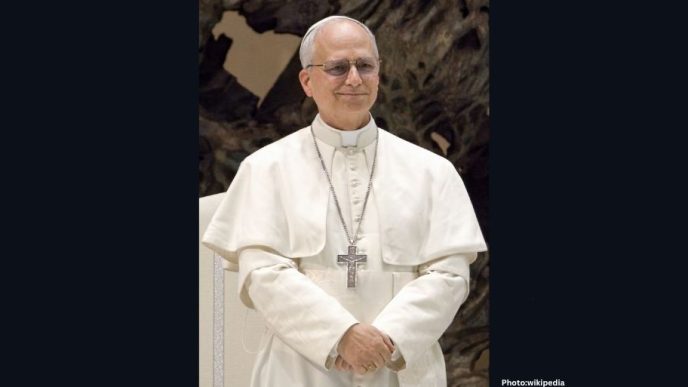
The fallout from Trump’s remarks has been swift, attracting condemnation from both sides of the political aisle. Bishop Robert Barron, a member of Trump’s Religious Liberty Commission, publicly stated that the president should apologize to the pope. Additionally, Italian Prime Minister Giorgia Meloni, previously seen as a Trump ally, described the remarks as “unacceptable.” In contrast, some Catholic administration officials defended Trump, with Vice President Vance cautioning the pope to “be careful” when discussing theology, and White House border czar Tom Homan advising the pontiff to “leave politics alone.”
Despite the backlash, Trump retains substantial support among Catholic voters. According to exit polling data from ABC News, 59 percent of Catholics voted for Trump in the 2024 presidential election, while only 39 percent supported former Vice President Kamala Harris. Kelsey Reinhardt, President of CatholicVote, referred to the Catholic vote for Trump as “one of the biggest political realignments in the last 25 years,” indicating that the dynamics of Catholic support may influence Republican strategies moving forward.
Potential Implications for the Midterms
Recent polls indicate a potential shift in Trump’s standing among Catholic voters, suggesting that his approval rating has declined. A CNN poll conducted in March revealed that only 42 percent of Catholic voters approved of Trump, while 57 percent expressed disapproval. McCarthy noted that while the recent comments may not directly affect the Republican Party’s Catholic base, they could sway Catholic voters in swing states ahead of the midterms. He emphasized, “There are 36 states in the country where the largest faith denomination is Catholic, including competitive districts in California, Pennsylvania, New York, Illinois, Arizona, and Iowa.”
Reinhardt echoed this sentiment, suggesting that future Catholic voting patterns will be determined more by policy outcomes than by the current public discourse. “I think how Catholics vote in the future is more going to be determined by policies in the future than by the temperature of this particular week,” she stated.
Historical Context and Future Outlook
This public confrontation is not without precedent; historical tensions have existed between U.S. presidents and the papacy. Pope John Paul II vocally opposed the 2003 U.S. invasion of Iraq during President George W. Bush’s administration, while Pope Francis has had his disagreements with various political leaders. However, the direct nature of Trump’s recent comments marks a notable departure from traditional presidential decorum when engaging with the Vatican.
McCarthy remarked, “Presidents don’t attack popes usually. I think you see disagreements in the church, but they tend to be pretty high level, and handled semi-diplomatically. This is so direct that it’s different.” As the exchange continues, it remains to be seen how this will affect the broader political landscape, particularly in light of the increasing engagement of Catholic communities across the United States.
In an effort to de-escalate the situation, Trump has moderated his tone in subsequent remarks, stating that he is “not fighting” with the pope and acknowledging the pontiff’s right to express his views. He noted, “I have a right to disagree with the pope. I have no disagreement with the fact the pope can say what he wants, and I want him to say what he wants, but I can disagree.”
The ongoing dialogue between President Trump and Pope Leo XIV is reflective of the complex interplay between faith and politics in contemporary America, and it underscores the potential ramifications for both the Republican Party and the Catholic Church as they navigate these turbulent waters.