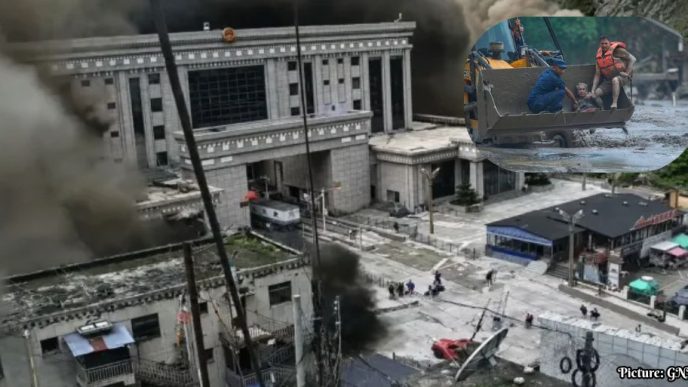
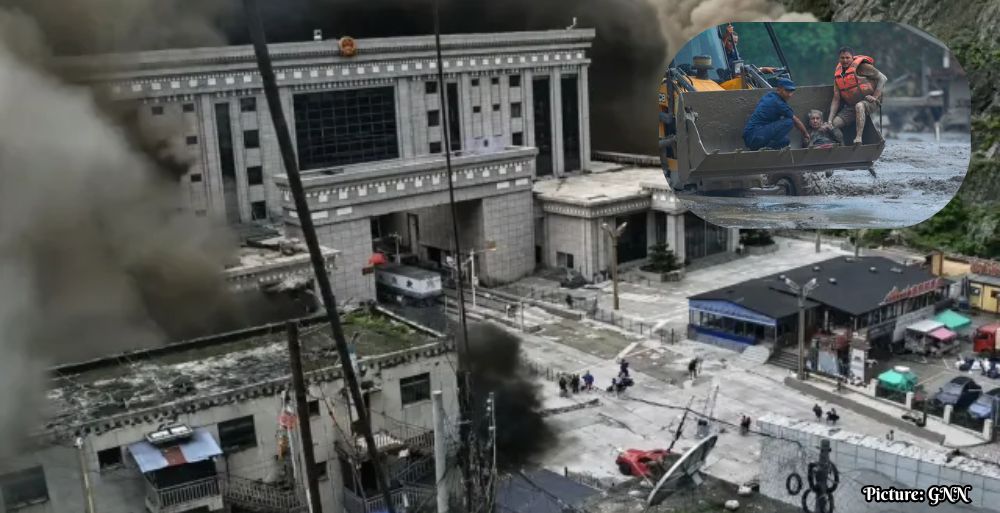
The Nepalese government has urgently requested specialized assistance from neighboring countries to bolster ongoing search and rescue efforts following catastrophic floods that have claimed hundreds of lives and left thousands unaccounted for.
The Nepalese government has called for immediate support from neighboring nations to aid in search and rescue operations following devastating floods that have resulted in a rising death toll and a significant number of missing individuals. As of Saturday, the official count indicates that at least 675 people have died due to the floods, with nearly 3,000 individuals reported missing, raising urgent concerns over the scale of the disaster and the effectiveness of ongoing rescue efforts.
According to the National Disaster Risk Reduction and Management Authority (NDRRMA), the confirmed death toll includes 669 fatalities within Nepal and seven in Tibet, bringing the total number of casualties to 682. The agency has also reported that 2,426 people are considered missing in Nepal, while 554 are unaccounted for in Tibet. The missing list includes not only local residents but also 517 foreigners and numerous workers from hydropower projects in the affected areas.
Rescue Operations Intensified
In light of the urgent situation, the Nepalese Ministry of Foreign Affairs has outlined specific types of support needed from neighboring countries. This includes specialized assistance with tunnel rescues, advanced technologies to locate survivors, rapid forensic and DNA analysis capabilities, and mortuary facilities for the deceased. An 11-member specialized technical reconnaissance team from India has already been mobilized to assist with tunnel rescues, and a similar team from China is expected to arrive shortly.
Rescue operations are particularly concentrated on the Trishuli 3A and 3B hydropower sites, where it is believed that over 100 workers may still be trapped inside debris-filled tunnels. Rescue teams have begun sending air pipes into these tunnels to facilitate communication and provide necessary oxygen to trapped individuals. The Ministry of Energy has reported partial success in drilling operations, with plans to send cameras into the affected areas to assess conditions and locate survivors. However, rescuers face significant challenges, including the accumulation of mud and limited access points for helicopters, complicating their efforts.
International Aid and Climate Concerns
The international community’s response to the disaster has begun to take shape, as China has offered to share crucial water and satellite data to assist Nepal in assessing the situation. During a recent conversation, Nepal’s Foreign Minister Shisir Khanal and his Chinese counterpart Wang Yi agreed to enhance the sharing of hydrological data, emphasizing the importance of cooperation in addressing the challenges posed by climate change in the Himalayan region.
Minister Khanal has raised alarms about the growing implications of climate change for Nepal, stating that there is an urgent need for further research to understand the changing dynamics of the Himalayan ecosystem and the associated risks. He noted that these risks not only affect Nepal but also extend to neighboring regions, highlighting the interconnected nature of environmental challenges in the area.
Personal Stories From the Ground
The human toll of the disaster is becoming increasingly apparent as families share their harrowing experiences. For instance, a British woman named Sammy Gecsoyler recounted how she was able to locate her missing mother and aunt through a TikTok video that provided their last known location. Hemangini Jitendra Patel and her sister, Hema Sunil Amin, were on a pilgrimage in Nepal when they lost contact with family members, prompting a frantic search effort.
As rescue operations unfold, numerous families are anxiously awaiting news regarding their loved ones. Reports indicate that at least 33 UK citizens are among the missing, including NHS workers and a priest who was leading a group on a pilgrimage to Mount Kailash. The anxiety and uncertainty faced by these families underscore the human impact of the flooding disaster.
Government Position and Future Outlook
In response to media reports suggesting that Nepal had declined international assistance, Foreign Minister Khanal publicly refuted such claims, labeling them as “entirely false.” He emphasized that continued support from the international community is critical for immediate relief efforts and will be essential for long-term reconstruction following the flooding.
The Nepalese disaster agency continues to closely monitor the situation as rescue operations progress. As communities begin to assess the extent of the damage, the government is preparing for substantial recovery efforts that are expected to require billions of dollars in funding. The scale of the destruction raises pressing questions about the long-term resilience of infrastructure and the need for enhanced disaster preparedness in the face of climate challenges.
Community Resilience amid Crisis
As the situation develops, the focus remains on locating missing individuals and providing essential aid to affected populations. Local communities are mobilizing to support each other in the aftermath of the floods, showcasing resilience in the face of adversity. The international community’s response, alongside local efforts, will play a critical role in determining how swiftly and effectively Nepal can recover from this devastating disaster.
With search and rescue efforts ongoing, the hope remains that more survivors will be found and that the necessary support will be mobilized to aid those affected by this catastrophic event. The unfolding crisis highlights the critical importance of international solidarity and cooperation in responding to natural disasters.