Award-winning film ‘Woman Unknown’ by May el-Toukhy takes home the Golden Lion at the Venice Film Festival, while the documentary ‘NAZA’ receives the special jury prize, highlighting significant narratives in contemporary cinema.
The 80th Venice Film Festival concluded with an awards ceremony that celebrated a diverse range of cinematic achievements, notably the Danish-Egyptian film ‘Woman Unknown,’ directed by May el-Toukhy, which won the prestigious Golden Lion. The festival took place on September 10, 2023, showcasing a blend of storytelling that reflects both historical and contemporary issues.
‘Woman Unknown’ is set in the immediate aftermath of Denmark’s liberation from Nazi occupation. The film centers on Marie, portrayed by Mathilde Arcel, a young housemaid poised to marry her widowed employer. However, she is burdened by a secret from her past: during the war, she had an intimate relationship with a German soldier. The narrative explores themes of identity, shame, and the echoes of history that women often face.
The film received high praise from critics, with The Guardian’s film critic describing it as “elegantly appointed” and drawing comparisons to Alfred Hitchcock’s classic ‘Rebecca.’ The Venice Film Festival jury recognized Arcel’s performance as outstanding, awarding her the Volpi Cup for Best Actress. This dual recognition for ‘Woman Unknown’ is noteworthy, as it is uncommon for a single film to receive multiple awards at the festival. Jury president Maggie Gyllenhaal remarked on the unanimous decision to award Arcel, stating, “She is going to blow our socks off.”
Significance of Female Representation
In her acceptance speech, El-Toukhy expressed deep gratitude for the festival’s recognition of female filmmakers, noting that ‘Woman Unknown’ was the only film in competition directed solely by a woman. She emphasized the challenges faced in creating the film, citing logistical, financial, and emotional hurdles. “What kept me going was the urgent need to illuminate the unknown women of our common history, to make them known,” El-Toukhy said, highlighting the film’s thematic focus on underrepresented narratives.
Additional Awards and Controversies
The Grand Jury Prize was awarded to Korean director Lee Chang-dong for ‘Possible Love,’ a film that explores the complexities of an unhappy marriage through the lens of a documentary filmmaker’s relationship with a wealthy husband. The film garnered widespread acclaim, further solidifying Lee’s reputation in international cinema.
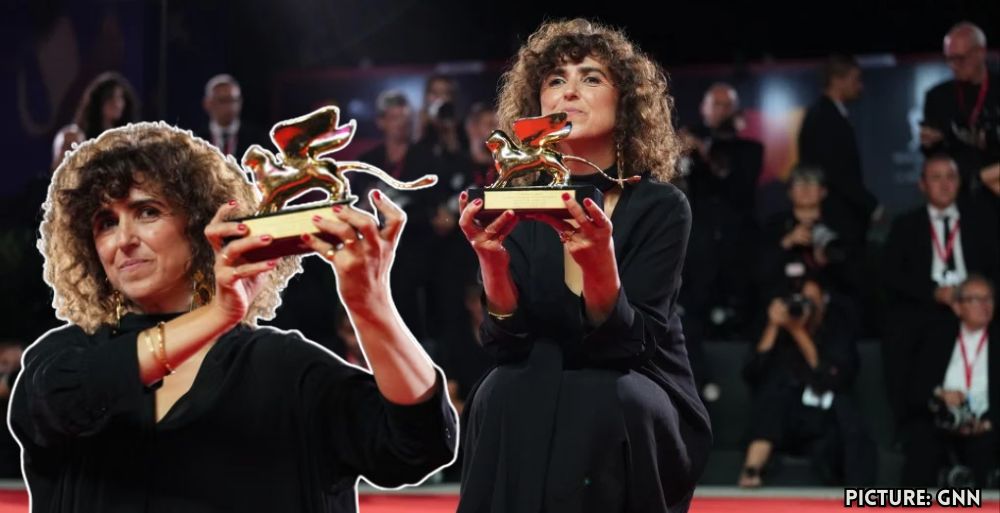
The Special Jury Prize, an accolade considered a significant recognition, was awarded to the documentary ‘NAZA’ by directors Yuval Abraham and Rachel Szor. The film delves into the contentious issue of Israel’s military actions in Gaza, utilizing testimonies from Israeli military insiders to explore the impact of AI technology in warfare, specifically regarding civilian casualties. The film’s title is derived from an acronym used by the Israeli intelligence service to predict civilian fatalities during airstrikes.
During the acceptance speech for ‘NAZA,’ Abraham addressed the backlash from Israeli politicians and journalists, stating, “It’s honestly not very easy to stand here, thinking of all the Israeli politicians and journalists who are now attacking this film and denying it without even seeing it.” The Israeli military responded by categorically denying the allegations made in the documentary, indicating the film’s polarizing nature and the broader discourse surrounding its content.
Other Notable Recognitions
In addition to the major awards, the festival recognized Russian director Ilya Khrzhanovsky with the Silver Lion for Best Director for his film ‘DAU,’ a biopic of the Nobel Prize-winning physicist Lev Landau. The inclusion of ‘DAU’ sparked controversy due to its lead actor’s previous statements regarding the ongoing conflict in Ukraine, prompting criticism from the Ukrainian government prior to the festival.
John Malkovich received the Volpi Cup for Best Actor for his role in ‘Wild Horse Nine,’ portraying an erratic CIA agent confronting ethical dilemmas following a cancer diagnosis. Malkovich accepted the award via video link, expressing his appreciation for the recognition amidst a long history of esteemed winners at the Venice Film Festival.
The festival also honored several other films, including the Best Screenplay award for ‘Un bon petit soldat’ by Stéphane Brizé, Coralie Amédéo, and Olivier Gorce, and the Marcello Mastroianni Award for Best Young Actor was awarded to Malou Khebizi for her performance in ’15/18 A Place to Heal.’
This year’s Venice Film Festival not only highlighted exceptional cinematic works but also underscored vital conversations about representation, historical narratives, and the impact of film in contemporary sociopolitical contexts.