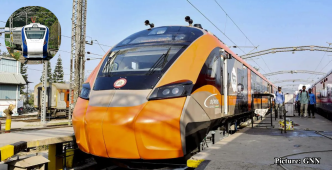
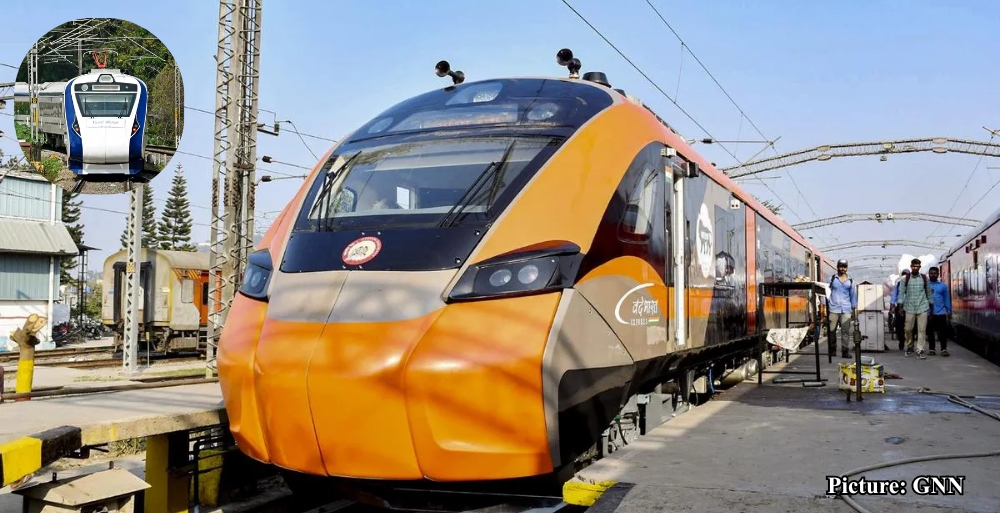
The Vande Bharat Express sleeper train, launched in January 2026, has quickly become a symbol of modern Indian rail travel, attracting significant interest and offering a new travel option between major cities.
As heavy rain cascaded over Kolkata’s Howrah Junction station, a crowd of eager passengers gathered on platform six, snapping selfies with the newly launched Vande Bharat Express sleeper train. Launched in January 2026, this service marks the inaugural sleeper option within India’s semi-high-speed Vande Bharat fleet, which has been a source of national pride since its introduction in 2019. The excitement surrounding the train was palpable, as many travelers eagerly awaited their chance to experience this modern mode of rail travel.
The name Vande Bharat translates to “Salute to India” in Sanskrit, and the fleet has been touted as a cleaner and more contemporary alternative to India’s older long-distance train services. Featuring aerodynamic designs, automatic sliding doors, and comfortable interiors, the Vande Bharat Express has been described as a significant upgrade. The Times of India characterized the sleeper carriages as “stunning” and “swanky”—terms not typically associated with Indian long-distance trains—while Prime Minister Narendra Modi has personally inaugurated several of these trains, further enhancing their status as symbols of Indian ambition and technological advancement.
Ticket Pricing and Accessibility
The pricing structure for the Kolkata-Guwahati route reflects the service’s dual appeal to business travelers and tourists alike. Third-class tickets are priced at approximately 2,400 rupees (£19), accommodating six berths in an open-plan compartment. Second-class tickets cost around 3,100 rupees (£25) for four berths partitioned by curtains, while first-class tickets are available for about 3,800 rupees (£30) for shared cabins. Given that the average monthly wage in India is approximately 21,000 rupees (£165), these fares may be prohibitively expensive for many, indicating that the sleeper train primarily caters to business travelers seeking a more comfortable alternative to air travel.
However, the route also serves a broader demographic. Guwahati, the train’s terminal point, is renowned for the Kamakhya Temple, a significant Hindu pilgrimage site that draws visitors from around the country. Additionally, the train stops at New Jalpaiguri Junction, an access point for the famous tea fields of Darjeeling. From Guwahati, travelers can further explore Shillong, a picturesque hill station often referred to as the “Scotland of the East,” or visit Pobitora Wildlife Sanctuary, known for its population of one-horned rhinoceroses.
Government Ambitions for Rail Development
The Indian government has framed the Vande Bharat trains as a “new phase in India’s premium passenger rail services,” linking this advancement to its broader vision for the country’s development by 2047. This ambitious plan includes operationalizing 800 Vande Bharat trainsets by 2030, expanding to 4,500 by 2047. Such goals underscore the government’s commitment to modernizing the nation’s rail infrastructure and enhancing connectivity across regions, aligning with India’s aspirations for economic growth and development.
Onboard Experience
During a recent journey on the Kolkata-Guwahati service, passengers were treated to a meal that included chicken curry, dal, rice, potato, broccoli, flatbread, and a traditional Assamese milk sweet. While the meal was appreciated, it was served lukewarm, highlighting an area for improvement in service quality. Tickets for the service can be booked through the Indian Railways’ official IRCTC website, with travelers outside India often finding third-party platforms like 12Go more user-friendly, albeit with potential agency fees. Due to high demand on popular routes, particularly between Kolkata and Guwahati, advance booking is strongly recommended to secure berths.
The Kolkata-Guwahati service operates six times a week, completing the journey in approximately 14 hours—an improvement over the up to 18 hours required by older train models. The route traverses India’s narrow land corridor between Bhutan and Bangladesh, with notable stops including New Jalpaiguri Junction for Darjeeling, Barpeta Road for Manas National Park, and New Cooch Behar, known for its royal architecture.
Despite the new train’s design and amenities, some travelers reported challenges in acquiring restful sleep due to the distractions posed by fellow passengers’ mobile phones, which pinged throughout the night. One traveler noted that the noise persisted until the early hours, although the train’s smooth operation eventually fostered a comfortable atmosphere for rest. For individuals over 1.9 meters (6 feet 2 inches) tall, the berths offered ample space, allowing them to stretch out comfortably without the usual concern of being cramped by passing passengers.
The introduction of the Vande Bharat sleeper service is not merely a technological advancement; it represents a broader commitment to enhancing Indian rail travel, promoting tourism, and fostering economic growth. As the government continues to invest in rail infrastructure, the Vande Bharat Express stands out as a beacon of modernity and progress, reflecting India’s aspirations on the global stage. This service not only aims to connect cities but also to bridge the cultural and economic divides that exist within the country.