India’s Ministry of External Affairs has issued a firm rebuttal to criticisms from Dutch officials regarding press freedom and minority rights, attributing these concerns to a misunderstanding of the country’s historical and social diversity.
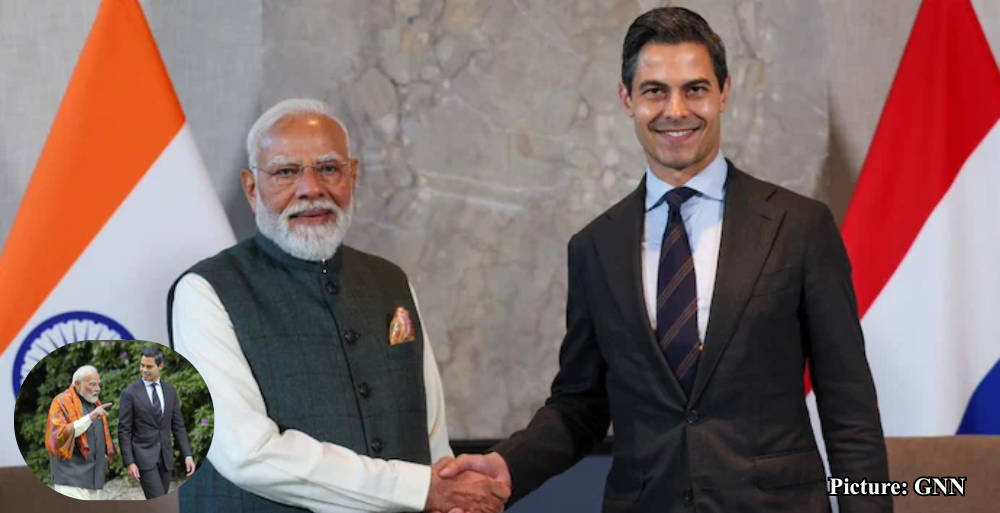
New Delhi, India – In a significant diplomatic exchange on Sunday, India categorically rejected concerns raised by Dutch officials about the status of press freedom and minority rights within its borders. This response was articulated during a press briefing in The Hague, where senior Indian officials addressed queries from journalists ahead of a scheduled meeting between Indian Prime Minister Narendra Modi and Dutch Prime Minister Rob Jetten.
During the briefing, Sibi George, Secretary (West) in India’s Ministry of External Affairs, emphasized that the concerns expressed by Dutch officials stem from a “lack of understanding” regarding India’s complex history and its social fabric. With a population exceeding 1.4 billion, India is characterized by a rich tapestry of cultures, languages, and religions that have evolved over more than 5,000 years.
Understanding India’s Historical Context
George elaborated on the historical context of India’s diversity, pointing out that the country has served as a refuge for various persecuted communities throughout its history. “Every religion… whenever any part of the world there was persecution in the past, they all came to India and thrived in India,” he remarked. This statement aimed to underscore India’s longstanding tradition of multiculturalism and coexistence.
Despite the government’s assertions of inclusivity, international observers and human rights advocates have raised concerns regarding the treatment of minority communities in India. Reports documenting discrimination and violence against various groups, including religious minorities and marginalized communities, have prompted scrutiny from both domestic and international stakeholders.
Press Freedom Concerns
On the topic of press freedom, Secretary George characterized India as a “noisy democracy,” suggesting that the vibrancy of media discourse reflects a robust environment for free expression. He stated, “Everyone has the freedom of expression, freedom of press in the country.” This assertion comes amidst a global discourse on media suppression and the rights of journalists, particularly in regions where dissent is met with hostility.
Critics of the Indian government argue that certain laws and regulations have created an environment of fear among journalists, leading to self-censorship and reduced investigative reporting. High-profile incidents of violence against reporters and legal actions against those who criticize the government have fueled perceptions of a deteriorating media landscape. Journalists in India have faced intimidation and, in some cases, imprisonment, raising alarms about the safety and freedom of the press.
Diplomatic Context and International Relations
The concerns expressed by the Dutch side reportedly emerged during discussions on bilateral relations and were not officially confirmed by Prime Minister Jetten himself. Nevertheless, these discussions resonate with broader apprehensions articulated by various international bodies regarding human rights practices in India. The meeting between Modi and Jetten was expected to cover a range of topics, including trade, technology, and environmental cooperation.
As Prime Minister Modi embarks on a four-nation European tour, which includes visits to the Netherlands, Sweden, and Norway, these diplomatic engagements are viewed as essential for enhancing India’s international partnerships, particularly amid ongoing geopolitical tensions. Modi’s government aims to strengthen economic ties and collaborative initiatives in technology and renewable energy, especially in light of shifting global dynamics influenced by conflicts such as the ongoing situation in Ukraine.
The Indian government has consistently emphasized its commitment to fostering a diverse and inclusive society, even as it confronts growing scrutiny from international forums. The dialogues between India and the Netherlands will be closely monitored by analysts and stakeholders concerned about the future of democratic practices in the region.
Implications for India-Dutch Relations
The exchange of views on minority rights and press freedom highlights the complex dynamics at play in international relations, where domestic policies often become focal points for diplomatic discussions. As global scrutiny of human rights practices intensifies, nations like India may find themselves balancing their internal policies with the expectations and criticisms of international counterparts.
In conclusion, as India navigates its foreign policy amidst global challenges, the ongoing dialogues with nations such as the Netherlands will likely shape not only bilateral relations but also the broader narrative concerning democracy and human rights within India. The outcomes of the Modi-Jetten meeting and subsequent interactions between the two nations will be pivotal in determining the trajectory of India’s international relations and its domestic policy landscape.