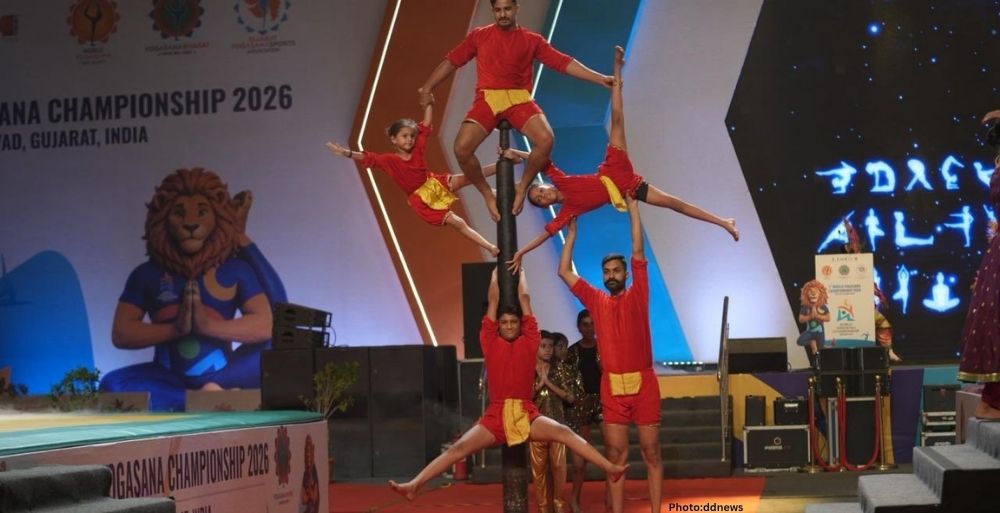
India showcased its prowess at the inaugural World Yogasana Championship 2026, clinching 102 gold medals out of a total of 114 medals during the five-day event held in Ahmedabad, marking a significant milestone for the sport.
The inaugural World Yogasana Championship 2026 concluded on June 8 at the EKA Arena in Ahmedabad, India, where the host nation dominated the competition by securing an impressive total of 114 medals, including 102 golds. This event, which highlighted the growing international recognition of yogasana, featured 522 athletes from 79 countries competing over five days.
Medal Distribution and Performance Insights
India’s remarkable medal tally underscores its preeminence in the sport. Japan trailed significantly in the standings, finishing in second place with a total of 11 medals, comprised of three gold, three silver, and five bronze. Argentina secured third place, largely due to the outstanding performance of Nabila Barraza, who emerged as the championship’s most successful athlete, clinching two gold medals and three silver medals across various events.
In total, 31 nations earned at least one medal, with ten countries achieving gold status. Notably, Nepal, while finishing fifth in the overall medal table, was the second-most successful nation in terms of total medals, accumulating 52 awards, including one gold, 36 silver, and 15 bronze. Uzbekistan also made a commendable showing with a total of 25 medals, featuring one gold, 13 silver, and 11 bronze.
Event Structure and Competitive Categories
The five-day championship was organized into several competitive categories, showcasing a variety of yogasana disciplines. Competitions included traditional yogasana, as well as artistic events in single, pair, group, and rhythmic formats. Athletes also demonstrated their skills in specialized categories such as forward bend, back bend, twisting body, hand balance, leg balance, and supine events.
India’s contingent comprised 122 athletes across six age categories: sub-Junior (10-14 years), junior (14-18 years), senior (18-28 years), senior A (28-35 years), senior B (35-45 years), and senior C (45-55 years). This extensive representation reflects India’s commitment to nurturing talent within traditional sports and fostering a competitive environment for youth athletes.
Historical Context and Growing Recognition of Yogasana
The World Yogasana Championship represents a pivotal moment for a sport that has gained increasing recognition in recent years. The term ‘yogasana’ is derived from the Sanskrit words ‘yuj,’ meaning to unite, and ‘asana,’ referring to body posture. In this competitive format, athletes are judged on their flexibility, balance, endurance, stability, and control while executing a series of postures.
The elevation of yogasana as a competitive sport in India has been bolstered by various initiatives aimed at promoting indigenous disciplines. Notably, yogasana was included in the Khelo India Youth Games in 2021 and is set to feature at the National Games 2025 in Uttarakhand. These initiatives have played a crucial role in creating a platform for young athletes to engage in and excel at traditional sports.
Implications for the International Sporting Community
The success of the Indian contingent at the World Yogasana Championship 2026 is not only a reflection of the country’s dedication to promoting traditional sports but also sets a precedent for future international competitions. As more nations engage in yogasana, the potential for the sport to attract a broader global audience appears promising. This event has significant implications for the international sporting community as it seeks to diversify the types of competitions available.
Furthermore, the inclusion of yogasana in major sporting events raises the possibility of its evolution into a recognized Olympic sport. The International Olympic Committee has shown increasing openness to incorporating traditional and culturally significant sports, which could pave the way for yogasana’s inclusion in future Olympic Games. With its established roots in Indian culture and its growing international presence, yogasana stands at the brink of becoming a significant player on the global sports stage.
Conclusion: A Bright Future for Yogasana
The inaugural World Yogasana Championship 2026 has set a significant precedent for the future of this discipline on the global stage. India’s overwhelming success not only showcases its deep talent pool but also reflects a broader trend of revitalizing and promoting indigenous sports. With ongoing efforts to institutionalize these practices and encourage youth participation, yogasana is poised to secure a significant place within the international sports landscape.
As the sport continues to evolve and gain recognition, its future appears bright. The success of this championship may inspire further international events, fostering greater participation and collaboration among nations. The implications of this championship extend beyond sports, potentially contributing to cultural exchange and understanding through the universal language of athletic competition.