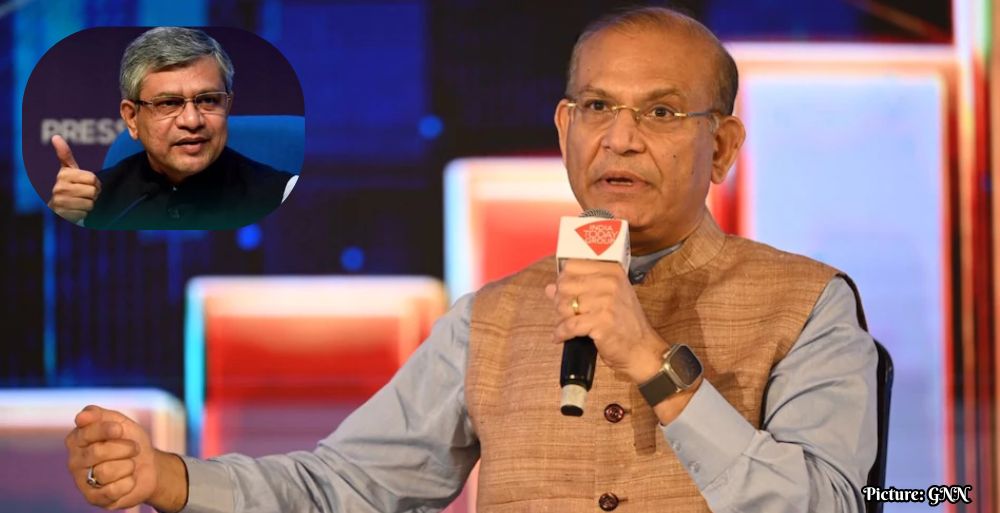
India’s Finance Minister Jayant Sinha has outlined ambitious goals for the country’s economy, emphasizing the need for significant investment and broader regional growth to achieve a $30 trillion economy by mid-century.
NEW DELHI – India’s Finance Minister Jayant Sinha has called for a monumental shift in investment strategy as the nation aims to reach a $30 trillion economy by 2050. Speaking at a recent economic forum, Sinha highlighted that India’s current growth rate of 6-7% is insufficient to meet long-term economic aspirations. He noted that achieving an annual growth rate of 8-10% is essential to harness the potential of India’s young population and emerging sectors such as artificial intelligence and green technologies.
Sinha’s remarks come at a time when India is grappling with the economic challenges posed by global uncertainties. He pointed out that while India has built a resilient economy capable of weathering such shocks, the challenge lies in accelerating growth to meet the country’s ambitious targets. “The challenge for us as everybody says is while we have the demographic advantage to grow at 8 or 9 or 10% and get to the 30 trillion. That’s the real challenge for us,” Sinha stated.
Investment Gap and Economic Comparison with China
One of the most pressing issues identified by Sinha is the significant investment gap that India faces to achieve its growth ambitions. He referenced China’s economic trajectory, noting that when China’s economy was approximately $4 trillion, it was investing about 40-42% of its GDP. In contrast, India currently invests around 30-31% of its GDP. To align with the investment intensity seen in China at a similar economic stage, India would need to increase its investment by about 10 percentage points of GDP, which translates to an additional $400 billion annually.
“So to be able to grow as fast as China did… we have to be investing 10% more than we are investing. What is 10%? 10% is $400 billion,” Sinha explained, underscoring the magnitude of the challenge ahead for India.
According to Sinha, achieving this investment level is not merely about the availability of capital. He emphasized the need to create an environment that generates attractive and consistent returns for investors. “It’s not about capital. There is more than enough capital in the world. It’s actually about returns,” he remarked, suggesting that enhancing decision-making speed and execution efficiency is crucial.
The Importance of Job Creation and Skill Development
In addition to increasing investment, Sinha stressed the necessity of creating jobs for India’s burgeoning young population. He indicated that transforming the workforce by equipping youth with high-level skills is imperative to compete with labor forces in advanced economies like the United States, Germany, and Japan.
With India’s current GDP per capita hovering around $2,700-2,800, disparities within the country are stark. Sinha highlighted that states such as Bihar and Jharkhand have per capita incomes of approximately $800 and $1,000, respectively. He affirmed that for India to transition successfully to a $30 trillion economy, growth must extend beyond established metropolitan areas and include less developed regions.
“If we really have to get to $30 trillion and we have to grow quickly, eastern India will have to participate in that growth,” he asserted. Sinha singled out Kolkata as a pivotal city that could serve as an economic engine for the wider eastern region, akin to the roles played by Bengaluru, Chennai, Mumbai, and Delhi in their respective territories.
Demographic Pressures and the Need for Timely Action
Another layer of urgency surrounding India’s growth ambitions is the nation’s demographic profile. India is home to a large young population, but Sinha cautioned that this advantage is time-limited. He stated, “We have a lot of young people that we have to make very productive, highly skilled, fit them into a 21st-century economy, and in 20 or 25 years these very same young people will be older people.”
Thus, India must not only increase investment but also create productive jobs, enhance skill levels, and develop new economic hubs to leverage its demographic dividend effectively, he said. Sinha described this comprehensive strategy as a “green frontier development model,” which is focused on the transformations of people, technology, and energy.
Ultimately, Sinha stressed that achieving the $30 trillion goal requires ongoing improvement in competitiveness rather than viewing the milestone as a final destination. “It’s a race we are in. So, we have to evolve. We have to keep getting better,” he concluded, highlighting the dynamic nature of economic progress.