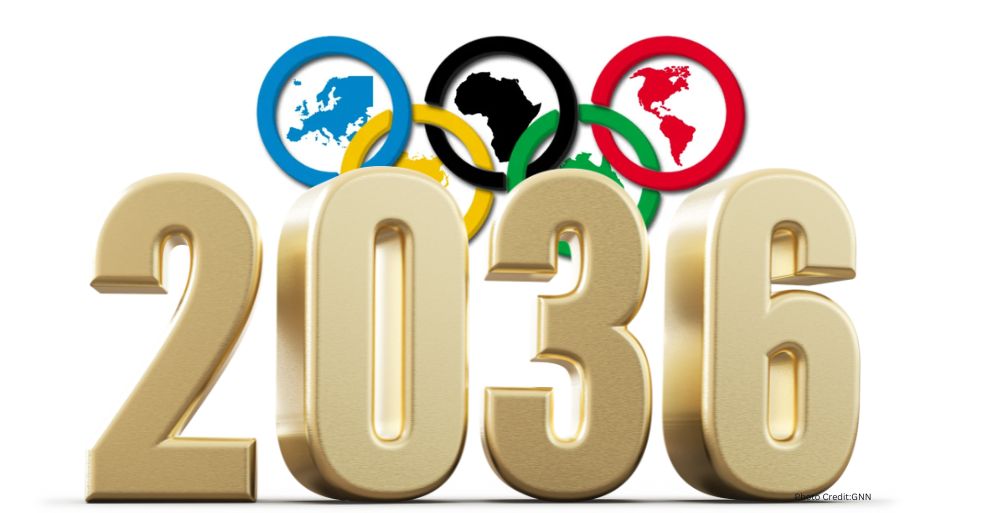
India is among seven nations actively pursuing the opportunity to host the 2036 Olympic and Paralympic Games, as outlined by the International Olympic Committee’s new selection roadmap.
New Delhi, Oct 6 – India’s pursuit to host the 2036 Olympic and Paralympic Games has officially progressed into a new phase following the International Olympic Committee (IOC) releasing a comprehensive roadmap for selecting the host city. Currently, India is one of seven nations—including Germany, Hungary, Qatar, the Republic of Korea, South Africa, and Türkiye—in discussions with the IOC regarding their interest in hosting the Games. This development marks a significant step for India as it seeks to host the world’s preeminent sporting event for the first time in history.
On October 1, 2024, the Indian Olympic Association (IOA) formally submitted a Letter of Intent to the IOC’s Future Host Commission, signaling India’s commitment to hosting the prestigious event. The letter initiates a structured engagement with the IOC, which is essential for advancing the bid through the multilayered selection process outlined by the committee.
Understanding the IOC’s Selection Process
The IOC’s Future Host Commission is responsible for overseeing the selection process for future Olympic Games. The recently published handbook details a multi-stage selection process that will culminate in the awarding of hosting rights. The IOC’s Executive Board is expected to shortlist interested parties by March 2027, following which feasibility assessments of the bids will commence.
In an official statement, IOC President Kirsty Coventry emphasized the importance of the athlete experience in planning for the Games. “I was fortunate to compete at five Olympic Games, across four continents. Each had its own character,” Coventry stated. She underscored that the essence of the Olympic experience centers around athletes, who dedicate years to achieving their Olympic dreams. “That is why, for every future host, delivering the best possible experience for the athletes must always be the starting point,” she added.
Key Milestones in the Bid Timeline
According to the IOC’s new roadmap, interested parties will present their proposals virtually to the Future Host Commission in November 2026. Following these presentations, the IOC will conduct thorough feasibility assessments by March 2027. This will lead to a Strategic Dialogue phase with shortlisted candidates, during which detailed evaluations will be made.
India and the other contenders will be assessed based on several essential criteria, including their venue masterplan, athlete experience, funding strategies, political and public support, Games delivery capabilities, and long-term legacy plans. The evaluations will also consider how each bid aligns with local development plans and the broader objectives of the Olympic Movement, which promotes peace, unity, and international cooperation through sport.
Final Stages and Important Deadlines
The selection process is projected to enter its final stage in December 2028, when the IOC’s Executive Board will engage in targeted discussions with a select number of preferred hosts. These preferred candidates will be required to provide comprehensive responses to a detailed questionnaire, along with a full set of guarantees regarding their ability to host the Games.
The final decision on the host city for the 2036 Olympic and Paralympic Games is expected to be made by IOC Members during a session scheduled for mid-2029. Additionally, the IOC has set a firm deadline of October 31, 2026, after which no new interested parties will be considered for the 2036 Olympic cycle.
Implications of India’s Bid
India’s bid for the 2036 Games reflects not only the nation’s growing ambitions in the realm of international sports but also its capacity to host large-scale events. The country’s recent experiences in hosting major sporting events, such as the Commonwealth Games and the FIH Hockey World Cup, bolster its credentials as a potential host for the Olympics.
Hosting the Olympics could bring substantial economic benefits, including increased tourism, infrastructure development, and global visibility. However, it also poses significant challenges, including the need for extensive planning, funding, and public support. As India prepares for this competitive journey, stakeholders will need to develop a comprehensive strategy that meets the expectations of the IOC while delivering an unparalleled experience for athletes, officials, and spectators alike.
In conclusion, as the bidding process for the 2036 Olympic and Paralympic Games unfolds, India will face considerable competition from the other interested countries. The coming years will be critical as the nation works to refine its proposal, engage with the IOC, and rally public and political support for this ambitious endeavor. The outcomes of this bid could significantly impact India’s position in the global sports arena and its ability to host large international events in the future.