As the United Nations General Assembly convenes, member states emphasize the urgent need for reform within the UN, particularly the Security Council, to ensure its relevance and effectiveness in addressing contemporary global challenges.
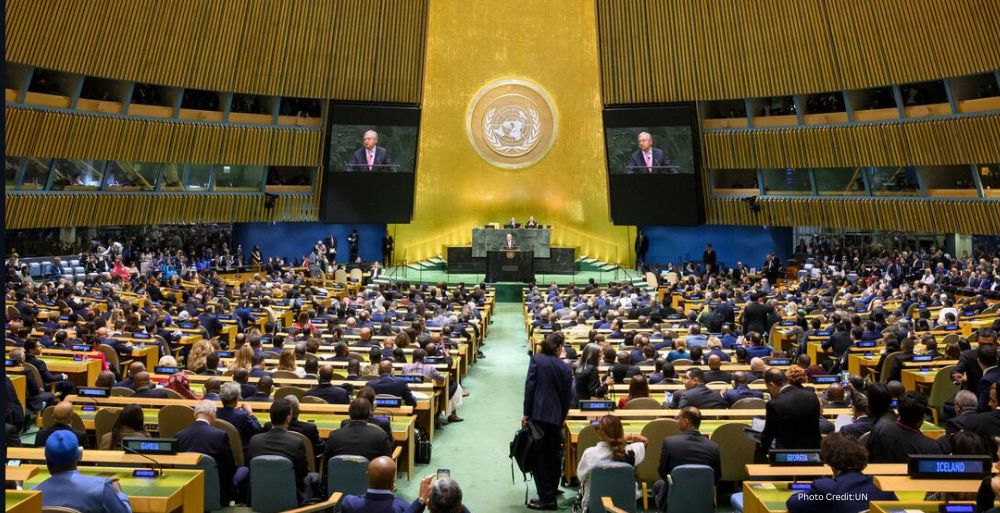
NEW YORK — During the annual General Debate of the United Nations General Assembly on September 23, 2023, representatives from 193 member states underscored a collective sentiment: for the United Nations (UN) to maintain its credibility and effectiveness, it must adapt to the geopolitical realities of the 21st century. Central to these discussions was the urgent call for reform of the UN Security Council, with numerous delegates highlighting the disconnect between the current structure and the modern global landscape.
UN Secretary-General António Guterres articulated this need succinctly, stating, “The United Nations exists because power requires rules – and humanity needs a place where power answers to principle.” This assertion reflects a growing consensus among member states that the UN’s institutional framework must evolve to reflect contemporary power dynamics.
Calls for Security Council Reform
Security Council reform emerged as a pivotal topic of debate, with many speakers arguing that the legitimacy of the UN is directly linked to its representation. A recurring theme was the lack of permanent African representation in the Security Council. Kenya’s representative emphasized this point bluntly, stating, “The equality proclaimed in this Assembly ends at the doors of the Security Council.” Guyana’s delegation echoed this sentiment, asserting the need for a Security Council that mirrors the geopolitical realities of today, advocating for the inclusion of permanent seats for Africa, Latin America, and the Caribbean.
Guterres supported this perspective, calling the current status quo “indefensible,” and he noted, “A 21st century Security Council without permanent African seats is unjust and indefensible.” General Assembly President Khalilur Rahman also highlighted this issue, stating that Africa should not have to wait indefinitely for adequate representation on the Council.
Diverse Approaches to Reform
While there was broad agreement on the need for reform, the proposed solutions varied significantly among member states. Spain called for comprehensive changes that would ensure equitable representation from all regions and proposed eliminating the veto power held by the five permanent members of the Security Council. This radical suggestion reflects a growing frustration with the existing power structures that many feel are outdated.
In contrast, Russia, one of the permanent members, took a more cautious stance, supporting an increase in representation from Asia, Africa, and Latin America, but warning that reforms should not undermine the authority of the Security Council or its permanent members.
The Importance of Trust in International Cooperation
Beyond structural reform, the concept of trust emerged as a critical theme throughout the discussions. Hungary’s representative emphasized that the UN must earn trust rather than demand it, arguing that cooperation and national self-interest are not mutually exclusive. Several delegations raised concerns regarding the selective application of international law and the perceived unequal treatment of states, which they argued erodes public confidence in international institutions.
Operational Effectiveness and Resource Allocation
As the UN initiatives, such as the UN80 Initiative, aim to enhance the organization’s coherence and effectiveness, member states presented varying visions of operational reform. Switzerland and Costa Rica called for prioritization, efficiency, and measurable results to improve the UN’s responsiveness to contemporary challenges. However, concerns were raised that reform should not merely focus on cost-cutting measures.
China reinforced this notion, asserting that reform should aim to enhance institutional performance rather than simply reduce budgets and responsibilities. Guyana further argued that the UN’s resources must align with its responsibilities, while Spain advocated for increased funding and executive capacity for UN agencies and programs.
Evaluating the UN’s Purpose
A recurring question among delegates was whether the UN can effectively address the pressing issues facing the world today. General Assembly President Rahman articulated this concern, stating, “Outside these walls, people are not asking whether the United Nations still exists. They are asking whether it works.” This statement reflects a critical perspective that underscores the importance of tangible outcomes over procedural adherence.
The United States presented a contrasting approach, proposing a reduction of the UN budget by 15 percent for 2026, which includes the elimination of over 4,000 positions within the UN bureaucracy, while also advocating for limited international involvement in matters considered national prerogatives.
A Unified Call for Resilience
Despite the diverse opinions on reform, delegates consistently returned to a shared concern: the scale and complexity of today’s global challenges have outstripped the capabilities of the existing UN structure. Guyana’s representative captured this sentiment, stating, “This is why we must not abandon multilateralism because it is imperfect; we must renew it because humanity still needs it.” This call to action reflects a collective recognition of the need for a more resilient and effective UN that can meet the demands of the contemporary world.