The Global Organization of People of Indian Origin (GOPIO) has issued a high-level formal protest to the White House following the administration’s endorsement of remarks that disparage Asian nations and challenge the 14th Amendment’s guarantee of birthright citizenship. Representing a community that contributes an estimated $300 billion annually in federal taxes, GOPIO leadership warned that such rhetoric threatens the “talent shift” necessary for U.S. global competitiveness and undermines the “Comprehensive Global Strategic Partnership” recently reaffirmed between Washington and New Delhi. The organization is calling for a formal retraction and a return to fact-based dialogue regarding the economic and social contributions of immigrant communities.
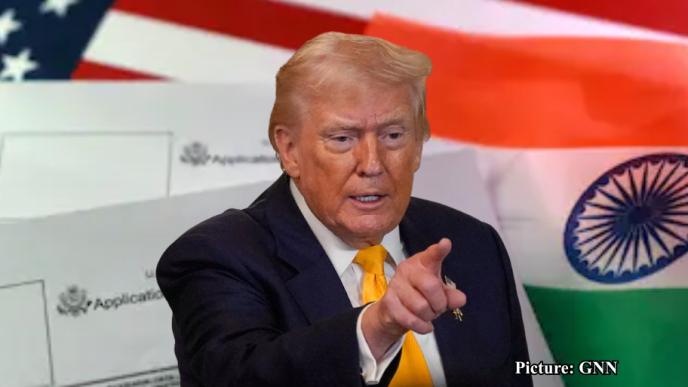
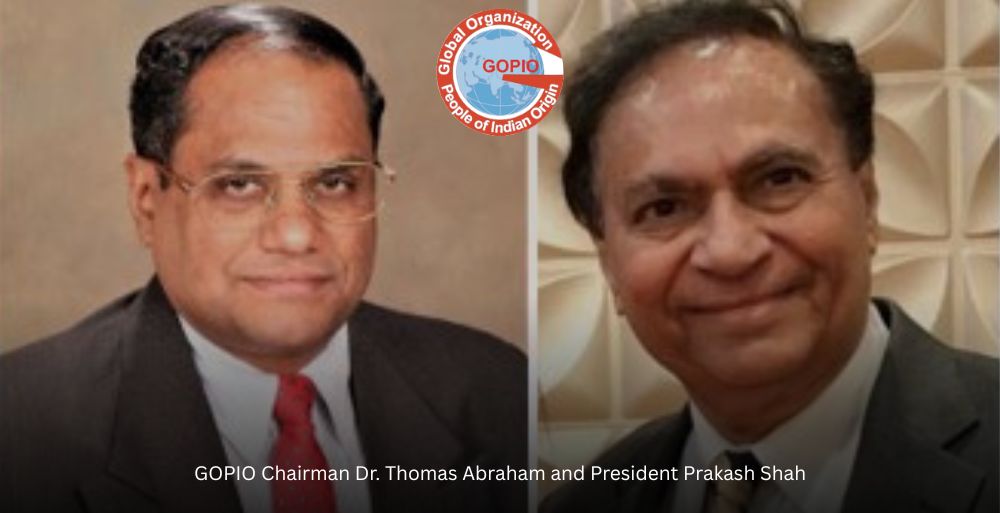
NEW YORK, NY — The Global Organization of People of Indian Origin (GOPIO) submitted a formal letter of protest to the White House on Monday, April 27, 2026, marking a significant escalation in tensions between the administration and one of the nation’s most economically influential diaspora groups. The letter, sent by GOPIO International Chairman Dr. Thomas Abraham and President Prakash Shah, directly addresses the White House’s recent promotion of rhetoric by media personality Michael Savage, which characterized India and China as “hellholes” and questioned the loyalty and legal standing of Asian Americans.
The controversy stems from an April 23 endorsement by the White House of a podcast transcript in which Savage claimed that “there’s almost no loyalty to this country amongst the immigrant class” and advocated for the termination of birthright citizenship. For the members of GOPIO, the rhetoric is seen not merely as political discourse but as a strategic threat to the stability of the millions of Indian Americans who comprise roughly 1.5% of the U.S. population yet wield outsized economic influence.
Economic Stakes and the “Talent Shift”
In their communication, Dr. Abraham and Mr. Shah highlighted a widening gap between the administration’s rhetoric and the documented economic reality of the Indian American community. Data from early 2026 indicates that Indian Americans maintain a median household income exceeding $166,000—the highest of any ethnic group in the United States—and contribute between 5% and 6% of all federal tax revenue.
“This rhetoric is a direct affront to the dignity of millions of citizens and risks undermining both the economic strength and strategic interests of the United States,” the leaders stated in the joint letter.
Dr. Abraham expressed specific concern regarding a “talent shift,” a phenomenon where highly skilled professionals in STEM, healthcare, and artificial intelligence relocate to more stable political environments. With over 75% of Indian Americans holding at least a bachelor’s degree and 40% possessing postgraduate qualifications, the organization argues that casting doubt on the legitimacy of their citizenship could trigger a “brain drain” to Canada, Europe, or back to a rapidly developing India.
Constitutional Conflict and the 14th Amendment
The timing of the White House endorsement is particularly sensitive as the U.S. Supreme Court deliberates on Barbara v. Trump, a case centered on an executive order attempting to restrict the 14th Amendment. The “loyalty” trope and the disparagement of legal birthright citizenship mentioned in the Savage podcast mirror the arguments currently being tested in the high court.
GOPIO’s letter reaffirmed that questioning birthright citizenship challenges a foundational principle of American social cohesion. Legal experts note that since its passage 160 years ago, the 14th Amendment has served as the bedrock for the American promise. “Language that diminishes these communities or suggests they are anything less than full citizens creates a permanent underclass of American families,” the letter noted, echoing concerns from legal advocacy groups like the ACLU that have filed injunctions against recent executive actions.
Global Strategic Implications
The protest also underscores a potential diplomatic rift. President Shah pointed to the global economic landscape, noting that when measured by Purchasing Power Parity (PPP), the economies of China and India are the first and third largest in the world, respectively. In 2026, China’s PPP-adjusted GDP stands at approximately $43.5 trillion, while India’s has surged toward $19.1 trillion.
The disparagement of these nations occurs just two months after the United States and India announced a landmark trade deal on February 2, 2026, which saw the U.S. slash tariffs on Indian goods from 50% to 18%. The deal, worth an estimated $500 billion in bilateral commitments, was intended to solidify a “Major Defense Partnership.”
“These nations are key global actors,” Shah emphasized. “Language that diminishes them undermines the mutual respect necessary for constructive international engagement.”
A Call for Fact-Based Dialogue
The letter concluded with a demand for the White House to retract its endorsement of the derogatory remarks and issue a reaffirmation of the values of inclusion and equal opportunity. GOPIO argued that the future strength of the United States lies in its ability to attract and empower global talent, a strength they believe is being compromised for short-term political signaling.
While the White House has not yet issued an official response to the GOPIO letter, the organization’s leaders remained firm. They noted that the Indian American community, which has founded thousands of startups in sectors like cybersecurity and clean energy, remains committed to the nation’s success but expects a level of discourse that reflects their multi-billion dollar contribution to the American treasury.
“The future strength of the United States lies in its ability to attract, retain, and empower talent from around the world,” the letter concluded. “That strength should not be compromised by rhetoric that alienates those who contribute so significantly to its prosperity.”
About GOPIO
Founded in 1989, GOPIO is a non-partisan, not-for-profit, secular organization with individual life members and chapter delegates from over 100 chapters in 36 countries. GOPIO promotes engagement, cooperation, and communication between the global Indian diaspora and local communities, fostering networks, partnerships, and civic participation worldwide.
GOPIO is a registered trademark with the U.S. Patent and Trademark Office.
Media Contact: Sid Jain, General Secretary, GOPIO, Tel: 201-889-8888