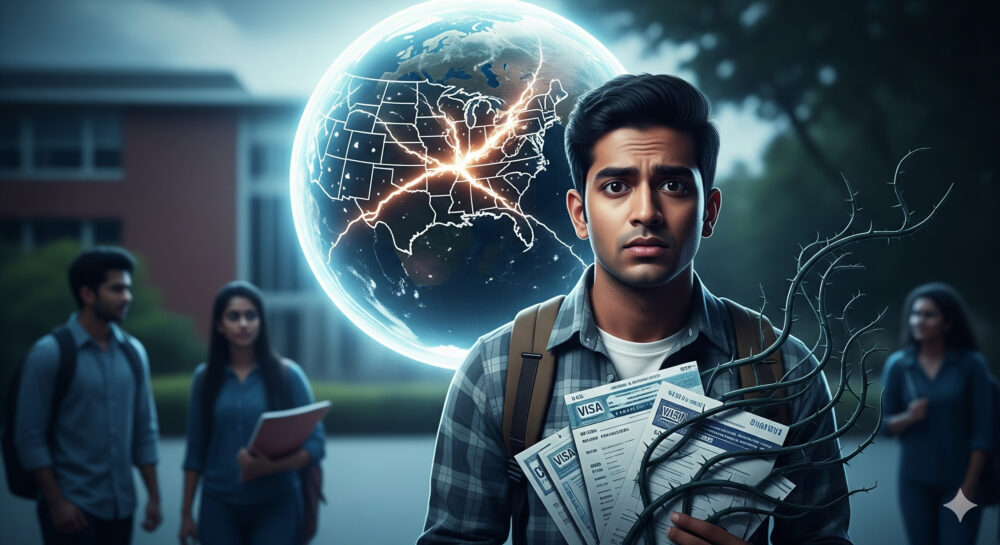
A federal court has annulled a Department of Homeland Security regulation that imposed restrictions on international student admissions and extensions, reaffirming existing immigration policies.
A federal judge has declared void a rule from the Department of Homeland Security (DHS) that sought to impose strict fixed admission periods and additional extension requirements for international students and exchange visitors. This ruling, delivered by U.S. District Judge F. Dennis Saylor IV of the District of Massachusetts, effectively preserves the current immigration framework for these individuals unless the decision is stayed or reversed on appeal.
The regulation that was vacated stipulated that international students could remain in the United States only until the end date indicated on their immigration documents, with a maximum limit of four years. Moreover, those seeking additional time to complete their studies would have been required to apply for extensions. The rule also included provisions that limited students’ abilities to transfer between educational institutions, modify their academic objectives, or enroll in additional programs.
Legal Findings and Implications
In his ruling, Judge Saylor characterized the DHS regulation as “arbitrary and capricious,” indicating that its implementation would not comply with established legal standards. This decision was preceded by a temporary ruling in September that blocked the regulation from taking effect. The court concluded that the DHS had failed to adequately consider existing monitoring and enforcement mechanisms, such as the Student and Exchange Visitor Information System (SEVIS), as potential less burdensome alternatives to the proposed regulatory changes.
Furthermore, the ruling determined that the restrictions imposed by the DHS exceeded the agency’s statutory authority, significantly affecting students engaged in doctoral research, joint degree programs, and those wishing to change their academic concentration. These limitations could have severely hampered their educational pursuits and opportunities in the U.S.
Reactions from Advocacy Groups
The ruling was met with approval from various advocacy organizations. The Foundation for India and Indian Diaspora Studies (FIIDS) commended the court’s decision, describing it as a crucial measure for protecting international students and safeguarding the broader American research and innovation sectors. FIIDS President Khanderao Kand stated, “Once again, the Court has come to the rescue of international students — and, in doing so, has helped protect the future of American science, technology, research, and innovation.” He emphasized that international students significantly contribute not only to educational institutions but also to research labs, startups, and various industries, enhancing the country’s scientific and economic competitiveness.
Neeraj Bhatia, an immigration attorney and representative for FIIDS, pointed out that the ruling recognized the detrimental impact that the proposed restrictions could have had on legitimate academic pursuits. The ruling is seen as a reaffirmation of the role of international students in the U.S. educational ecosystem, which has been a vital part of America’s global standing in higher education.
Status of Current Policies
The recent ruling has provided relief for international students, researchers, and their families who faced uncertainty due to the proposed changes. The FIIDS has urged the DHS and the U.S. Citizenship and Immigration Services (USCIS) to issue clear guidance to universities and affected students, ensuring that agency policies and their implementation align with the court’s decision.
As a result of this ruling, the existing duration-of-status framework remains intact. Eligible F-1 students and J-1 exchange visitors can continue to stay in the United States for the duration authorized by their respective programs, subject to applicable immigration requirements. This is crucial for maintaining the stability and continuity of their academic pursuits and research endeavors.
Potential for Appeal
The federal government retains the right to appeal this final judgment. It had previously contested a preliminary injunction issued in September, as noted by NAFSA: Association of International Educators, which was one of the plaintiffs in this case. The future of the DHS regulations now depends on the government’s response to this latest ruling and whether it will seek further legal recourse. The outcome of any potential appeal could have far-reaching implications for the policies governing international students in the U.S., as well as the overall climate for foreign academic talent.
As the debate surrounding immigration policy continues, this ruling highlights the tension between regulatory authority and the need to support educational and research opportunities for international students. The case reflects broader discussions about the role of international students in American society and the economy, especially in light of the ongoing global competition for talent in fields such as science, technology, engineering, and mathematics (STEM).