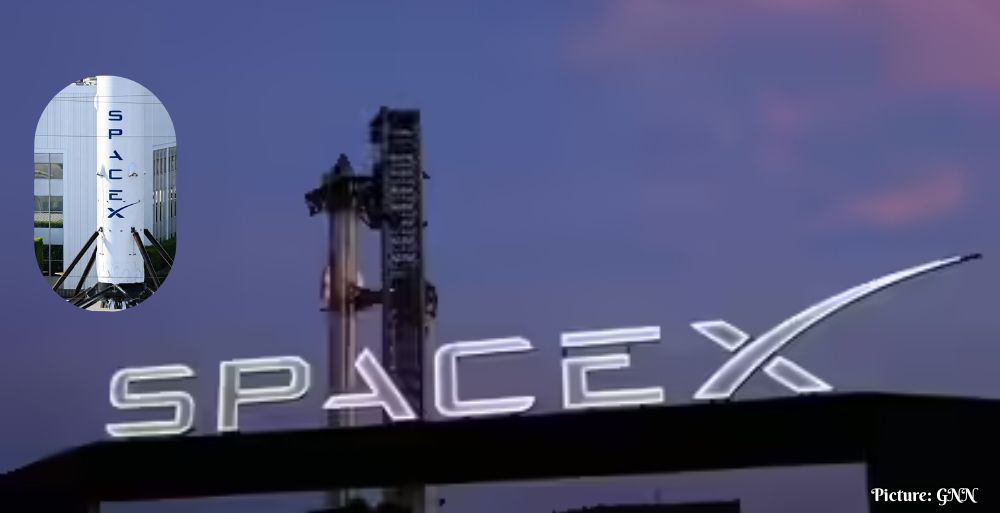
The Federal Communications Commission has granted SpaceX the authorization to deploy one million orbital datacenters, a decision aimed at supporting the rapidly growing artificial intelligence industry.
In a significant regulatory milestone, the Federal Communications Commission (FCC) announced on Wednesday that it has approved SpaceX’s request to deploy a constellation of one million orbital datacenters, marking the first instance of such an initiative receiving federal approval in the United States. This bold move is expected to support the expanding demands of the artificial intelligence (AI) sector, which is increasingly reliant on vast amounts of data processing power.
FCC Chairman Brendan Carr emphasized the importance of this initiative, asserting that it positions the United States as a leader in the transition to a more advanced civilization capable of utilizing solar energy on a monumental scale. “America is leading the world into the era of super intelligence,” Carr stated in a press release. This project aims to harness the near-constant solar power available in space, which proponents argue will significantly reduce operational costs and environmental impacts compared to traditional terrestrial datacenters.
Historical Context and Regulatory Landscape
The approval represents a remarkable step forward in the intersection of technology and regulation. Historically, the establishment of datacenters has been predominantly grounded on land-based infrastructures, which require substantial resources, including land, electricity, and water. As AI technologies evolve and their energy demands skyrocket, the need for innovative solutions has become increasingly pressing.
In its statement, the FCC highlighted that the initiative not only promises to alleviate the environmental burdens associated with conventional data centers but also aims at propelling advancements in AI technologies. The commission’s decision aligns with a broader trend in regulatory environments, which are gradually recognizing the potential of space-based solutions to address terrestrial challenges.
Technical Challenges and Criticisms
Despite the excitement surrounding the project, there are substantial technical challenges and criticisms that must be addressed. A July report published by the Government Accountability Office (GAO) noted that while space-based datacenters could alleviate some of the resource strains faced by Earth-based counterparts, significant engineering and economic barriers remain. The report pointed out that datacenters generate surplus heat, and effective cooling methods for computing hardware in space are still under investigation.
Moreover, the potential for increased satellite collisions poses significant management challenges in a more congested orbital environment. The GAO report warned that a dramatic increase in the number of satellites could complicate tracking and collision avoidance, raising concerns about the safety and sustainability of orbital operations.
Deployment Timeline and Strategic Considerations
Under the terms of the FCC’s approval, SpaceX is required to commence deployment of the orbital datacenters by November 2033. The company must deploy at least 10% of the total constellation—100,000 satellites—by November 2035 and achieve 50% deployment by November 2038. While the ambitious approval allows for the construction of one million satellites, it remains uncertain whether SpaceX will actually launch that many, particularly given that there are currently only about 17,000 satellites in orbit.
Experts in the field note that satellite operators often seek regulatory approval for larger numbers than they intend to deploy to maintain flexibility in design and deployment strategies. For instance, SpaceX had previously sought permission to deploy 42,000 Starlink satellites, of which just over 11,000 are currently operational. The success of this new initiative is heavily contingent upon advancements in SpaceX’s next-generation reusable rocket, Starship, which is still under development.
Industry Reactions and Competitor Concerns
The approval has sparked a range of reactions within the industry. Notably, Amazon’s satellite division, Leo, has raised concerns about the feasibility of SpaceX’s ambitious plans, suggesting that the timeline for deploying such a vast number of satellites may be unrealistic and could take centuries. In response to these critiques, FCC Chairman Carr defended SpaceX’s capabilities, urging competitors to focus on their own initiatives rather than worrying about SpaceX’s progress. “Amazon should focus on getting their own launches and satellite constellation in order rather than worrying about the pace at which SpaceX is launching satellites,” Carr stated in March.
Implications for the Future of AI and Space Technology
The implications of this regulatory approval extend far beyond mere technological advancement. As the AI sector continues to expand, the demand for robust data processing capabilities is expected to escalate dramatically. OpenAI CEO Sam Altman has expressed skepticism regarding Musk’s timeline for operational datacenters, cautioning that optimism surrounding their deployment by 2027 may be overly ambitious given the current technological landscape.
In addition to the approval for the constellation of datacenters, the FCC also sanctioned SpaceX’s requests to enhance its optical network with additional communication capabilities. As this project unfolds, it will be closely monitored by industry experts, regulators, and environmental advocates, highlighting the ongoing tension between technological innovation, regulatory frameworks, and environmental stewardship.
As the world moves towards a more interconnected future, the success or failure of this initiative could set important precedents for the deployment of future space-based technologies and their role in addressing some of the most pressing challenges facing humanity today.