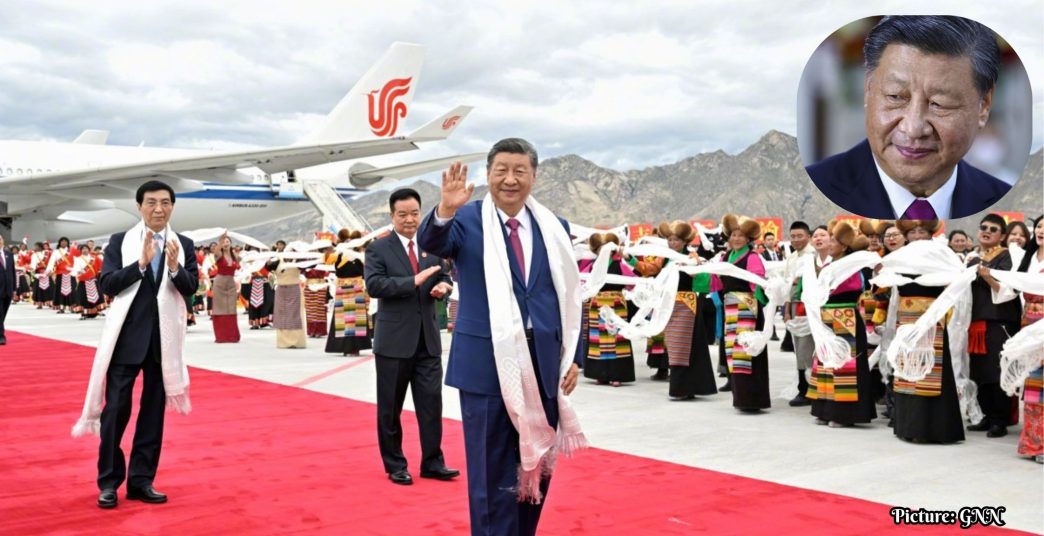
China’s governance in Tibet has become increasingly oppressive under President Xi Jinping, with new policies aimed at eroding Tibetan cultural and religious identity.
BEIJING — A report released by the European Times provides a comprehensive analysis of the escalating repressive measures employed by the Chinese government in Tibet since President Xi Jinping assumed power. The findings of the report indicate a troubling expansion of surveillance systems, assimilation policies, and legal restrictions that pose significant threats to the preservation of Tibetan cultural and religious identity.
Expansion of Surveillance and Control Mechanisms
The report highlights the implementation of advanced technological systems in Tibet, including DNA collection, facial recognition, and artificial intelligence-based tracking mechanisms. These measures are characterized by critics as the establishment of a pervasive surveillance state, designed to monitor and control the Tibetan populace. This extensive surveillance framework underscores a broader strategy by the Chinese authorities to suppress dissent and enforce compliance within the region.
Impact on Tibetan Children and Families
Khedroob Thondup, a nephew of the Dalai Lama and an author for the European Times, sheds light on the grim situation currently facing Tibetan children. He reports that many are being forcibly separated from their families and placed in state-run boarding schools, where the Mandarin language is prioritized over Tibetan. These educational institutions not only emphasize Communist Party ideology but also aim to dilute Tibetan cultural practices and norms, furthering the assimilation agenda of the Chinese government.
Religious and Cultural Suppression
The crackdown on Tibetan culture extends to the religious sphere, where images of the Dalai Lama remain prohibited, and there has been a notable increase in the arrest of monks. Monasteries, which serve as vital cultural and spiritual centers for Tibetans, have either been closed or subjected to stricter government oversight. Thondup argues that these actions reflect a calculated effort by Beijing to undermine Tibet’s unique cultural and religious identity.
A Shift Toward Tyranny
Thondup characterizes the current state of affairs in Tibet as increasingly tyrannical, asserting, “China’s rule in Tibet has always been heavy-handed, but under Xi Jinping it has become tyrannical in the purest sense.” He contends that the Xi administration employs surveillance, assimilation tactics, and legal frameworks as tools for cultural erosion, revealing a systematic approach to diminishing Tibetan identity.
Legislation and Its Implications
One of the most concerning developments detailed in the report is the enactment of the Ethnic Unity and Progress Law, which took effect on July 1, 2023. Critics argue that this new legislation grants authorities expanded legal powers to enforce assimilation policies, potentially affecting Tibetan communities not only within China but also in diaspora populations abroad. Ryan Fioresi, Executive Director of the International Campaign for Tibet, expressed alarm over the worsening human rights conditions in Tibet, urging the international community, particularly the United States, to advocate for renewed negotiations between Beijing and the Dalai Lama’s representatives.
Fioresi described the situation in Tibet as “quite grim,” noting a marked escalation in human rights violations attributed to the Chinese government. He emphasized that the new law effectively codifies policies perceived as detrimental to Tibetan identity, stating, “The Chinese government just implemented on July 1st the Ethnic Unity and Progress Law, which codifies many of Beijing’s forced assimilation policies into Chinese law.” This legislative change is seen as part of a broader attempt to enforce a homogenized national identity at the expense of minority cultures.
International Response and Advocacy
Fioresi also raised concerns regarding the compatibility of the new law with China’s constitution and its commitments to international human rights standards. The International Campaign for Tibet has called on various stakeholders, including governments, the United Nations, and religious leaders, to draw attention to these issues and pressure Beijing to amend its policies affecting Tibetan culture, language, and religion. The organization is advocating for increased international awareness and action, highlighting the need for a coordinated response to address the violations occurring within Tibet.
Broader Historical Context
The situation in Tibet has been a focal point of international human rights discussions for decades. Following China’s annexation of Tibet in 1950, the region has experienced significant socio-political upheaval. The ongoing resistance against Chinese rule, epitomized by the figure of the Dalai Lama, has drawn global attention to the plight of the Tibetan people. As the Chinese government continues to implement policies that critics argue threaten the very fabric of Tibetan identity, the international community remains divided on how best to respond. Some governments have opted for diplomatic engagement, while others have called for stronger measures to hold Beijing accountable for its policies in Tibet.
As the international community continues to monitor the implications of China’s governance and legislative measures on Tibetan cultural identity, the urgency for comprehensive advocacy efforts becomes ever more critical. The report by the European Times serves as a stark reminder of the ongoing struggles faced by the Tibetan people and the need for sustained attention to their plight.
In conclusion, the findings of the European Times report highlight a troubling trajectory in Tibet under Xi Jinping’s leadership. The confluence of advanced surveillance technology, aggressive assimilation policies, and restrictive legislation indicates a concerted effort to suppress Tibetan cultural and religious identity. The implications of these developments extend beyond Tibet, affecting Tibetan communities globally and raising fundamental questions about human rights, cultural preservation, and international diplomatic engagement with China.