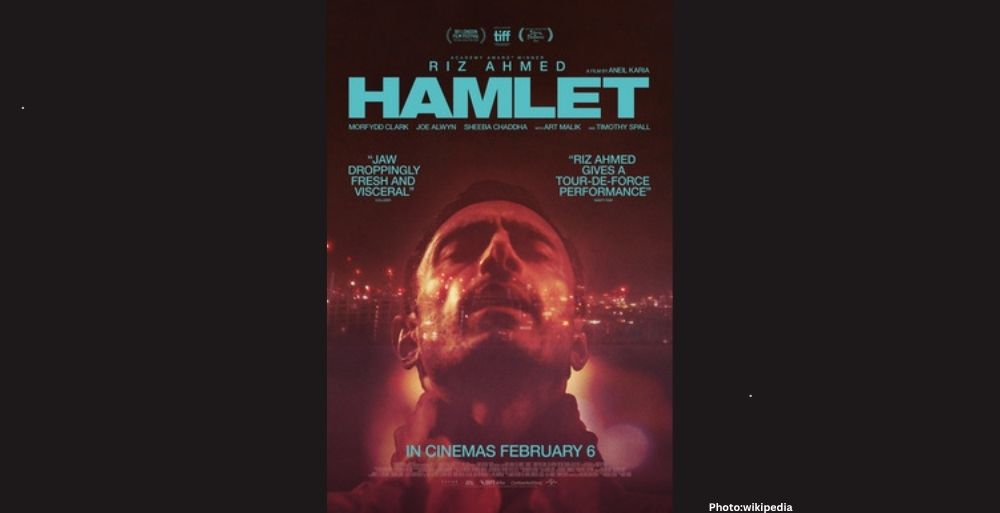
Aneil Karia’s adaptation of Shakespeare’s Hamlet, featuring Riz Ahmed, navigates a complex terrain where cultural elements and traditional themes intersect in a modern setting, yet struggles with its identity and coherence.
In a significant cinematic venture, the film adaptation of William Shakespeare’s Hamlet, directed by Aneil Karia and starring Riz Ahmed in the titular role, is set to premiere in select theaters across the United States on April 10, 2026. Following its initial release in the United Kingdom earlier this year, the film has generated significant anticipation, particularly among enthusiasts of both Shakespearean drama and contemporary film.
Opening with a haunting visual that captures the essence of a man performing last rites, Karia’s adaptation immediately immerses viewers in a culturally rich and emotionally charged atmosphere. This choice not only establishes a poignant starting point but also hints at the broader themes of death and existential inquiry that are central to the narrative of Hamlet.
Performance and Production Quality
The performances in Karia’s adaptation have been characterized as intense and deeply committed. Riz Ahmed’s portrayal of Hamlet is expected to resonate profoundly with audiences, supported by a strong ensemble cast that includes Morfydd Clark, Joe Alwyn, Sheeba Chaddha, Avijit Dutt, Art Malik, and Timothy Spall. The film’s cinematography features a stark and controlled aesthetic, paired with a background score that effectively amplifies Hamlet’s psychological turmoil, creating a palpable tension throughout the narrative.
However, despite these strengths, the film has been met with ambivalence regarding its cultural integration. Indian cinema has previously demonstrated how to adeptly adapt Shakespeare’s work—most notably through the films of Vishal Bhardwaj, such as Maqbool and Haider. These adaptations not only preserved the essence of the source material but also reimagined the narratives within the socio-political landscapes of India, allowing the characters and themes to feel authentic and relevant. In contrast, Karia’s film appears to waver between cultural contexts without fully committing to either, raising questions about its overall coherence.
Cultural Integration and Challenges
The film incorporates various cultural elements, such as traditional music and attire, yet these choices often feel visually disconnected from the narrative. For instance, while Gertrude is styled in Indian aesthetics and wedding scenes feature traditional lehengas, Hamlet’s stepfather Claudius is portrayed as an Englishman dressed in a sherwani. This juxtaposition raises questions about the film’s intent and cohesiveness, leading viewers to wonder about the underlying rationale for such visual choices.
Furthermore, the film’s language and structure amplify this tonal dissonance. The characters retain their original Shakespearean names and predominantly communicate in Shakespearean English, even as they navigate a modern world filled with clubs, fractured relationships, and substance use. This choice may alienate a broader audience, as the dialogue can feel out of place amid otherwise contemporary settings, creating a jarring experience for viewers unfamiliar with the original text.
Thematic Exploration and Audience Reception
Director Aneil Karia appears to be wrestling with the central dilemma that defines Hamlet itself: the tension between fidelity to the source material and the desire for adaptation. The film grapples with these themes but risks failing to fully embrace either approach, leaving viewers in a state of uncertainty regarding its narrative direction.
Despite its ambitions, critics suggest that the film caters primarily to a niche audience—those who appreciate Shakespearean works in their original form. A more grounded approach, akin to Bhardwaj’s successful adaptations, might have yielded a stronger impact by fully embracing localization or committing entirely to a stylized theatrical interpretation that could resonate more deeply with a wider array of viewers.
Nonetheless, the film demonstrates a clear intention and a willingness to take risks, indicative of Karia’s directorial vision. As it stands, the film occupies a liminal space—caught between cultures, forms, and identities, much like its titular character. This indecision may resonate with audiences who identify with the play’s themes of uncertainty and existential questioning, akin to the dilemmas faced by Hamlet himself.
Conclusion
Ultimately, Karia’s adaptation of Hamlet embodies an intricate balancing act, navigating the complexities of cultural integration while striving to honor the legacy of Shakespeare. The film attempts to explore the rich tapestry of identity and belonging through its characters, yet it remains to be seen whether this adaptation can effectively bridge the gap between its ambitious artistic vision and the expectations of its audience. As it prepares for its upcoming release, audiences and critics alike will be watching closely to see how this interpretation of a classic tale unfolds on screen, hoping that it can find its footing in the delicate interplay of tradition and modernity.