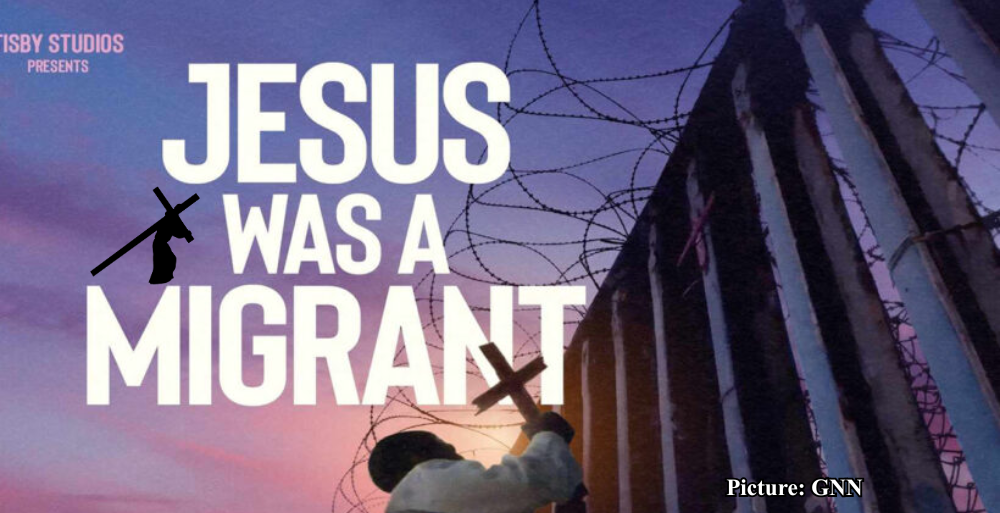
In the wake of recent immigration policies, historian Jemar Tisby’s documentary ‘Jesus Was a Migrant’ examines the intersection of Christian theology and U.S. immigration policy, urging Christians to reconsider their stance on migrants.
LOS ANGELES — On April 8, 2025, historian and author Jemar Tisby premiered his documentary ‘Jesus Was a Migrant’ in Los Angeles, which critically examines the relationship between Christian beliefs and U.S. immigration policy amid a politically charged environment. The film arrives at a time when immigration debates are intensifying, particularly following recent actions by President Donald Trump, who reinstated policies that effectively block migrants from seeking asylum at the southern U.S. border.
The abrupt policy shift, which occurred in January 2025, has left countless individuals seeking refuge without a legal pathway, generating significant despair among migrant communities, particularly in border towns like Juarez, Mexico. Tisby’s documentary seeks to explore the tensions within the Christian community regarding immigration, especially among those who profess to follow the teachings of Jesus, a figure often depicted as a migrant himself.
Documentary’s Purpose and Themes
Tisby, who gained prominence in the evangelical community with his bestselling book ‘The Color of Compromise,’ which scrutinized the historical complicity of U.S. Christians in racism, has turned his focus towards the complexities of immigration in this latest project. He stated, “We wanted to explore that tension. How can people who claim to follow a migrant, Jesus, also celebrate when migrants are shut out from seeking safety?”
The documentary was created in collaboration with the Christian nonprofit organization FaithWorks and focuses on real-life stories of migrants, showcasing their struggles and resilience. Tisby emphasized the importance of honoring these stories, noting that they needed a robust treatment rather than a brief recap. He added, “We asked them, as Americans, as Christians, what can we do to help? And they said, tell our stories.”
Connections to Racism and Historical Context
Tisby also draws connections between current immigration issues and the historical treatment of marginalized communities in the U.S. He referenced Martin Luther King Jr.’s assertion that society is “caught in an inescapable network of mutuality,” arguing that the struggles faced by migrants today echo those faced by Black individuals in the past. Tisby believes that the same tactics used to marginalize one group can and will be applied to others if left unchecked.
Historically, evangelicals have played a role in advocating for the rights of immigrants and refugees. However, Tisby noted a significant shift in this stance over the past few decades. He attributes this change to the rise of nationalism within white evangelicalism, particularly during the Cold War era when America was framed as a Christian nation. He explained, “The poison pill was always embedded within white evangelicalism,” which has led to a perception of superiority that undermines the dignity of immigrants.
The documentary aims to shed light on this shift, illustrating how recent political rhetoric has further alienated immigrant communities. Tisby pointed to the controversial statements made by President Trump regarding immigrants from certain countries, which have fueled xenophobic sentiments and led to harsher immigration policies.
Theological Perspectives on Immigration
A central theme of the documentary is the theological implications of viewing Jesus as a migrant. Tisby challenges the notion that immigrants should only be welcomed if they assimilate into a specific cultural framework. “It’s a faulty theology and a bad hermeneutic,” he asserts, calling for a more inclusive understanding of community that celebrates diversity.
He stressed that under the New Covenant, unity does not require uniformity, as emphasized in the New Testament where it is stated that there is neither Jew nor Gentile, slave nor free, male nor female. Tisby argues that these biblical principles should inform how Christians engage with immigration policy, asking, “If Jesus was at the border, would Christians let him in?”
Encouraging Community Action
The filmmakers hope that ‘Jesus Was a Migrant’ will prompt viewers to reflect on their own beliefs and actions regarding immigration. Tisby emphasized the importance of dialogue and collaboration, noting that the documentary is designed to foster community discussions. “We’re not just slapping the film up on YouTube or Vimeo and hoping people watch. We are encouraging people to host a screening and gather a group of people,” he stated.
To facilitate this, the film’s website offers a downloadable discussion guide and resources for further action, inviting individuals and churches to engage with the material and consider their roles in advocating for migrant rights.
The timing of the film’s release aligns with ongoing discussions about immigration policy, which has become a contentious issue in American politics. Tisby expressed urgency in bringing the film to audiences, stating, “This is an urgent issue right now, and for so much of the second term of this administration, it has been the policy that has garnered the most attention and the most division among people in the nation and in the church.”