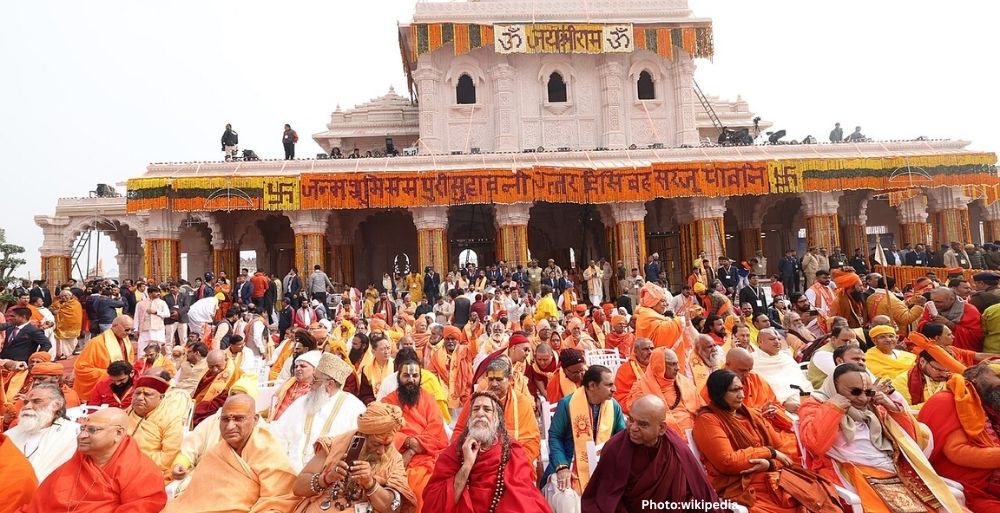
The recent allegations of embezzlement involving donations at the Ram Temple in Ayodhya pose significant challenges for the Bharatiya Janata Party (BJP) and the Sangh Parivar, potentially undermining their moral authority as assembly elections approach in Uttar Pradesh.
The arrest of eight individuals linked to the alleged misappropriation of funds at the Ram Temple in Ayodhya has sparked serious concerns about financial accountability within the organizations closely associated with the Bharatiya Janata Party (BJP) and the Rashtriya Swayamsevak Sangh (RSS). These developments arrive as assembly elections are anticipated in Uttar Pradesh early next year, a state vital to the BJP’s electoral success.
Context of the Ram Temple Movement
The Ramjanmabhoomi movement has been a cornerstone of the BJP’s political narrative, significantly contributing to the party’s rise in national politics. Centered around the construction of a temple at the site believed to be the birthplace of Lord Rama, this movement has reinforced the cultural nationalism propagated by the RSS and its affiliates. The BJP has utilized the temple construction as a galvanizing force to rally its Hindu voter base.
However, the recent allegations of embezzlement threaten to tarnish the moral authority of the Sangh Parivar, which has historically positioned itself as a defender of Hindu values and ethics. The allegations entail the misappropriation of cash and valuables donated by devotees for the temple’s construction, raising troubling questions about the integrity of the individuals and organizations that championed this cause.
Immediate Political Repercussions
The ramifications for the BJP are profound and multifaceted. The party relies heavily on the Ram Temple issue to solidify its support among Hindu voters, and any perception of corruption could jeopardize its prospects in the upcoming elections. Political analysts caution that the BJP must respond quickly and effectively to these allegations to preserve its credibility.
In light of these allegations, the Shri Ram Janmabhoomi Teerth Kshetra Trust, which oversees the temple’s construction, has initiated the process for a First Information Report (FIR) to investigate the claims of embezzlement. Alok Kumar, the working president of the Vishwa Hindu Parishad (VHP), has emphasized the necessity for accountability, stating, “We will ensure that those responsible are brought to justice.” This proactive stance is crucial as it attempts to mitigate damage to the reputation of the organizations involved.
Internal Dynamics and Accountability within the Sangh Parivar
Within the Sangh Parivar, there is a discernible shift as different factions navigate the implications of this scandal. The Trust, which has a substantial presence of VHP personnel and affiliates, is faced with the challenge of establishing accountability while distancing itself from the scandal. Uttar Pradesh Chief Minister Yogi Adityanath, who played an active role during the Ramjanmabhoomi movement, has been tasked with overseeing governmental inquiries into the matter.
This delineation of responsibility appears to be significant within the Sangh Parivar. It may afford the BJP a chance to maintain a degree of moral high ground by presenting itself as an organization committed to transparency and accountability, even amidst a scandal that threatens its core values. However, the effectiveness of this strategy will largely depend on the party’s ability to manage the fallout and address public concerns regarding the integrity of its leadership.
Long-term Implications for Temple Management and Governance
The allegations of embezzlement also pose a considerable challenge to the broader right-wing agenda concerning the management of Hindu temples. Advocates within the Sangh Parivar have long argued for the privatization of temple management, often drawing comparisons to the governance of religious institutions of other faiths. In India, Hindu temples, particularly in southern states, are subject to significant government oversight through Devaswom boards, which manage the administration of temples.
In recent discussions following the embezzlement allegations, Nripendra Misra, chairperson of the Trust’s construction committee, suggested that the management of the Ram Temple could adopt operational models similar to the Tirumala Tirupati Devasthanams, a government-backed entity responsible for managing the renowned Sri Venkateshwara Swamy Temple in Andhra Pradesh. Misra argued that such a model could enhance transparency and professional oversight, potentially alleviating concerns regarding financial mismanagement in the future.
Conclusion: Navigating Political Waters
The embezzlement case at the Ram Temple in Ayodhya is not merely an isolated incident; it represents a significant challenge for the BJP and the Sangh Parivar as they prepare for crucial assembly elections. The long-term effects of this controversy are likely to extend beyond immediate electoral implications, influencing public perceptions of accountability and integrity within organizations that have historically claimed to uphold Hindu values.
As the situation unfolds, both the Sangh Parivar and the BJP will need to navigate these challenges with caution, balancing the need for transparency and accountability against the backdrop of their political aspirations. The coming months will be critical as they strive to restore public trust and maintain their ideological integrity in the face of emerging scrutiny.