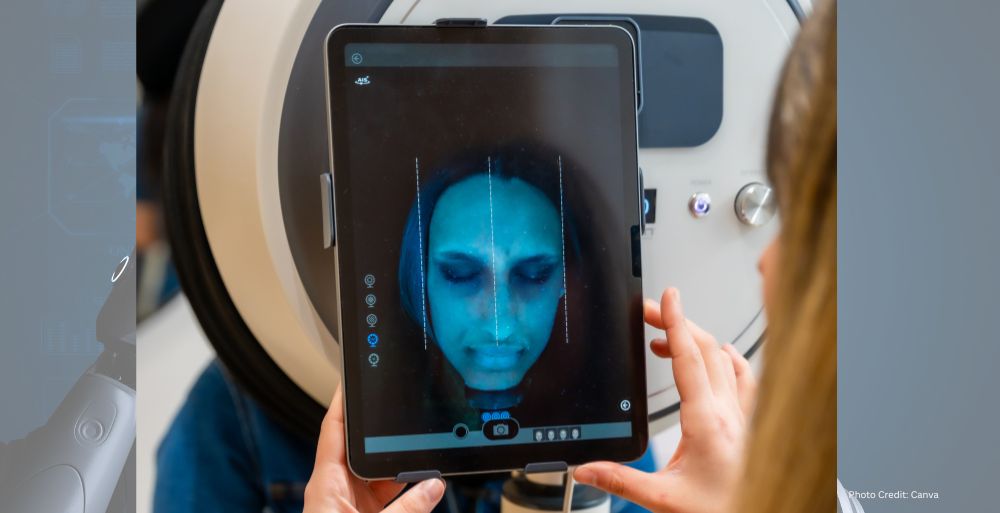
An innovative artificial intelligence tool developed by researchers at Mass General Brigham aims to assist healthcare professionals in estimating the survival rates of cancer patients using a single facial photograph. This technology analyzes specific facial features, particularly around the eyes, to predict health outcomes.
A pivotal study conducted by researchers at Mass General Brigham in Boston has unveiled a groundbreaking artificial intelligence (AI) tool designed to aid healthcare professionals in evaluating the health status and survival prognosis of cancer patients through the analysis of a single photograph of their face. This innovative technology employs advanced machine learning techniques to scrutinize facial characteristics, with a focus on features surrounding the eyes, to generate predictions regarding a patient’s potential longevity.
The AI tool, named ‘FaceSurvival’, has been trained on millions of images, including approximately 35,000 photographs of cancer patients. The researchers discovered that specific areas of the face, particularly the skin beneath the eyes and around the bridge of the nose, serve as significant indicators of survival outcomes across a variety of cancer types, including advanced stages where the disease has metastasized to critical areas such as bones or the brain.
Research Background and Tool Development
The study encompassed a diverse patient population, primarily drawn from the United States and the Netherlands, with ages ranging from children to individuals in their 90s. The researchers emphasized that the AI is intended to augment the clinical judgment of healthcare professionals and is not designed to replace them. Lead researcher Dr. Raymond Mak articulated the necessity for such tools in light of a rapidly aging population, stating, “As the population ages, physicians need better ways to estimate physical reserve and frailty before recommending intensive treatments such as radiation, surgery, or systemic therapy.”
The primary objective of the ‘FaceSurvival’ tool is to provide a more quantitative and consistent means of health assessment, thereby supporting personalized treatment decisions. While the AI is still undergoing development, a pending patent application for the technology indicates its potential for future clinical applications.
Complementary AI Tool for Biological Age Prediction
In addition to the survival assessment tool, researchers are also developing a second AI tool dubbed ‘FaceAge’, which aims to predict biological age based on facial features. This tool focuses on critical indicators such as nasolabial folds, marionette lines, and other facial expressions that contribute to perceived aging. Dr. Mak noted that certain lifestyle factors, including excessive alcohol consumption, drug use, and smoking, can accelerate the visible aging process.
The ‘FaceAge’ tool has demonstrated surprising consistency across various real-world images, irrespective of differences in lighting, pose, and facial expressions. According to Dr. Mak, the tool remained stable even after common cosmetic procedures, with only minor variations observed following rhinoplasty, commonly known as a nose job.
Limitations and Expert Opinions
Despite the promising results, the researchers acknowledge that the AI tools require further validation before they can be deemed suitable for clinical use. Experts in the field, such as Professor Miroslaw Bober from the University of Surrey in the UK, have cautioned against premature claims regarding the tools’ capabilities. He emphasizes the necessity for rigorous testing across different hospital settings and patient demographics to assess the reliability of the predictions.
Professor Bober remarked, “This is a promising proof of concept, but it is not ready for clinical use. The tool still needs testing against doctors’ own judgment and across different hospitals and patient groups.” He further stressed that while predicting an outcome is a significant step, it does not equate to providing explanations for those predictions.
Future Implications and Ethical Considerations
The development of AI tools like FaceSurvival and FaceAge signifies a substantial advancement in the integration of technology within healthcare. As researchers continue to refine these tools, they aim to enhance the overall accuracy and efficiency of patient assessments, which could lead to more tailored treatment strategies for cancer patients.
Looking ahead, the researchers plan to expand their dataset to include a broader range of ethnicities and demographics to improve the tools’ accuracy and applicability across diverse populations. The ongoing exploration of AI in medical settings holds the potential to revolutionize patient care; however, careful consideration and further research will be essential to ensure the ethical and effective implementation of these technologies.
Moreover, the integration of AI in healthcare raises important ethical questions regarding patient privacy, data security, and the potential for algorithmic bias. As AI systems are trained on historical data, there is a risk that they may inadvertently perpetuate existing disparities in healthcare access and outcomes. Thus, it is critical for researchers and healthcare providers to engage in ongoing dialogue about the ethical implications of AI tools and ensure that they are designed and deployed in a manner that is equitable and just.
In conclusion, while the FaceSurvival and FaceAge AI tools represent promising innovations in medical technology, their successful implementation in clinical practice will require rigorous validation, ethical considerations, and a commitment to enhancing patient care across all demographics.