The Ganpati festival in Mumbai sees an evolution in the representation of the elephant-headed god Ganesh, showcasing more muscular and dynamic idols, reflecting changing cultural aesthetics and political influences.
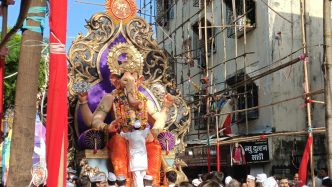
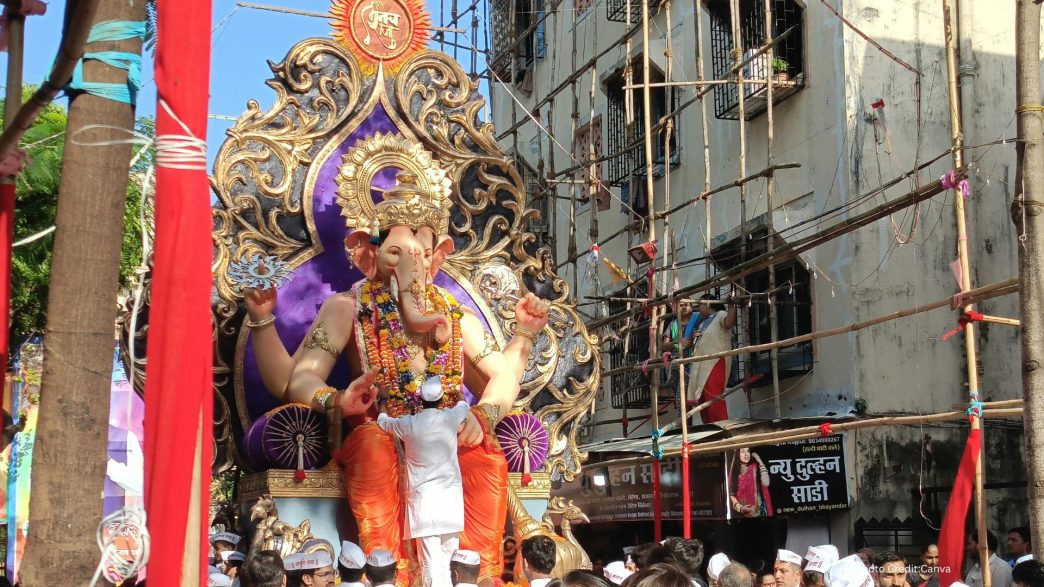
MUMBAI, India (RNS) — The streets of Khetwadi in south Mumbai are alive with vibrant celebrations as the 10-day Ganpati festival commenced on September 14, 2023. The festival, dedicated to the elephant-headed god Ganesh, features thousands of elaborately crafted idols, including a striking 47-foot depiction of Ganpati with a muscular physique and flowing hair, symbolizing a shift in traditional representations of this revered deity.
Ganpati, known for his cherubic and playful demeanor, is typically portrayed with a round belly and seated in a relaxed posture. However, over the past decade, the portrayal of Ganesh has transformed significantly, influenced by social media, contemporary pop culture, and a growing trend of muscular Hindu nationalism. “Every year we do a different theme,” said Hemant Dixit, president of the Khetwadi Ganpati committee, reflecting on the evolving nature of idol representation. “In Hindu tradition, God has no fixed form. You can see God in anything. Here, we have depicted the essence of Ganesha through the body of a lion.”
This year, several community groups are opting for more traditionally masculine representations of Ganesh, drawing inspiration from powerful deities like Vishnu’s Narasimha and Shiva. Previous years have seen idols dressed in army fatigues, perched on military vehicles, or even sporting an AK-47. These portrayals resonate with younger audiences who engage with sacred imagery through the lens of contemporary cinema and lifestyle culture. “The six-pack abs, the martial bearing, the athletic physicality — these reflect how younger, urban audiences engage with sacred imagery through the visual language of contemporary cinema and lifestyle culture,” noted Pankaj Jain, chair of the India Centre at Flame University in Pune.
Impact of Popular Culture
The influence of Indian cinema on cultural representations cannot be overstated. The past decade has witnessed the rise of cinematic idols, such as the “Baahubali”-inspired Ganesh, that echo the aesthetics of blockbuster films which depict characters with exaggerated physical prowess. Rakesh Pathrabe, a Nagpur-based artist, highlighted that the demand for unconventional styles depends greatly on the organizers’ vision for the idol. “It all depends on the requirements of the organizers, what unusual styles they want,” he explained, referring to his work, including a fierce portrayal of Ganesh that sparked a wave of imitative designs.
Hinduism is known for its adaptability, allowing for various interpretations of the same deity based on regional, contextual, and cultural factors. Vasudha Narayanan, a religion professor at the University of Florida, commented on this flexibility, stating, “Popular culture representing lived Hindu traditions are different from the sophisticated philosophical texts, and depict a wonderful sense of humor and expediency.”
Competition and Community Engagement
As the Ganpati festival grows in scale and commercial significance, organizers and artists strive to create unique representations that stand out. “It’s become like a competition,” remarked Siddhant Mohite, an artist who received numerous requests for muscular Ganpati idols, though he declined them, believing that Ganpati should retain his traditional form. Meanwhile, Prathamesh Patil, who specializes in smaller, traditional Ganpatis, noted the increasing requests for idols styled in contemporary themes, including military attire and modern vehicles, as these designs attract larger crowds.
In Valsad, Gujarat, festival organizer Faizal Munawar Shaikh reported a growing trend where communities seek larger and more dramatic representations of Ganesh. This year, a notable nine-foot idol depicts the deity with bulging biceps and sinewy forearms. The Ganpati festival, which originated in western India during the late 19th century to celebrate Hindu identity and resist colonial rule, has evolved into a medium for representing deities and cultural narratives to the next generation.
Political Influences
The current political landscape in India, particularly since the Bharatiya Janata Party-led government took power in 2014, has seen a resurgence of a more militant and masculine form of Hinduism that intertwines politics with religious identity. This year, in a notable initiative, one community in Hyderabad has encouraged festival organizers to sing the national anthem and hoist the national flag at Ganpati celebrations, highlighting the increasing fusion of nationalism with religious observance.
Last year’s celebrations were marked by a jingoistic tone, occurring shortly after military hostilities between India and Pakistan. The Maharashtra state government urged festival organizers to commemorate military achievements and honor soldiers. One striking display featured an 18-foot idol of Ganesh positioned alongside a replica S-400 missile system, emphasizing a blend of patriotism and religious devotion.
Artistic Trends and Controversies
As the trend of dynamic Ganpati idols continues, artists have noted a rise in the popularity of so-called “balancing murti” (idol), where Ganesh is depicted in action poses, such as mid-battle with a demon or in mid-air, which adds an element of dynamism to the traditional form. However, such poses can pose risks during transportation and installation, as noted by Pathrabe. He also expressed concern that the peak of the macho Ganpati trend may have passed, with some artists and devotees advocating for a return to more traditional representations of the deity.
Last year, a Nagpur group faced backlash for presenting Ganesh in a more aggressive form, leading to a police complaint by a right-wing group that claimed the depiction was disrespectful. Lalit Kanojiya, who leads another Nagpur group, reflected on the changing dynamics, stating, “We used to do different versions and go along with the trend of the time. But this year, he said, ‘Ganpati should look like Ganpati.’”