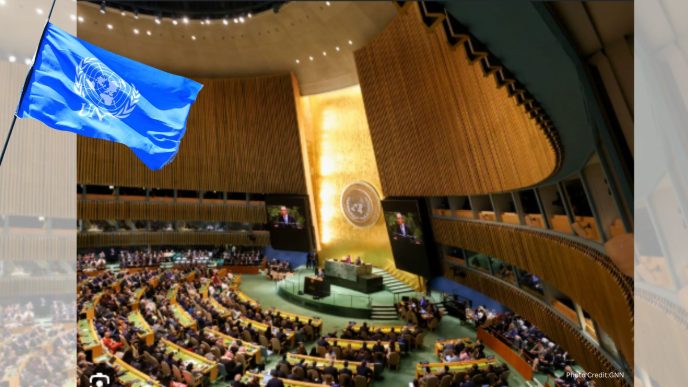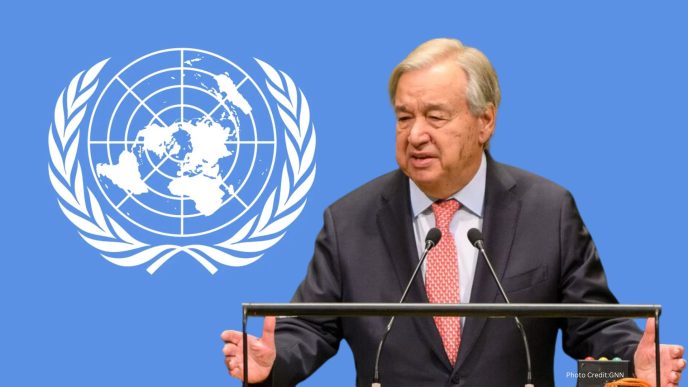
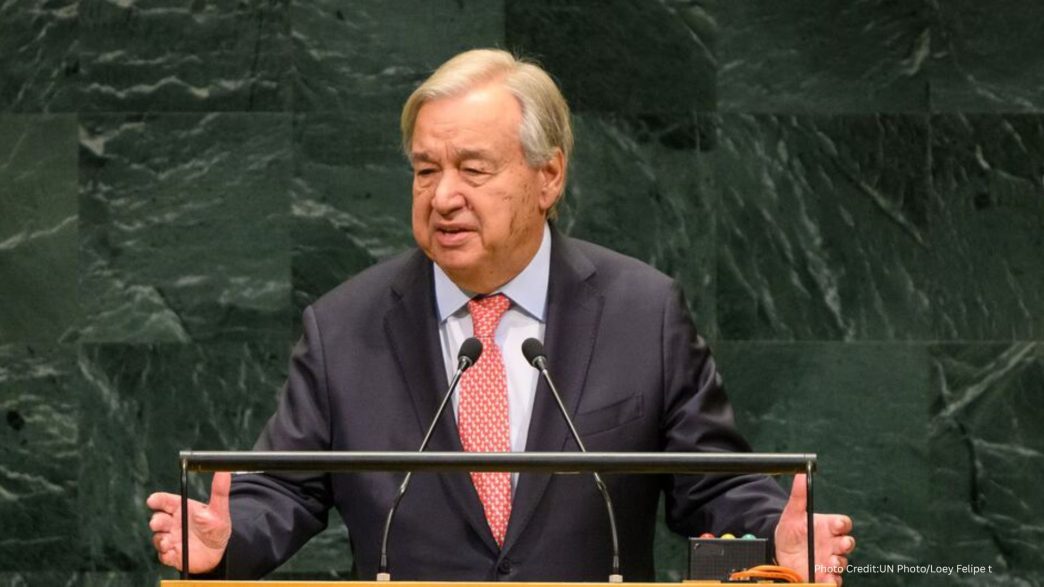
The UN Secretary-General António Guterres emphasized the urgent need for global cooperation to address widening fault lines in geopolitical conflicts, climate change, and artificial intelligence during his address at the UN General Assembly in New York.
NEW YORK – In a poignant address to world leaders gathered at the United Nations General Assembly, UN Secretary-General António Guterres warned that “the fault lines in our world are widening,” urging nations to work together in a spirit of interdependence to address pressing global challenges. Guterres, who is set to complete his term at the end of the year, highlighted the critical issues of geopolitical conflicts, climate change, and the rapid advancements in artificial intelligence that threaten global stability.
Guterres’s remarks come at a time of heightened international tensions, with ongoing conflicts in various regions, including the Middle East and Eastern Europe. He stated, “Instead of letting the future veer toward fragmentation, transactionalism, and mistrust, we must build a world based on interdependence, sustained by a dense web of economic, political, social, and technological connections.” His call to action reflects a growing recognition among global leaders that collaborative efforts are essential to navigate the complexities of the current geopolitical landscape.
Current Global Conflicts
As he addressed the assembly, Guterres pointed to the ongoing wars involving permanent members of the UN Security Council, notably the United States and Russia, as factors contributing to the UN’s challenges. Brazil’s President Luiz Inacio Lula da Silva echoed this sentiment, asserting that the world is “held hostage by the inaction of the Security Council for failing to fulfill its role.” This frustration highlights the broader concerns regarding the effectiveness of the UN in mediating conflicts and fostering peace.
The UN’s effectiveness has been further compromised by a funding crisis and diplomatic tensions, particularly during former President Donald Trump’s administration, which saw reduced US support for the organization. Guterres noted that the urgency of the UN’s work has never been more pronounced, particularly as the international community grapples with an increasing number of conflicts and humanitarian crises.
Artificial Intelligence and Accountability
During his address, Guterres also raised alarms about the potential dangers posed by unregulated artificial intelligence systems. He stated, “Killer robots must have no place in our future,” underscoring the ethical concerns surrounding the deployment of AI technologies in warfare and decision-making processes. He emphasized the need for accountability and oversight in AI development, warning that “technology without accountability” could lead to catastrophic outcomes.
According to Guterres, the nations with the most advanced AI capabilities, specifically the United States and China, bear a significant responsibility to establish effective communication channels to ensure that AI technology is developed and utilized safely. He expressed hope that even amid geopolitical tensions, these nations could collaborate on establishing common safeguards.
Escalating Conflicts in the Middle East
As the UN General Assembly convenes, the situation in the Middle East remains precarious. Reports indicate that the death toll from Israeli attacks on Gaza has reached 73,919, according to Gaza’s health ministry. This staggering figure reflects the humanitarian crisis resulting from ongoing hostilities between Israel and Hamas, which began following a Hamas-led attack on southern Israel on October 7, 2023, that resulted in approximately 1,200 Israeli civilian deaths.
The Palestinian group Hamas has accused Israel of violating a ceasefire agreement and undermining efforts to reach a broader peace plan. Meanwhile, Israeli officials contend that Hamas is responsible for the ongoing violence. Human rights experts have issued grave assessments, with some concluding that Israel’s actions may constitute genocide against the Palestinian population in Gaza, a claim that Israel has vehemently denied.
US-Iran Relations and Diplomatic Developments
In the context of global diplomacy, US Secretary of State Marco Rubio indicated that the United States is open to engaging with Iranian officials at the UN General Assembly. However, he clarified that no formal meetings are currently scheduled. Rubio emphasized that the US position remains firm: Iran must not be permitted to obtain nuclear weapons.
The backdrop of this diplomatic overture includes ongoing tensions in the Strait of Hormuz, where Iran has indicated a willingness to reopen shipping routes if the US eases military pressure and lifts sanctions. This comes amidst reports of increased military activity in Yemen, where Saudi Arabia has conducted airstrikes against Houthi positions, raising tensions further in the region.
As world leaders continue to convene at the UN, the stakes remain high, with numerous conflicts and humanitarian crises demanding urgent attention. The emphasis on interdependence and collaborative solutions articulated by Guterres may serve as a critical framework for addressing these complex challenges in the years to come.