In the wake of the recent midterm elections, Texas’ Indian American community has demonstrated a significant shift in political allegiance, moving away from Republican candidates due to escalating anti-Indian rhetoric within the party.
As the midterm elections approached, leaders within Texas’ Indian American community voiced concerns regarding a growing trend of anti-Indian sentiment among Republican officials, warning that this could alienate a key demographic at a pivotal moment for political control in the state. The accuracy of these warnings has become increasingly evident as preliminary election data indicates a pronounced pivot away from the Republican Party among South Asian and Indian American voters.
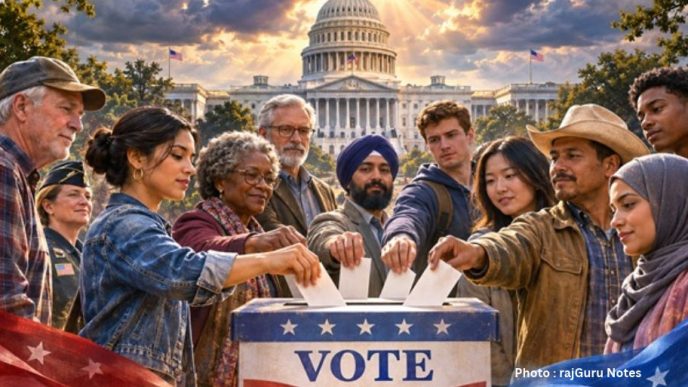
Recent reports suggest that Indian Americans overwhelmingly supported Democratic candidates in the midterms, contributing to historic victories in significant races, including the governor’s mansion and a crucial Senate seat. This shift highlights a broader trend reflecting a substantial decline in support for the Republican Party among Indian Americans. An analysis by the Carnegie Endowment for International Peace revealed that the proportion of Indian Americans supporting the GOP has nearly halved compared to previous elections, where approximately one in three indicated support for Republican candidates.
Changing Political Landscape
“That one in three has now disappeared and gone back to what it was before,” stated Sumitra Badrinathan, a professor at American University who conducted the study. Her research emphasized that while discrimination remains a significant concern, broader economic issues—such as rising living costs—also resonate strongly with the Indian American community. Notably, Collin County, a Dallas suburb with a substantial Indian American population, displayed a clear trend of voters shifting away from Republican candidates.
Among those affected by this shift was Bo French, a conservative commentator whose remarks regarding Indian Americans gained national attention. French notably underperformed in areas populated by Indian Americans, particularly when compared to Texas Governor Greg Abbott. Both Abbott and French faced defeats against their Democratic challengers, suggesting that anti-Indian sentiment may have influenced their electoral outcomes.
Impact of Political Rhetoric
French, along with other right-wing figures, has directed anti-immigrant rhetoric towards Indian Americans, particularly criticizing programs like the H-1B visa system. Critics argue that such programs allow employers to hire foreign workers over American citizens, framing it as a threat to domestic job security. These comments, however, received little response from mainstream Republican leaders, including former President Donald Trump and Vice President JD Vance, whose wife is of Indian descent. Governor Abbott distanced himself from French’s comments, stating that they did not represent his message.
The lack of condemnation from prominent Republican figures has further alienated even conservative Indian Americans. Vasant Bhatt, a 21-year-old University of Houston student and lifelong Republican, expressed his disillusionment, stating, “Seeing all this rhetoric, I’m asking myself why I was working so hard to defend a political party where I felt increasingly compelled to defend my own place within it.” This sentiment underscores a growing frustration among Indian Americans regarding the GOP’s handling of issues affecting their community.
Looking Ahead: The Future of Indian American Voting Patterns
While the recent midterm elections showcased a significant Democratic surge among Indian American voters, Badrinathan cautioned that neither party should take their support for granted. Her research indicates that approximately a quarter of Indian American respondents identified as independents, highlighting a potentially volatile voting bloc that could sway in future elections. “Elections have shown that about half of this population is solidly Democratic,” Badrinathan noted, “But the quarter of them who haven’t decided what their political identity is should ring some alarm bells for the party.”
This shift has prompted celebrations within segments of the Indian American community. For instance, Madira and Masala, an Indian restaurant, celebrated the electoral outcomes by offering promotions such as buy-one-get-one-free dosas, a traditional Indian dish. This promotion followed a viral moment when Texas Representative James Talarico made a dosa just days before Election Day, signaling cultural pride and community solidarity among Indian Americans.
In summary, the midterm elections have illuminated the evolving political landscape in Texas, particularly concerning the Indian American community. As Republican candidates grapple with internal divisions and external perceptions, the implications of rising anti-Indian sentiment could reshape political allegiances in future elections. The growing discontent within this demographic represents a critical challenge for the GOP, potentially altering the party’s approach to minority communities as they seek to regain their footing in a changing political environment.