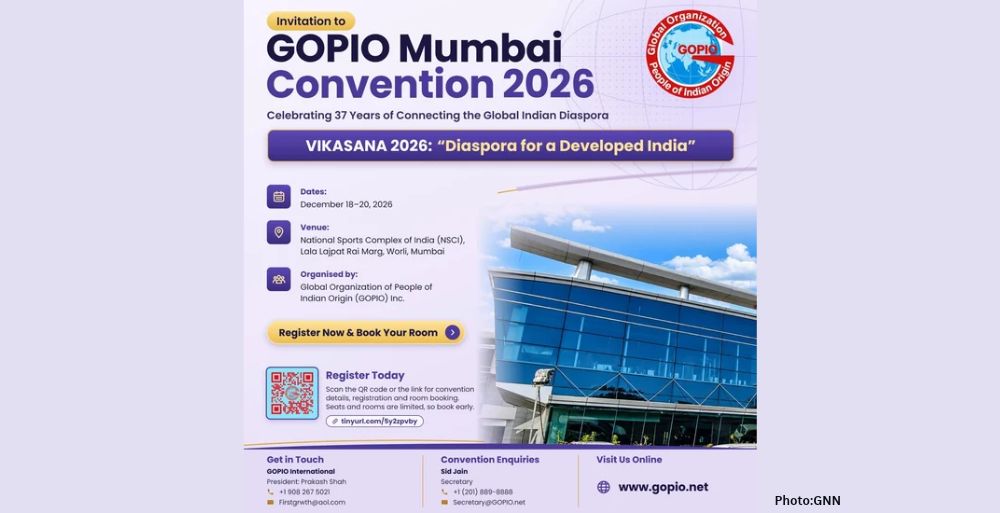
As the world prepares for the GOPIO Mumbai Convention 2026, themed “VIKASANA 2026: Diaspora for a Developed India,” it is an opportune moment to reflect on the remarkable journey of the Global Organization of People of Indian Origin (GOPIO), one of the most influential diaspora organizations in modern Indian history.
Among the principal architects of the movement was Dr. Thomas Abraham, GOPIO’s founding president and one of the leading figures in global diaspora advocacy. Writing about the origins of the organization, Dr. Abraham observed:
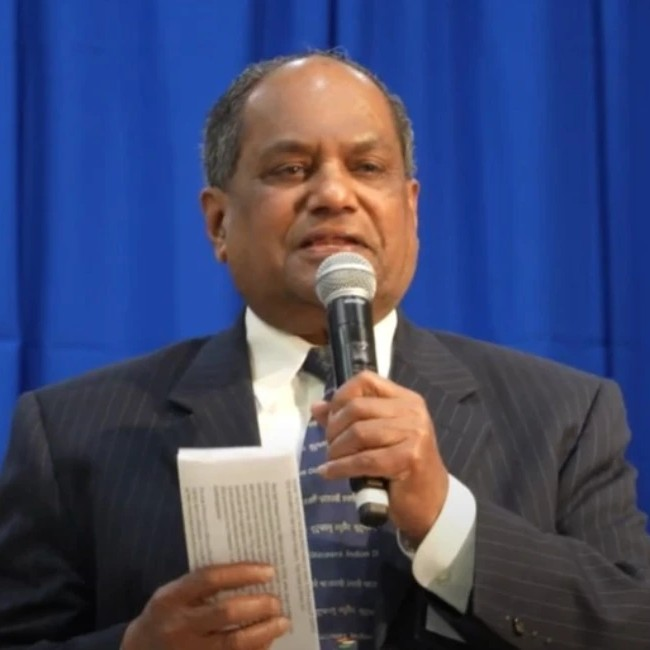
“If our professional expertise and financial resources are pooled together, it will benefit not only overseas Indians but also their countries of residence and our motherland, India.”
That vision remains central to GOPIO’s mission today.
What began as a bold idea in 1989 has evolved into a worldwide movement connecting millions of people of Indian origin across continents, mobilizing talent, advocating for rights, fostering economic collaboration, and strengthening India’s engagement with its global diaspora.
“37 years ago, a simple idea brought People of Indian Origin together across continents: wherever we live, we stay connected to India and to each other,” recalls Dr. Thomas Abraham, the architect, pioneering founder, and current chairman of GOPIO International. “That idea became GOPIO, a global network of doctors, entrepreneurs, scientists, community leaders and change-makers who carry India with them everywhere they go.”
The Birth of a Global Movement
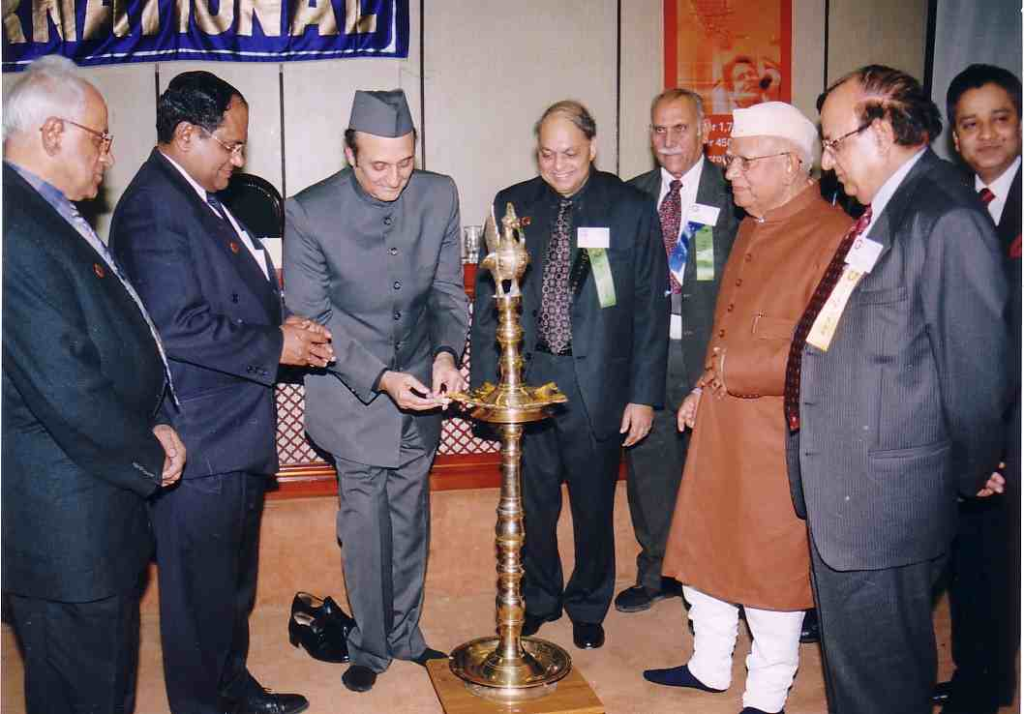
GOPIO was founded during the First Global Convention of People of Indian Origin, held in New York from August 27 to September 3, 1989. The convention brought together more than 3,000 delegates from around the world and led to the creation of a permanent global platform for overseas Indians.
The National Federation of Indian American Associations (NFIA), headed by Inder Singh, organized the First Global Convention of People of Indian Origin in New York from August 28th to September 3rd, 1989 with the objectives of sharing the experience of international Indian communities on a common forum and to foster harmony with a feeling of brotherhood and fellowship amongst the people of Indian origin. The convention officers were: Dr. Thomas Abraham (Convener), Sudha Acharya (Co-Convener and Executive Secretary), Dhiraj Solanki (Co-Convener and Treasurer), and Co-Conveners Ram Gadhavi, Dr. Jagat Motwani and Sureshwar Prasad Singh.
The convention attended by over 3000 delegates was a tremendous success, which identified and discussed problems facing people of Indian origin. It also provided necessary fora at the national and international level to voice their concerns. For the first time, a book on Migration of Indians Around the World was published at the convention where twenty six resolutions pertaining to the various issues and interests of the community were adopted.
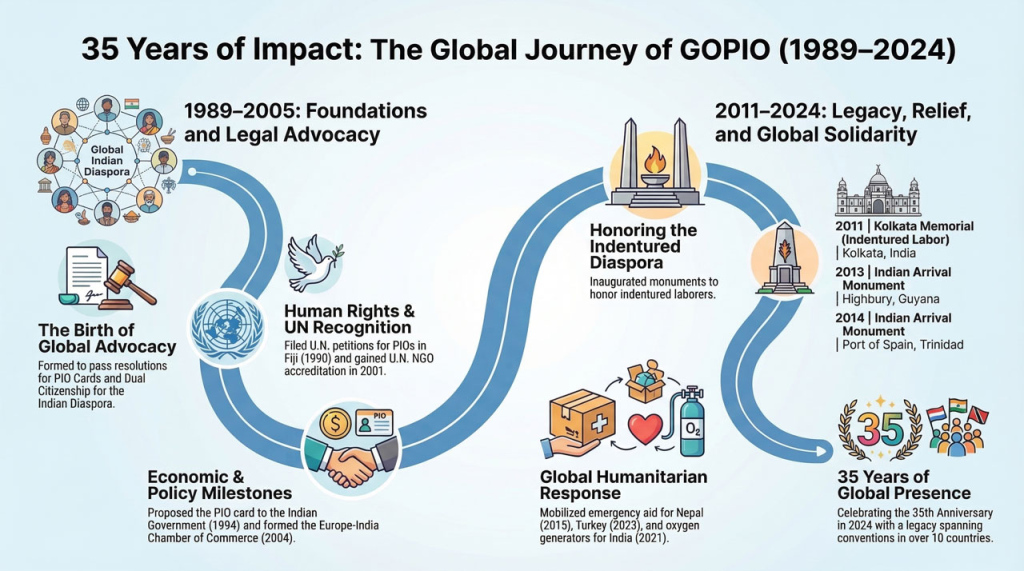
The organization emerged at a time when Indian communities abroad often faced discrimination, political marginalization, and limited engagement with India itself. According to GOPIO’s official history, its initial mission focused on combating human rights violations against people of Indian origin while creating a unified voice for diaspora communities worldwide.
The Birth of GOPIO: A Landmark Moment in Global Indian History
The origins of GOPIO can be traced to a historic gathering that transformed the Indian diaspora from a collection of scattered communities into a unified global movement. The First Global Convention of People of Indian Origin, held in New York from August 28 to September 3, 1989, brought together more than 3,000 delegates from across the world and laid the foundation for what would become the largest international organization representing people of Indian origin.
The convention was organized by the National Federation of Indian American Associations (NFIA) under the leadership of Inder Singh, with the vision of creating a common platform for overseas Indians to share their experiences, discuss common challenges, and foster a spirit of brotherhood, fellowship, and cultural unity.
The success of the event was made possible through the efforts of a distinguished organizing team led by Dr. Thomas Abraham, who served as the Convener. He was supported by Sudha Acharya, Co-Convener and Executive Secretary; Dhiraj Solanki, Co-Convener and Treasurer; and fellow Co-Conveners Ram Gadhavi, Dr. Jagat Motwani, and Sureshwar Prasad Singh. Their leadership and dedication united Indian-origin communities from diverse regions, cultures, and professions around a shared vision.
At a time when Indian-origin communities in many countries faced discrimination, political marginalization, and limited engagement with their ancestral homeland, the convention sought to provide a collective voice and a framework for global cooperation.
The convention proved to be a historic success. Delegates examined the social, economic, political, and human rights issues affecting people of Indian origin worldwide and adopted 26 resolutions addressing matters of common concern. The event also witnessed the publication of the pioneering volume Migration of Indians Around the World, one of the first comprehensive efforts to document the global Indian diaspora.
Most significantly, the convention gave birth to GOPIO, a permanent international organization dedicated to protecting the rights of people of Indian origin, promoting their welfare, preserving their cultural heritage, and strengthening their ties with India. More than three decades later, GOPIO continues to embody the vision first articulated in New York in 1989: a united and empowered global Indian community working together for mutual advancement and for the progress of India.
Building a Global Indian Identity
At the heart of GOPIO’s success lies its recognition that the Indian diaspora is not a single community, but a vast network spread across more than 100 countries.
GOPIO created structures through which business leaders, scientists, academics, health professionals, entrepreneurs, policymakers, and community activists could collaborate across national boundaries. today, the organization maintains chapters throughout North America, Europe, Africa, Asia-Pacific, and the Caribbean.
The organization’s objectives have consistently emphasized promoting cultural heritage, enhancing cooperation among overseas Indians, mobilizing intellectual and financial resources, and strengthening ties between diaspora communities and India.
Perhaps most importantly, GOPIO helped transform the concept of the Indian diaspora from a collection of isolated migrant communities into a globally connected network with shared interests and aspirations.
Championing Rights and Advocacy
One of GOPIO’s earliest and most significant contributions was its advocacy on behalf of diaspora communities facing political and social challenges.
The organization raised concerns at international forums regarding the treatment of people of Indian origin in countries such as Fiji and Sri Lanka. and filed petitions highlighting human-rights issues affecting these communities.
Its advocacy efforts eventually gained global recognition. In 2001, GOPIO obtained accreditation as a non-governmental organization with the United Nations and participated in the World Conference Against Racism.
These initiatives helped establish GOPIO as not merely a cultural organization but a global advocate for diaspora rights and representation.
Influencing Diaspora Policy
GOPIO’s influence extends beyond advocacy into policy development.
Among its most notable achievements was its long-standing campaign for greater recognition of overseas Indians by the Government of India. The organization championed initiatives such as the Person of Indian Origin (PIO) Card, which has now been rena,ef as Overseas Citizens of India (OCI) Card; dual citizenship proposals; and mechanisms to strengthen engagement between India and its diaspora communities.
Over the years, GOPIO has become a respected interlocutor between policymakers in India and diaspora communities, helping shape discussions that eventually contribute to broader overseas Indian engagement policies.
Its efforts reflected a powerful shift in thinking: overseas Indians were no longer viewed as distant expatriates but as strategic partners in India’s development.
Promoting Entrepreneurship and Economic Connections
Long before India’s rise as a major global economic power, GOPIO recognized the importance of connecting diaspora expertise with India’s development.
Through international conventions, business forums, trade conferences, entrepreneurial summits, and networking platforms, the organization created opportunities for investment, innovation, and knowledge transfer.
These initiatives helped build bridges between Indian entrepreneurs abroad and emerging opportunities within India.
The organization’s philosophy remains rooted in the belief that diaspora capital extends beyond money. Intellectual capital, professional expertise, technological innovation, and global networks are equally important resources.
As GOPIO’s official history states, mobilizing the financial, intellectual, and professional resources of overseas Indians can benefit both their countries of residence and India itself.
Developing the Next Generation
A less-publicized but equally important aspect of GOPIO’s work has been its focus on youth engagement, education, and leadership.
Through scholarships, mentoring initiatives, youth forums, academic conferences, leadership awards, and professional networking programs, the organization has sought to ensure that younger generations remain connected to their heritage while preparing for leadership roles in their adopted countries.
Its educational programs have reinforced the idea that cultural identity and global citizenship are not mutually exclusive but mutually reinforcing.
Voices of Leadership
Throughout its history, GOPIO leaders have consistently emphasized service, unity, and engagement.
In a 2025 GOPIO webinar addressing immigration challenges faced by diaspora communities worldwide, founder Dr. Thomas Abraham stated:
“Our goal is to create a global platform that not only informs but equips the Indian diaspora to navigate complex immigration landscapes with clarity and purpose. Through these webinars, GOPIO remains a catalyst for connection, advocacy, and community resilience.”
GOPIO President Prakash Shah added: “This series is more than information. It’s a lifeline. We are committed to amplifying the concerns of our communities across borders and shaping a proactive response to immigration challenges with expert insights and collaborative solutions.”
These statements illustrate how the organization continues to evolve while remaining faithful to its founding mission.
Looking Ahead: VIKASANA 2026
As India moves toward its aspiration of becoming a developed nation by 2047, GOPIO’s relevance may be greater than ever.
India’s emergence as a leader in artificial intelligence, digital infrastructure, biotechnology, clean energy, advanced manufacturing, and space technology presents unprecedented opportunities for collaboration with its global diaspora.
The forthcoming VIKASANA 2026 convention in Mumbai embodies that vision. It seeks to bring together entrepreneurs, scientists, physicians, policymakers, investors, academics, and innovators to explore how the worldwide Indian community can contribute to India’s next stage of growth.
Thirty-seven years after its founding, GOPIO stands as a testament to the power of a simple idea: that geography may separate people, but shared heritage, common purpose, and collective aspiration can unite them across the world.
What began in New York in 1989 as a gathering of overseas Indians has become a global movement. Its story is not merely the history of an organization. It is the story of how a diaspora found its voice, discovered its influence, and continues to help shape the future of India and the world.