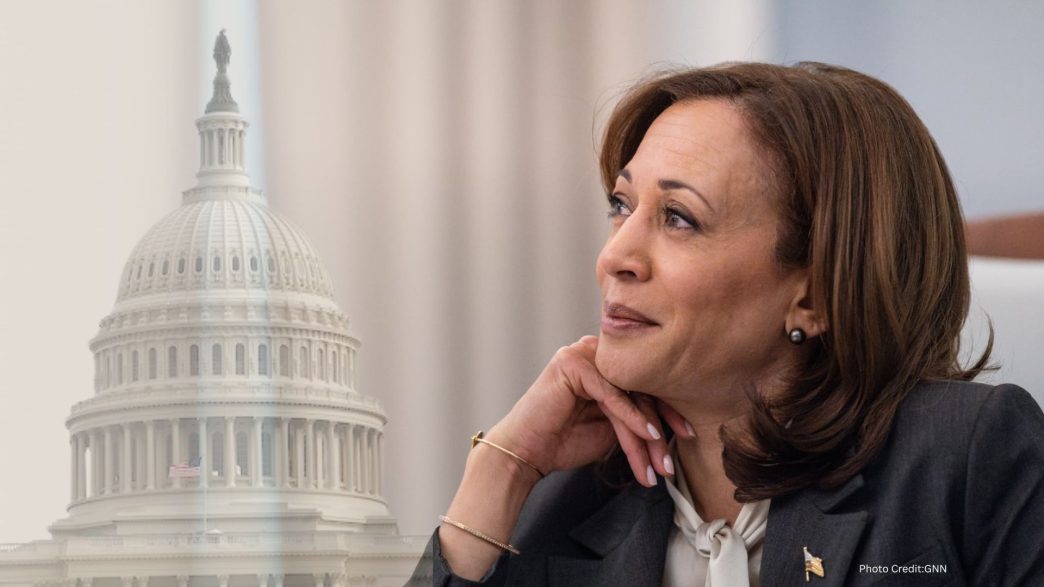
As Vice President Kamala Harris campaigns for fellow Democrats in key battleground states, speculation grows about her potential candidacy for the 2028 presidential election.
Vice President Kamala Harris has intensified her political activities as she weighs the possibility of a second presidential run, embarking on a campaign tour to support fellow Democrats in crucial midterm elections. Her first stop was in Michigan on Tuesday, where she endorsed Senate nominee Abdul El-Sayed, a significant figure in a state that was pivotal in the 2020 presidential election.
Michigan holds particular importance for Harris, as it was one of the battleground states she lost to Donald Trump in 2020. The state is also one of the six that will kick off the Democratic presidential nominating process in the upcoming election cycle. Harris has additional campaign rallies planned in Nevada and Georgia, which are also critical to the Democratic Party’s electoral strategy.
Political Landscape and Implications
Harris’s current campaigning efforts come at a time when her potential candidacy for the 2028 election is uncertain. While she remains one of the most recognizable figures in American politics, her previous bid for the presidency ended prematurely when she exited the race in late 2019 before any primaries were held. Critics within the party express skepticism regarding her viability as a frontrunner; Barry Goodman, a Democratic National Committee member from Michigan, stated, “I just don’t think her running again would be the right thing for America moving forward.”
Other Democratic candidates, particularly those in regions that Trump won decisively, have publicly distanced themselves from Harris. Iowa gubernatorial nominee Rob Sand remarked, “No thanks. Let’s move on. We need some new leadership.” This sentiment reflects a faction within the party eager for a change in direction.
Despite this, numerous party members, including influential Black women who advocated for Harris’s selection as Biden’s running mate in 2020, argue she deserves the time and space to contemplate her next steps without facing undue pressure. California Governor Gavin Newsom recently indicated he would not enter the presidential race if Harris decides to run, further underscoring her unique position within the party.
Community Dynamics in Michigan
Harris’s visit to Michigan is particularly noteworthy given the state’s diverse electorate and the recent tensions that arose during the 2024 presidential campaign. The Arab American community expressed frustration with Biden’s stance on Israel’s military actions in Gaza, and they were disappointed with Harris’s alignment with the administration. El-Sayed, who is known for his critical views on Israel, aims to unify communities that have been divided by recent events. He acknowledged that there were “some hurt feelings” during the last election cycle and sees Harris’s visit as an opportunity for reconciliation.
El-Sayed’s campaign, which is facing Republican nominee Mike Rogers, has attracted attention not only for its progressive stance but also for its outreach to diverse communities. He noted, “We can build together on the areas of agreement, and we can come to understand each other far better on the areas where we might have seen eye to eye.”
Strategic Positioning for Harris
Harris’s political engagements have been relatively sparse compared to other potential candidates like Pete Buttigieg, who has actively campaigned for Democratic candidates while positioning himself for a future presidential run. Harris’s approach has been more subdued; she has participated in smaller events in South Carolina but has focused on behind-the-scenes work, such as efforts to mobilize Black voters ahead of the midterms.
“There’s value in doing a lot of stuff behind the scenes instead of being front and center, especially for her,” said Bre Maxwell, a Democratic National Committee member from South Carolina. She pointed out that Harris remains a target for criticism from political opponents, particularly Donald Trump.
Jaime Harrison, a prominent South Carolinian and former national party chair, noted that Harris’s established name recognition provides her with a strategic advantage as she navigates her future political ambitions. “Many of these folks who do get in quickly would love to have that type of name ID, would love to have that type of network,” he stated.
Lessons from Past Campaigns
Harris’s initial presidential campaign in 2020 provided her with valuable lessons. Despite garnering significant enthusiasm and support, particularly after being selected as Biden’s running mate, she struggled to distinguish herself from the administration on key issues like inflation and immigration. Observers noted that she often reaffirmed alignment with Biden’s policies, which did not resonate well with all voters.
If she chooses to run again, political consultant Antjuan Seawright suggested that Harris would need to adopt a more moderate stance and acknowledge any previous missteps. “Voters reward authenticity and humility,” he explained, emphasizing the need for Harris to communicate a clear vision that reflects both her personal growth and the evolving political landscape.
Harrison concurred, indicating that it would be essential for Harris to transition from her vice presidential role and engage directly with voters on the campaign trail. “You can’t act like a sitting vice president,” he cautioned. “I’d tell her she has to run hard, just as hard as everybody else.”
As Harris continues her campaign efforts for the Democrats this fall, including stops in Nevada and Georgia, the political dynamics surrounding her potential candidacy for 2028 remain fluid. Her actions in the coming months will likely influence both her standing within the party and the broader electoral landscape as Democrats prepare for the next presidential race.