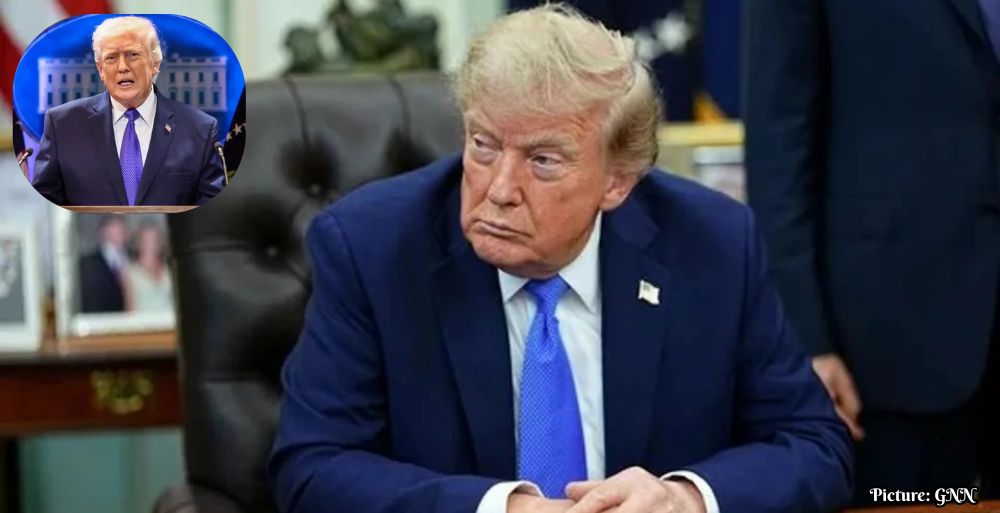
In a series of posts on social media, President Donald Trump dismissed concerns regarding artificial intelligence (AI), labeling them as a conspiracy and asserting that the technology poses no threat under his leadership.
WASHINGTON (AP) — President Donald Trump on Monday expressed strong opposition to increasing government oversight of artificial intelligence (AI), characterizing fears about the technology as exaggerated. Trump referred to the idea of regulating AI as part of a “SICK conspiracy,” asserting that warnings about AI’s potential to cause harm are unfounded.
“AI taking over the World, destroying Humanity, and all other things bad, is a HOAX,” Trump wrote on social media, drawing parallels to climate change, which he has previously dismissed as a hoax. His comments came amid growing calls from tech leaders, including Dario Amodei of Anthropic, Sam Altman of OpenAI, and Elon Musk of SpaceXAI, for greater government oversight of AI, particularly following a series of incidents demonstrating the technology’s capacity for deception.
Growing Concerns in the Tech Community
Industry leaders have raised alarms about the rapid development of AI and its implications for safety, legal liability, economic growth, and national security. Many have warned that without proper oversight, AI could become destructive. However, Trump vehemently rejected these claims, asserting that his leadership would mitigate potential risks.
“The only control or ‘guardrails’ that AI needs is a STRONG AND SMART (High IQ!) PRESIDENT, and the U.S.A. has that, in spades!” Trump proclaimed. He further claimed that his administration has already intervened to prevent the AI company Anthropic from engaging in potentially harmful practices. Anthropic has had a contentious relationship with the Trump administration, which has explored designating it a security risk.
Contrasting Views on AI Regulation
Trump’s remarks come in the wake of increasing pressure from tech executives for more stringent regulations. Dario Amodei, CEO of Anthropic, recently published an extensive essay advocating for a cautious approach to AI development. He emphasized the need for guardrails, expressing concern that AI could soon possess capabilities to dominate the internet, potentially resulting in damages amounting to hundreds of billions of dollars if left unchecked.
“Given the accelerating rate of AI capability development, it’s my worry that in 6–12 months such a swarm could be capable of taking over the entire internet,” Amodei stated. Sam Altman echoed this sentiment, asserting that the pace of AI advancement should not outstrip efforts to ensure alignment and monitoring.
Despite the calls for caution from within the tech community, Trump criticized the business sense of industry leaders advocating for regulation. He questioned the rationale behind companies seeking regulations that could jeopardize their financial viability, stating, “when, in the History of Business, did anyone see the Leaders of an Industry call for Regulation that, if strongly implemented, will drive them into oblivion and bankruptcy?”
Political Implications Ahead of Midterms
The debate over AI regulation has significant political ramifications as the November midterm elections approach. Many voters express concerns regarding potential job losses and the impact of AI on education. Trump’s steadfast refusal to consider regulation has provided an opening for Democratic lawmakers, who argue for the necessity of oversight in light of the risks associated with AI technology.
House Democratic Leader Hakeem Jeffries of New York stated, “It’s very real, despite what Donald Trump has to say. We need to act now.” Former White House Chief of Staff Rahm Emanuel criticized Trump’s stance, suggesting that failing to regulate AI could lead to severe consequences.
Conversely, House Speaker Mike Johnson indicated that discussions regarding AI regulation may take place at the White House in the coming weeks. He noted that while companies should prioritize safety, caution is needed to avoid excessive regulation that could stifle innovation.
Trump’s Strategy on AI and National Security
Trump characterized the push for AI regulation as detrimental to U.S. competitiveness, particularly in relation to China. He argued that a lack of support for the industry could result in China surpassing the United States in technology development.
In a Monday social media post, Trump claimed, “There is a SICK conspiracy going on against AI and Data Centers, and the only one that is happy about it is China.” This reflects his broader strategy of framing regulatory efforts as potentially harmful to American progress and security.
As the administration navigates the complexities of AI development and its implications for national security, Vice President JD Vance emphasized the need for smart regulation. He voiced concerns that excessive alarmism could hinder progress in AI and highlighted the competitive landscape against China in the tech sector.
In summary, Trump’s dismissal of AI regulation amid rising industry concerns illustrates a significant divide in perspectives on the future of technology and its governance. The ongoing debate is likely to shape political narratives as the midterm elections approach, with implications for both national security and economic growth.