On the 25th anniversary of September 11, the South Asian Journalists Association reflects on its role in aiding journalists to comprehend South Asia and honors the lives affected by the tragic events of that day.
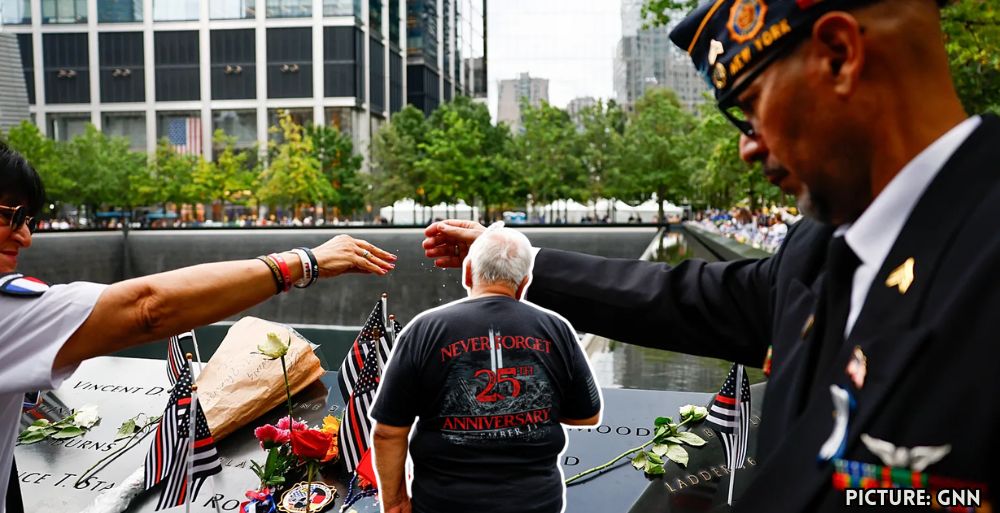
September 11, 2026 — As the nation observes the 25th anniversary of the September 11 attacks, the South Asian Journalists Association (SAJA) has taken the opportunity to honor the memory of the thousands of individuals who lost their lives during the attacks, as well as the families, communities, and first responders whose lives were irrevocably altered. This anniversary serves as a moment of reflection on the impact of those tragic events on journalism, particularly concerning the coverage of South Asia.
In the immediate aftermath of 9/11, SAJA played a crucial role in shaping how mainstream news organizations reported on South Asia, a region that suddenly found itself at the center of international focus. For over a year following the attacks, SAJA diligently documented the experiences of South Asian journalists, tracked the narratives of victims and survivors, highlighted incidents of hate crimes, and provided essential resources for journalists covering the unfolding events.
Documenting Tragedy and Supporting Journalism
In 2002, SAJA collaborated with the family of Daniel Pearl, a Wall Street Journal reporter who was kidnapped and murdered while reporting in Pakistan, to establish the Daniel Pearl Award. This award continues to recognize exceptional investigative journalism related to South Asia, emphasizing courage and the exposure of critical public issues. The establishment of this award reflects SAJA’s commitment to honoring journalistic integrity and excellence.
“SAJA was still a relatively new organization on 9/11, but in that difficult time, it showed the value of a journalism organization dedicated to the region and to the journalists who cover it,” stated Jyoti Thottam, then-president of SAJA. “We became a resource for countless journalists all over the world trying to quickly get up to speed, even as many of our members were deeply involved in covering 9/11 or were affected by it. SAJA also showed what it meant to be a community of journalists, the people who are there for each other in times of crisis.”
A Community of Support
Indira Somani, the current president of SAJA, recalled her experiences during that tumultuous period, saying, “At the time, I was the vice president of SAJA, and the South Asian Journalists Association became the organization of record to which most mainstream journalists turned for context and understanding of Pakistan, India, Afghanistan, the Taliban, al-Qaeda, and more. I’m grateful we existed and helped educate the mainstream.”
Sree Sreenivasan, a co-founder and former president of SAJA, expressed gratitude for the dedication of the organization’s members. “Looking back, I am so grateful to all the members who volunteered to help other journalists understand complex issues around religion, history, geopolitics, and more,” he remarked.
Continuing the Mission
Today, SAJA continues its mission of supporting South Asian journalists and nurturing the next generation of storytellers. The organization prides itself on its commitment to aiding news organizations in better understanding the communities they cover, which is especially pertinent as the media landscape continues to evolve. In recent years, the rise of digital media has transformed the way news is reported and consumed, making the role of organizations like SAJA even more critical.
As the organization marks this significant anniversary, it honors the journalists, colleagues, and communities affected by 9/11, reflecting on the enduring importance of accurate and informed journalism as a cornerstone of democracy and community understanding. SAJA’s growth is noteworthy; founded in March 1994 with just 18 members, the organization now represents over 1,000 journalists of South Asian descent across the United States and Canada.
SAJA serves as a vital network for training, inspiration, and support, not only for South Asian journalists but for all individuals covering South Asia and its diaspora. The organization aims to enhance the coverage of the subcontinent and its diaspora, ensuring that the narratives of these communities are told with authenticity and depth.
The Role of Journalism in Society
The reflections from SAJA on the 25th anniversary of September 11 underscore the critical role that journalism plays in shaping public discourse and understanding in a diverse society. In a world increasingly polarized by misinformation and sensationalism, the need for accurate and nuanced reporting has never been more pressing. SAJA’s commitment to fostering a well-informed public is reflected in its ongoing programs and initiatives that support journalists in their pursuit of truth and integrity.
As the organization looks to the future, it remains steadfast in its commitment to promoting the integrity of journalism as a profession. This commitment is particularly significant as the media faces challenges such as declining trust and the growing influence of social media platforms, which can often amplify divisive narratives.
In conclusion, the South Asian Journalists Association’s reflections on the 25th anniversary of September 11 not only honor the past but also highlight the ongoing challenges and responsibilities that journalists face today. As the organization continues to support its members and expand its reach, it serves as a reminder of the vital importance of journalism in a democratic society, ensuring that the voices of diverse communities are heard and understood.