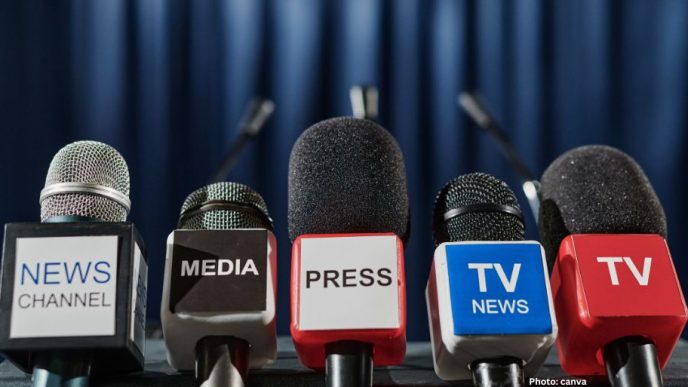
In a significant act of solidarity, leading television networks have announced the suspension of pool coverage of President Trump, following a White House decision to bar several media outlets from accessing presidential events.
In a notable escalation of tensions between the Trump administration and the media, major television networks including Fox News Media, ABC News, CBS News, NBC News, and CNN collectively announced on Monday that they would cease pool coverage of President Donald Trump. This decision comes shortly after the White House imposed a ban on three news organizations—CNN, MS NOW, and Politico—accused by the president of producing what he terms ‘fake news.’
The joint statement from the networks underscores the critical role of the press in a democratic society, asserting that “the public has a vital interest in receiving accurate, independent information about its government.” The networks further declared, “No administration should restrict a news organization because it objects to its reporting.” This rare display of unity among major broadcasters highlights the gravity of the situation and the perceived threat to journalistic integrity.
Details of the Media Ban
The controversy began last week when the White House revoked press credentials for CNN, MS NOW, and Politico, effectively barring them from covering presidential events. Reporters from these outlets were notably denied access to the White House, a standard practice that allows for broader media coverage of governmental affairs. The decision to revoke access appears to stem from ongoing criticisms leveled by these organizations against the Trump administration, although no specific incidents or reports were cited as triggers for the ban.
On the same day the networks issued their statement, the White House pool released a note to subscribers indicating that “effective today, the TV pool will not be covering events designated as pool coverage of the President.” This decision directly correlates to the restrictions placed on CNN, which had been fulfilling its designated pool duties prior to the ban. The note further clarified that there would be no replacement pool in place, significantly diminishing media access to presidential activities.
Legal Considerations and Potential Litigation
In response to the ban, the affected media organizations have indicated their intention to pursue legal action against the Trump administration, likely on First Amendment grounds. Legal experts have suggested that the success of such a lawsuit may hinge on arguments related to press freedom and the public’s right to access information—fundamental principles enshrined in the Constitution.
Media advocacy groups and watchdog organizations have condemned the administration’s actions, asserting that the ban poses a serious threat to press freedom and sets a troubling precedent for government interaction with the media. Additionally, elected officials, particularly from the Democratic Party, have voiced their concerns, framing the administration’s actions as an affront to journalistic integrity and transparency.
Trump’s Response to Criticism
In the wake of widespread backlash, President Trump defended the ban through a post on his social media platform, Truth Social. He asserted, “The White House is not instituting an assault on the Free Press, something which I cherish. It is instituting an assault on the FAKE NEWS, something that has grown like Cancer in our beloved United States of America.” This statement reveals the president’s ongoing narrative that positions critical media coverage as inherently false or misleading.
While Trump did not elaborate on the rationale behind the ban, his comments reflect a long-standing pattern of antagonism toward news organizations that have reported critically on his presidency. This incident marks yet another chapter in the fraught relationship between the administration and the press, characterized by frequent accusations of ‘fake news’ and efforts to delegitimize critical reporting.
Implications for Media Freedom and Public Access
The suspension of pool coverage marks a significant shift in how major networks engage with the Trump administration, raising important questions about the role of the media in a democratic society. The implications are far-reaching, as this action not only affects the immediate access of reporters and news organizations but also influences public perception and access to information regarding presidential activities.
Historically, the relationship between the presidency and the press has been pivotal in shaping public discourse and ensuring government accountability. The current situation has drawn parallels to previous tensions between the media and political figures, particularly in periods of heightened political polarization. As the legal implications of the ban unfold, the situation is likely to be scrutinized by legal scholars, journalists, and political analysts alike, with many questioning the potential for government overreach into press freedoms.
In conclusion, the decision by major television networks to suspend pool coverage of President Trump in solidarity with barred media outlets marks a crucial moment in the ongoing dialogue about press freedom in the United States. As the legal landscape develops and public discourse continues to evolve, the implications of this ban for journalistic practice and the public’s right to information will remain a focal point of discussion in the months ahead.