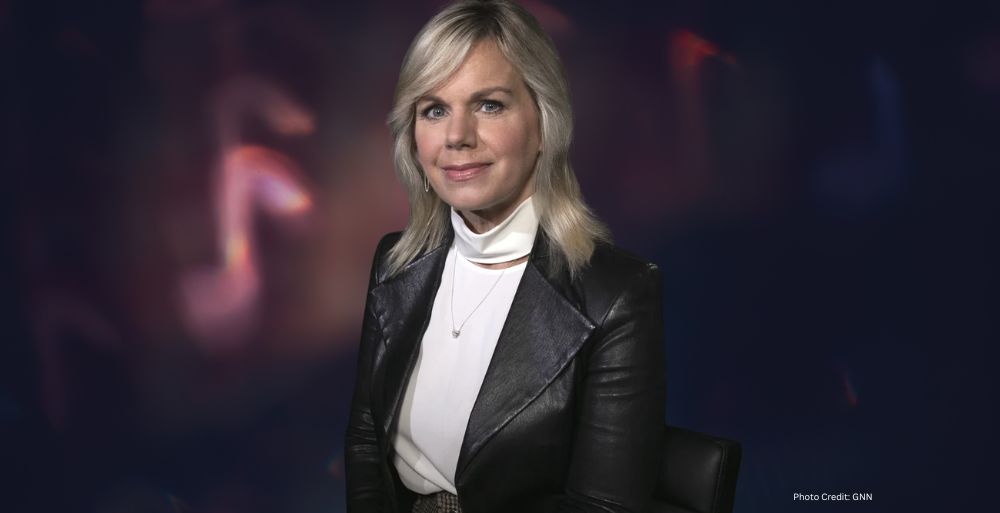
Former Fox News host Gretchen Carlson calls on journalists to challenge misogyny in the White House press room, highlighting the need for solidarity among reporters in the face of Trump’s derogatory remarks.
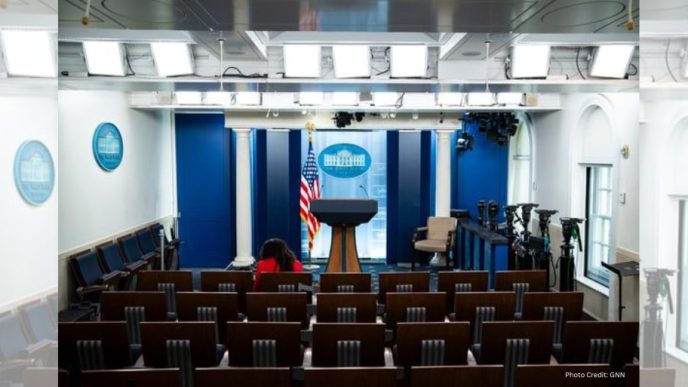
In a striking moment of unity among rival news networks, President Donald Trump’s recent ban on CNN, MSNBC, and Politico from White House events has prompted a collective response from the media, as journalists navigate the complexities of access and accountability in political reporting. This situation has drawn the attention of Gretchen Carlson, a journalist and former Fox News host, who has called for a more assertive stance against what she characterizes as an “outright onslaught” of misogynistic remarks from the president.
In a phone interview with The Guardian conducted prior to the announcement of the media ban, Carlson, 60, urged her colleagues in the press corps to not only push back against Trump’s derogatory comments toward female reporters but also to uphold a standard of respect and dignity in their coverage of the presidency. Carlson, co-founder of the nonprofit organization Lift Our Voices, which aims to eliminate workplace silencing, emphasized the need for journalists to confront and question the president’s behavior directly.
The Impact of Trump’s Comments
Trump’s history of disparaging female journalists includes derogatory labels such as “stupid,” “piggy,” and “incompetent.” Carlson expressed her dismay at such language, asserting that it undermines the professionalism and integrity of journalists tasked with reporting on the presidency. “That’s highly offensive to any human being, much less journalists whose job it is to cover the president with respect and dignity,” she stated. Carlson called for a unified front among reporters to challenge the normalization of such behavior, urging them to repeat the questions that provoked these insults and to demand answers from the administration.
“It’s my hope that other journalists will start speaking up when that happens,” Carlson remarked, highlighting the importance of accountability in the press. “The questions will be asked until they are answered and that it’s not just from the one who’s attacked.”
Challenges of Access and Accountability
While Carlson acknowledges the difficult position journalists face in maintaining access to the president, she insists that inaction only perpetuates a culture of misogyny. “You can’t speak to people that way,” she stated emphatically. However, she also recognized the significant risk reporters run when they confront the president directly, as such actions could jeopardize their access to future press events.
This dynamic is further complicated by the presence of pro-Trump media outlets that often pose less challenging questions and may not advocate for their mainstream media counterparts. Carlson noted that the White House Correspondents’ Association has historically been able to unify its members, suggesting that collective action is possible despite these challenges.
“When you get attacked like that and another reporter just goes on to the next question, it makes it look like there’s nothing wrong,” she explained. “It’s damaging to young men about how they can treat women and young women about how they feel they should be treated.”
Historical Context and the #MeToo Movement
Reflecting on the broader implications of these issues, Carlson drew parallels between her experiences in journalism and the evolution of the #MeToo movement. Nearly ten years ago, she took a stand against sexual harassment in the workplace by suing Roger Ailes, the former chairman of Fox News, which led to widespread revelations about similar abuses. During this period, the #MeToo movement gained momentum, raising awareness around sexual misconduct and empowering survivors to speak out.
Despite the challenges posed by current political dynamics, Carlson believes that progress continues to be made. She highlighted a notable bipartisan effort surrounding the disclosure of documents related to Jeffrey Epstein, which brought together lawmakers from both parties in support of survivor advocacy. “It was an amazing bipartisan movement,” she noted, referencing the collaboration between various political figures.
Moving Forward with Nonpartisan Advocacy
As Carlson continues her advocacy work through Lift Our Voices, she emphasizes the importance of nonpartisan efforts to combat workplace misconduct. In 2022, her organization successfully passed two federal laws aimed at restricting forced arbitration in cases of abuse, marking significant progress in the fight against workplace silencing. “People ask me every single day: how did you do that?” Carlson reflected, underscoring the practical achievements that can result from sustained advocacy.
Looking ahead, Carlson remains focused on eradicating non-disclosure agreements (NDAs) that allow toxic workplace cultures to thrive in secrecy. She is adamant that the fight against sexual harassment and abuse transcends political affiliations, urging individuals to confront misconduct regardless of party lines. “There is no room for hypocrisy with regard to this kind of behavior,” she asserted. “This is about power.”
In summary, Carlson’s call to action serves as a reminder of the vital role that journalists play in holding power to account and the necessity of solidarity in the face of adversity. As the media landscape continues to evolve, her advocacy highlights the importance of integrity and respect in the pursuit of truth.