A growing bipartisan movement is emerging in response to the increasing influence of Big Tech in the United States, as concerns over privacy, surveillance, and the economic impact of technology rise among both Democrats and Republicans.
In recent months, a notable shift has occurred in the political landscape regarding the influence of major technology firms in the United States. Amid heightened scrutiny over data privacy, surveillance technology, and the ramifications of artificial intelligence (AI), a rare bipartisan consensus is forming against the dominance of Big Tech. This development reflects a significant change in how both political parties are addressing issues that resonate with a diverse array of constituents.
Escalating Backlash Against Big Tech
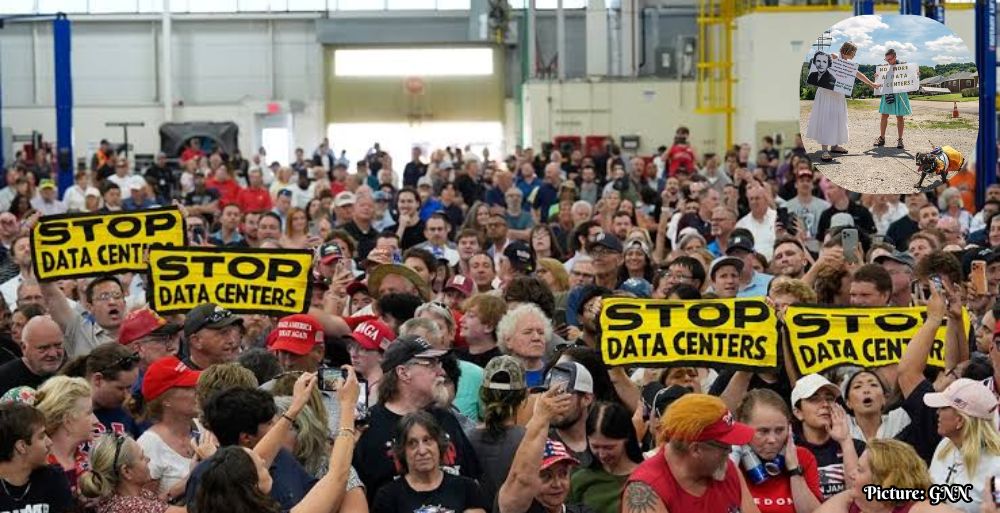
The backlash against the technology sector has manifested in various forms, ranging from protests concerning the establishment of data centers to landmark legal rulings against social media companies. Political scientists note that the underlying sentiment fueling this resistance can be encapsulated in a shared motto: “Don’t tread on me.”
Valerie Hudson, a distinguished professor at the Texas A&M University Bush School of Government and Public Service, articulated this sentiment, stating, “You couldn’t think of a better Bond villain than Big Tech, who are promising to put you out of a job, to make your children ignorant and completely captured by their algorithms, to make you completely surveyed so that the government or companies can track virtually every one of your movements, and take your land for its data centers.”
Political Landscape Shifts
Historically, the technology industry enjoyed considerable support from Republican leaders, particularly during President Trump’s administration. However, recent developments indicate a growing skepticism among GOP officials regarding the unchecked growth of technology firms. This shift has gained momentum, particularly in light of public concerns surrounding cybersecurity risks associated with advanced AI models and the operations of data centers.
In summer 2026, Republican leaders, including Texas Governor Greg Abbott, began to align with Democratic figures like Pennsylvania Governor Josh Shapiro to implement more stringent oversight of data center projects. These initiatives aim to mitigate the financial and environmental impacts of these massive facilities on local communities.
Moreover, figures such as Texas Attorney General Ken Paxton and former Congressman Mike Rogers have voiced support for increased regulation, advocating for legislation that ensures data centers and AI companies are held accountable for the consequences of their operations.
Bipartisan Polling Trends
Public sentiment reflects this growing discontent with Big Tech. A Gallup poll conducted in July 2026 revealed that confidence in large technology companies had plummeted to a record low of 20 percent, a stark decline from 32 percent in 2020. Additionally, support for these companies among Republicans dipped to 20 percent, while Democrats’ approval fell from 18 percent to 13 percent.
In a striking illustration of grassroots opposition, a Kentucky farmland owner gained media attention by refusing a $26 million offer from an AI firm to acquire their property for a data center, stating, “kick rocks and don’t come back.”
Privacy and Surveillance Concerns
The rising tide of criticism is not limited to data centers; it also extends to surveillance technology. Flock Safety, a company that provides automated license plate readers and other monitoring tools, is facing backlash from both sides of the political spectrum. While its technology is touted for aiding law enforcement, critics argue it represents an invasion of privacy.
Political scientists have noted that many Republicans, traditionally supportive of law enforcement initiatives, are beginning to express concerns that the surveillance technologies may infringe on the privacy rights of citizens. This shift mirrors the Democratic Party’s long-standing apprehensions regarding AI surveillance systems, which they argue could be abused by law enforcement and intelligence agencies.
In recent weeks, both Governor Abbott and Governor Shapiro have taken steps to impose restrictions on Flock Safety’s operations, joining a growing list of state leaders, including Florida Governor Ron DeSantis and Utah Governor Spencer Cox, who are implementing similar measures.
The Path Forward
Civil liberties advocates have voiced skepticism about the effectiveness of Flock’s recent updates to its privacy policies, emphasizing that these changes do not sufficiently address public concerns. Political strategist Basil Smikle remarked on the broader implications of this backlash, describing it as part of a long-standing and growing rejection of a large surveillance state, a sentiment gaining traction across party lines.
As bipartisan efforts to regulate technology firms intensify, lawmakers from both parties have previously collaborated to introduce legislation aimed at holding social media companies accountable for their impact on children and society at large. However, despite these efforts, significant reforms have yet to materialize.
In light of the recent legal actions against Meta, including significant settlements aimed at reforming its practices, experts like Hudson suggest that the public’s trust in tech companies has eroded to a point where many believe any regulatory measures will be crafted in the companies’ favor. “The trust is way too far gone,” she remarked, emphasizing the challenges ahead for tech firms in rebuilding their reputations amidst growing public scrutiny.