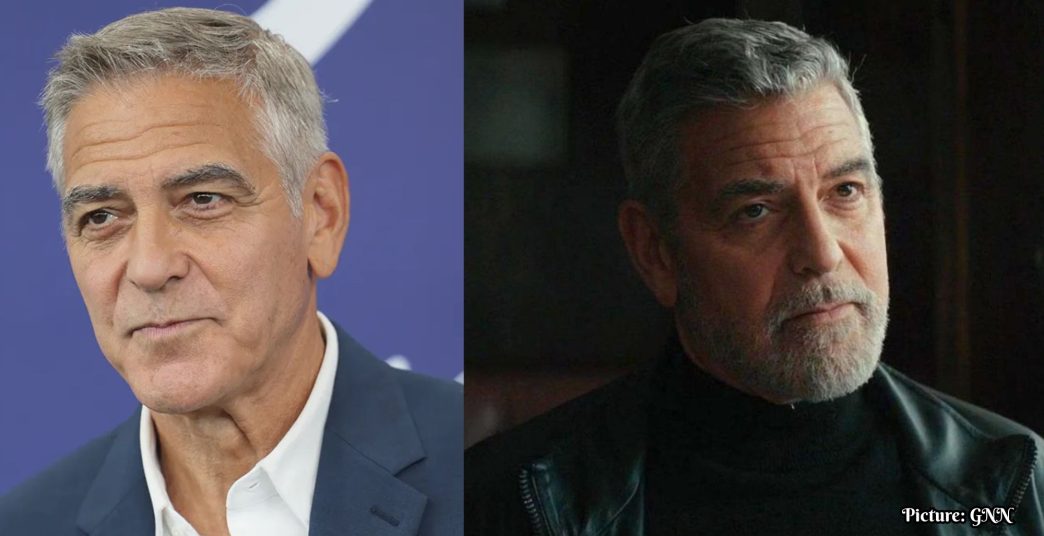
Actor George Clooney has expressed support for Mark Ruffalo’s criticism of the proposed $111 billion merger between Paramount and Warner Bros Discovery, highlighting concerns over media consolidation and free speech.
VENICE, Italy — As the Venice Film Festival prepares to honor George Clooney with its Golden Lion for lifetime achievement, the actor has publicly defended fellow actor Mark Ruffalo’s right to voice criticism regarding the proposed $111 billion merger between Paramount Global and Warner Bros Discovery. Clooney’s remarks were made on the eve of the festival, where he is set to receive the prestigious award.
Clooney, known for his advocacy on various social issues, articulated his concerns about the potential ramifications of further consolidation in Hollywood, stating, “I worry when a big company swallows up another company. I always worry whenever big companies are consolidating because it means a lot of people are going to lose their jobs.”
Ruffalo’s Opposition and Controversy
Ruffalo has emerged as one of the most vocal opponents of the Paramount-Warner merger. Last month, he took to social media to criticize the merger, arguing that it could have severe implications for the film industry. Furthermore, Ruffalo has directed his critique towards the Ellison family, owners of Paramount, accusing them of complicity in what he described as the “genocide” of Palestinians and suggesting that their wealth is built upon an “apartheid system of oppression powered by Oracle,” the tech company co-founded by Larry Ellison.
Ruffalo’s comments have not gone without backlash. He faced accusations from Paramount that his statements invoked antisemitic tropes, particularly in relation to Oracle’s business dealings with Israel. In response, Ruffalo has rejected these accusations, standing firm in his belief that criticism of the merger and Oracle’s ties to the Israeli military should not be silenced. His stance has garnered significant support, with over 170 Jewish artists, academics, and public figures signing an open letter endorsing his right to express dissenting views.
Clooney’s Stance on Free Speech
In his defense of Ruffalo, Clooney emphasized the importance of free speech in a democratic society. He stated, “I support Mark Ruffalo’s ability to speak freely. I think that that’s ridiculous. We’re not going to ban speech. I believe in free speech even when I completely disagree with it. That’s important, right?” Clooney continued by acknowledging that differing opinions are essential to public discourse, saying, “There are going to be people tonight in the room that are going to disagree with most everything I say or stand for. Fair enough. That’s how it’s supposed to be. We’re supposed to argue these things out and come to a conclusion based on the information that we take in.”
On the financial implications of the merger, Clooney expressed skepticism, stating, “I don’t know how this goes through. There are so many issues involved.” His remarks reflect a broader concern regarding the financial viability of large-scale media mergers, especially in a rapidly changing entertainment landscape.
Concerns About AI and Media Ownership
In addition to discussing the merger, Clooney raised alarms about the increasing role of artificial intelligence in the film industry, predicting that it could lead to negative outcomes. He humorously mentioned his desire to avoid appearing in commercials long after his passing, highlighting the unpredictable nature of technological advancements in media.
Moreover, Clooney addressed the concentration of media ownership among a handful of extremely wealthy individuals, specifically mentioning figures like Jeff Bezos and Elon Musk. Such concentration raises questions about the diversity of voices in journalism and the potential ramifications for democratic discourse.
A Celebration of Career and Achievement
Clooney’s receipt of the Golden Lion on Wednesday evening marks a significant milestone in his career, which has spanned nearly three decades at the Venice Film Festival. He first attended the festival in 1998 with the film “Out of Sight” and has since returned for various projects, including “Good Night, and Good Luck,” “Michael Clayton,” and “Gravity.” The award will be presented to him by Laura Dern, his co-star from the film “Jay Kelly,” in a poignant moment that underscores his enduring legacy in the film industry.
As the festival continues, the discussions surrounding the Paramount-Warner merger and the criticisms leveled by Ruffalo are likely to remain in the spotlight, illustrating the ongoing tensions within Hollywood regarding corporate consolidation, free speech, and the responsibility of media in shaping public perception.