Recent floods in Nepal and Tibet have left hundreds missing, including many pilgrims drawn to the sacred Mount Kailash, a revered site for four major religions.
Mount Kailash, a prominent peak in the Himalayas, stands as a spiritual epicenter for millions of followers from Hinduism, Buddhism, Jainism, and the ancient Bon religion. The mountain, which rises to approximately 22,000 feet, is located at the tripoint of India, Nepal, and Tibet, drawing thousands of pilgrims annually who undertake a sacred journey around its base.
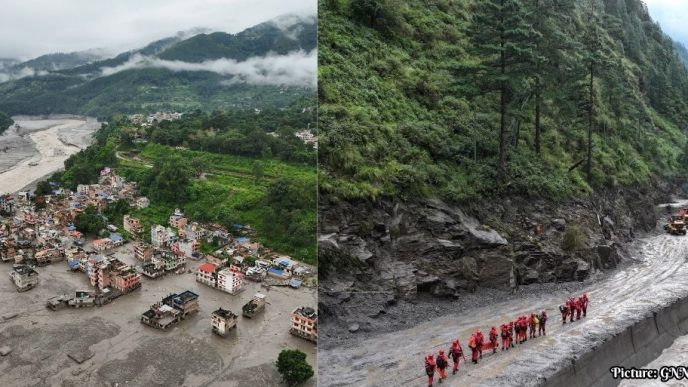
This week, catastrophic flooding in the regions surrounding Mount Kailash has resulted in hundreds of people being reported missing. Among those unaccounted for are at least two groups of pilgrims, totaling approximately 130 individuals, who were near the Gyirong border crossing between Nepal and China when the floods occurred. Tour organizers and family members have confirmed the presence of these groups in the area at the time of the disaster.
Religious Significance of Mount Kailash
Mount Kailash is not merely a geographical landmark but is steeped in spiritual significance across various religions. For Tibetan Buddhists, the mountain is deemed the “precious snow” mountain, believed to be the center of the universe and home to a deity embodying supreme bliss. The pilgrimage, known as the kora, involves a 33-mile trek around the mountain, which is believed to cleanse sins and bring practitioners closer to nirvana.
Hindus regard Mount Kailash as the abode of Lord Shiva, the god associated with destruction and transformation. In Jainism, it is said that one of the religion’s early prophets attained salvation on this mountain. The Bon religion, which predates Buddhism in Tibet, also holds Mount Kailash as a source of spiritual power.
During the pilgrimage, adherents of different religions follow distinct paths: Hindus and Buddhists circumambulate the mountain in a clockwise direction, while Bon followers traverse it counterclockwise. The completion of the pilgrimage typically spans several days, with pilgrims seeking purification, blessings, and spiritual transformation.
Jamyang Tsering, a Tibetan tour guide, articulated the deep connection many feel towards Mount Kailash, stating, “In Tibet, we have a saying: If you touch something sacred, a piece of it stays with you forever. I have touched Mount Kailash again and again with my own hands. And still, after all these years, the mountain lives in me.”
Impact of Recent Floods
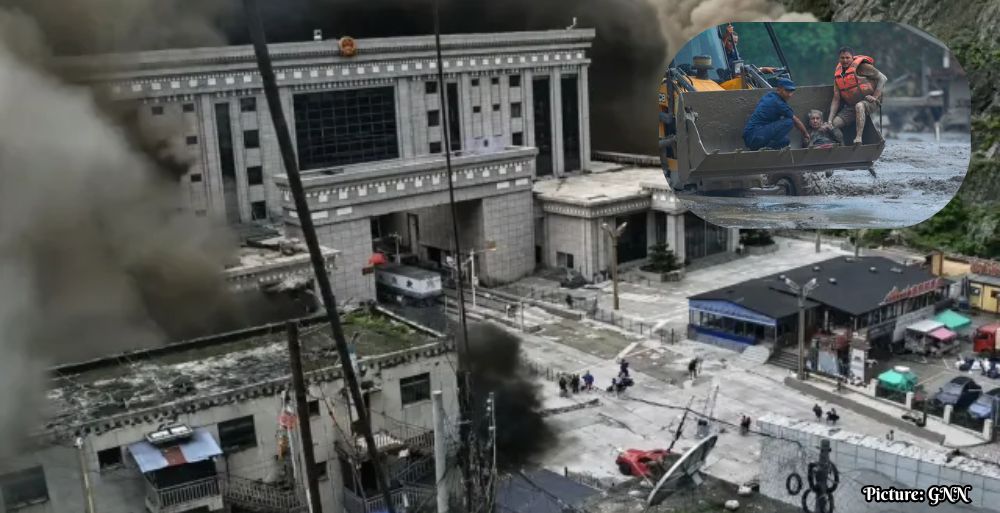
The recent flooding, which struck the region, has been linked to heavy rainfall that overwhelmed local infrastructure. Reports indicate that the floods have caused significant destruction, submerging roads and cutting off access to various areas. The humanitarian implications of the floods are severe, with search and rescue operations underway to locate the missing individuals, many of whom were engaged in pilgrimage activities.
The International Center for Integrated Mountain Development, an intergovernmental organization focused on the Himalayan region, noted that Mount Kailash and the adjacent Lake Manasarovar have historically served as vital conduits for trade, culture, and religious exchange among the diverse communities inhabiting the area. This underscores the mountain’s enduring significance not just as a religious site, but as a cultural and historical nexus.
As rescue efforts continue, the situation remains fluid, and reports regarding the fate of the missing pilgrims are expected to evolve. Local authorities and international aid organizations are mobilizing resources to respond to the crisis, emphasizing the need for urgent assistance in the affected areas.
The floods have not only disrupted lives but have also raised concerns regarding the impact of climate change on the region, highlighting the vulnerability of mountainous terrains to extreme weather events. Experts suggest that as climate patterns shift, increased rainfall and flooding may become more common, potentially affecting pilgrimage routes and local communities that depend on these sacred sites.
Historical Context of Pilgrimages
Mount Kailash has a long history as a pilgrimage destination, with records indicating that for centuries, devotees have traveled great distances to pay homage at this sacred site. The mountain’s significance is emphasized by the multitude of texts and oral traditions that highlight its spiritual importance across different cultures. The convergence of religions at Mount Kailash represents a unique aspect of Himalayan spirituality, fostering a shared reverence that transcends individual beliefs.
The pilgrimage to Mount Kailash is not only a personal spiritual journey for many but also a significant cultural event that reinforces communal bonds among diverse ethnic groups. The pilgrimage season typically sees thousands of participants, with local economies benefiting from the influx of visitors who rely on local accommodations, food, and transportation services.
Conclusion
The floods near Mount Kailash have brought to the forefront the intersection of spirituality, culture, and environmental challenges in the Himalayas. As rescue operations unfold and the affected communities begin to assess the damage, the enduring reverence for Mount Kailash remains undiminished, serving as a poignant reminder of the deep connections individuals hold to their spiritual practices and the land they cherish. The ongoing situation illustrates not only the immediate humanitarian crisis but also raises broader questions about climate resilience in sacred spaces that hold profound significance for millions around the world.