Six months after the U.S. and Israel initiated military strikes against Iran, the geopolitical landscape in the Middle East has shifted significantly, presenting challenges to their objectives and raising questions about regional security.
Six months have passed since the United States and Israel launched a military offensive against Iran on February 28, 2023, with the goal of dismantling the Islamic Republic’s leadership and fostering a pro-Western government. However, the anticipated transformation of the Middle East has not materialized as expected. Instead of destabilizing the Iranian regime, the offensive appears to have fortified it, complicating the security landscape in the region.
Regional Responses and Iranian Resilience
In the wake of the strikes, Iran has demonstrated remarkable resilience, surviving targeted assassinations of its top officials and a sustained bombing campaign. Barbara Leaf, a former ambassador and assistant secretary of state for the Middle East under President Biden, noted that Iran has emerged from the conflict with increased confidence, asserting that it can not only endure but also reshape the regional dynamics to its advantage. “That is going to be exceptionally difficult to deal with, to say the least,” Leaf remarked, highlighting the emergence of a more radicalized Iranian regime.
Prior to the military engagement, Iran faced significant vulnerabilities, marked by a collapsing currency and unprecedented anti-government protests in late 2022 that were met with violent repression. However, the initial U.S. and Israeli strikes did not ignite the anticipated uprising among the Iranian populace. Instead, the regime quickly replaced its leadership and consolidated its power, with many citizens opting for self-preservation amidst the chaos.
Control Over Strategic Trade Routes
Following the military engagement, Iran effectively closed the Strait of Hormuz, a crucial maritime corridor for global oil and gas supplies, and escalated attacks against Gulf nations hosting U.S. military personnel. This aggressive posture not only threatened the global economy but also raised alarms among U.S. allies in the region about the efficacy of American security guarantees. Former Trump administration officials had previously negotiated a ceasefire in April 2023, but subsequent attempts to solidify a lasting agreement faltered.
Yoel Guzansky, an expert on Iran and the Gulf at the Institute for National Security Studies in Israel, emphasized that while Iran has gained leverage through its control of the Strait of Hormuz, this tactic poses risks to its neighbors and the broader global economy. “Tehran’s danger is confusing its ability to survive with victory and demanding more than its leverage can deliver,” Guzansky stated, underscoring the precarious balance Iran must maintain.
Shifting Alliances and Gulf State Concerns
The longstanding U.S. commitment to safeguarding Gulf Arab nations from external threats has been tested in unprecedented ways. Historically, the U.S. has maintained a robust military presence in the region, which has been pivotal in deterring aggression from Iraq and Iran, while fostering economic prosperity in countries like the United Arab Emirates (UAE). However, the recent conflict has led to doubts regarding the reliability of American security assurances.
Iran’s military actions have extended beyond targeting Israel to threatening Gulf states, which have been cautious to remain uninvolved in the conflict. The strikes on U.S. military bases and critical infrastructure in the Gulf have raised fears of broader regional instability. Kristian Coates Ulrichsen, a Gulf expert at Rice University, remarked that the war’s initiation lacked a clear political objective and failed to account for regional partners’ concerns, undermining U.S. credibility and complicating future diplomatic efforts.
In a significant development, Saudi Arabia recently pursued a defense pact with Pakistan and Turkey, indicating a potential shift in security alliances among traditional U.S. allies. Despite this, Ulrichsen cautioned that there remain limited alternatives to U.S. defense partnerships, highlighting the complex security dilemmas faced by Gulf states.
Israel’s Tactical Victories and Diplomatic Isolation
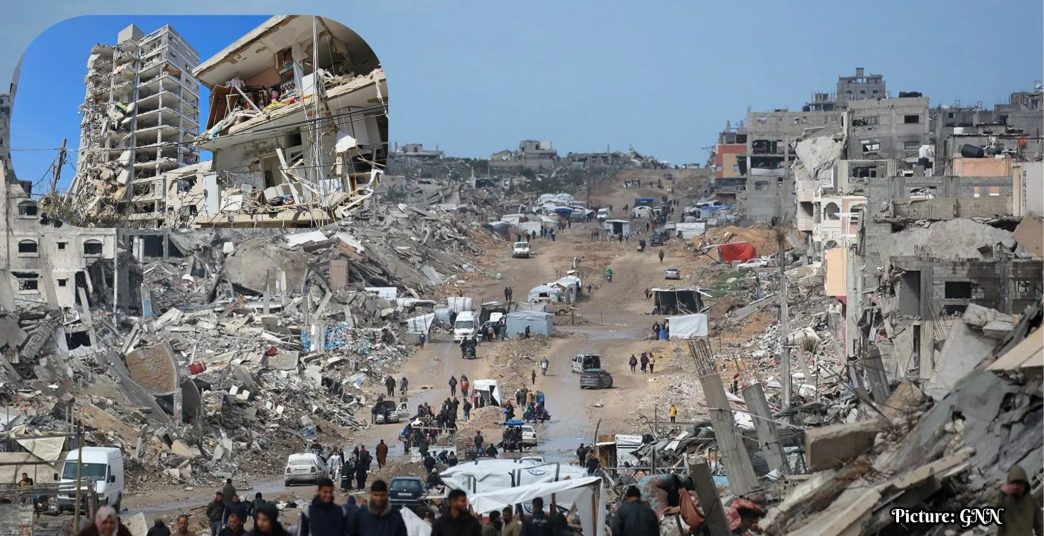
In the context of the conflict, Israel has continued its military operations against Iranian-backed groups, including Hezbollah in Lebanon, retaliating with heavy airstrikes. However, these tactical victories have come at a significant diplomatic cost. Israel faces increasing international scrutiny and criticism regarding its military actions in Gaza, with accusations of genocide and crimes against humanity being leveled against Prime Minister Benjamin Netanyahu.
The ramifications of the conflict have also led to a noticeable decline in support for Israel among U.S. lawmakers. As the war has evolved into a stalemate, progressive critics within the Democratic Party have gained traction, with a notable portion of House Democrats advocating for reductions in military aid to Israel. This shift in sentiment has further complicated Israel’s aspirations for normalization of relations with Saudi Arabia, which appear increasingly unlikely as regional leaders reassess their partnerships amid ongoing instability.
Ulrichsen noted that the perception of the current Israeli leadership as a contributor to regional instability has diminished its prospects for diplomatic engagement with key Arab states. “The conflicts that have swept across the region since October 7 have led officials in Saudi Arabia to view the current Israeli leadership as contributing to regional instability and not therefore a viable diplomatic partner at the moment,” he stated.
As the situation in the Middle East continues to evolve, the long-term implications of the U.S. and Israeli actions against Iran remain uncertain. The initial goals of transforming the region through military intervention have given way to a complex landscape characterized by heightened tensions, shifting alliances, and a resurgent Iranian regime.