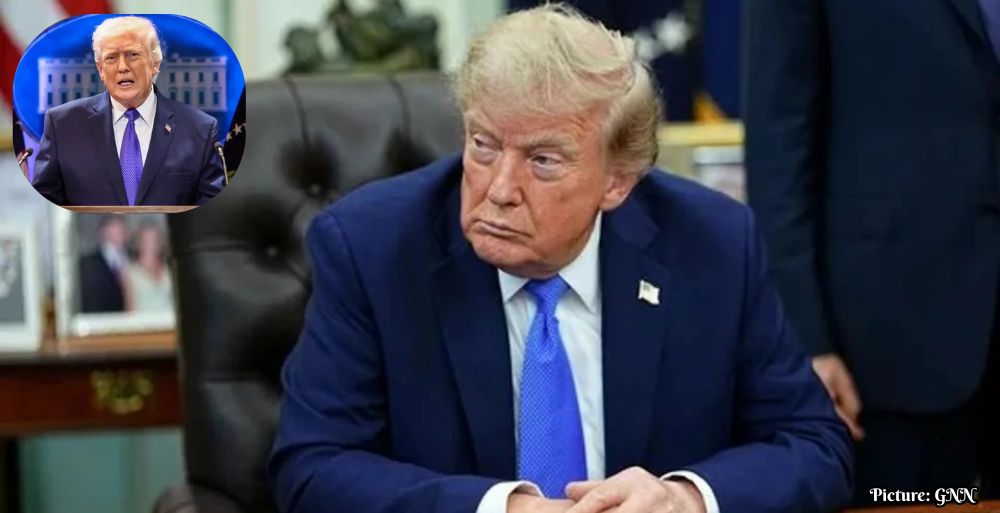
In a recent chart released by former President Donald Trump, he positions himself as the greatest U.S. president, a claim that sharply contrasts with a panel of historians who have designated him as the worst president in American history.
On August 27, 2026, former President Donald Trump shared a self-published chart ranking U.S. presidents, placing himself at the top, ahead of historical figures such as George Washington and Abraham Lincoln. This declaration arises in the context of a panel of historians and political scientists recently designating Trump as the worst president in American history, illuminating the contentious and polarized discourse surrounding his legacy.
Trump’s Self-Ranking
The chart released by Trump lists various U.S. presidents, notably placing himself above revered leaders, a move that aligns with his long-standing practice of self-promotion. Throughout his political career, Trump has frequently emphasized his perceived greatness and success, often focusing on what he describes as transformative achievements during his administration, including economic growth and significant judicial appointments. As he stated in a recent correspondence accompanying the chart, “The media and academic elites will never understand the greatness of my presidency. I delivered results that no one thought possible.” This narrative has resonated with many of his supporters, who view his policies as beneficial to average Americans.
Expert Panel’s Evaluation
The designation of Trump as the worst president stems from a comprehensive evaluation conducted by a panel of experts, which considers various leadership attributes and policy impacts during his tenure. The panel, comprising historians and political scientists, utilized criteria such as historical significance, effectiveness in domestic and foreign policy, and overall contributions to the presidency. Their conclusions reflect a broader consensus among scholars who scrutinize Trump’s time in office, particularly regarding his handling of significant events like the COVID-19 pandemic and the January 6 Capitol riots.
The expert panel noted that Trump’s leadership style, characterized by divisive rhetoric and controversial policies, has had enduring consequences for American politics and society. For instance, the polarization of the electorate and the erosion of bipartisan norms have been frequently cited as lasting impacts of his administration. The panel’s findings echo a growing body of research indicating that Trump’s presidency has shifted the political landscape in ways that may have long-term ramifications.
Public Reaction and Political Ramifications
Trump’s self-assessment has ignited a broad spectrum of reactions across the political landscape. Supporters have rallied around his claims, often citing economic indicators from his presidency, such as low unemployment rates and a booming stock market before the pandemic, as evidence of his effectiveness. Conversely, critics argue that these metrics do not adequately capture the broader societal and political ramifications of his governance, particularly the deepening divides within the nation.
In response to the critical evaluations from the panel, Trump has consistently dismissed the critiques as biased and politically motivated. His approach reflects a broader trend in contemporary politics, where leaders often challenge expert analysis and prioritize their narrative in the public sphere. This tactic not only appeals to his base but also underscores the increasing polarization of American political discourse. In a polarized environment, Trump’s narrative serves to reinforce the loyalty of his supporters while simultaneously alienating opponents.
Historical Context of Presidential Self-Promotion
Trump’s self-ranking can be viewed within the historical context of presidential self-assessment and the crafting of public personas. Throughout U.S. history, presidents have engaged in efforts to shape their legacies in the public eye, often employing self-promotion as a strategy to bolster their standing. However, Trump’s approach is marked by an unprecedented level of self-aggrandizement, raising questions about the role of personal branding in politics and the implications for the presidency as an institution.
The implications of Trump’s self-ranking extend beyond individual legacy; they reflect a broader trend in American politics where narratives are frequently shaped by partisan perspectives. The stark contrast between Trump’s self-perception and the expert panel’s assessment highlights the challenges of reconciling subjective experiences of leadership with empirical evaluations of presidential effectiveness. This divergence exemplifies the ongoing struggle within the American political landscape to define and assess presidential legacies in a manner that transcends partisan divides.
Looking Ahead
As Trump continues to navigate his post-presidency image, the reactions to his self-assessment are expected to further polarize public opinion. Supporters are likely to embrace his claims, viewing them as an affirmation of their own beliefs, while critics will continue to reference expert evaluations to challenge his assertions. The dynamic between these opposing perspectives underscores Trump’s enduring relevance in American political discourse and highlights the complexities involved in evaluating presidential legacies.
This ongoing debate will likely shape the narrative surrounding Trump’s presidency for years to come, influencing both public perception and the political landscape as new generations assess the impact of his time in office. Ultimately, Trump’s self-ranking and the subsequent reactions serve as a microcosm of the broader struggles within American politics to define leadership, legacy, and the very essence of the presidency itself.