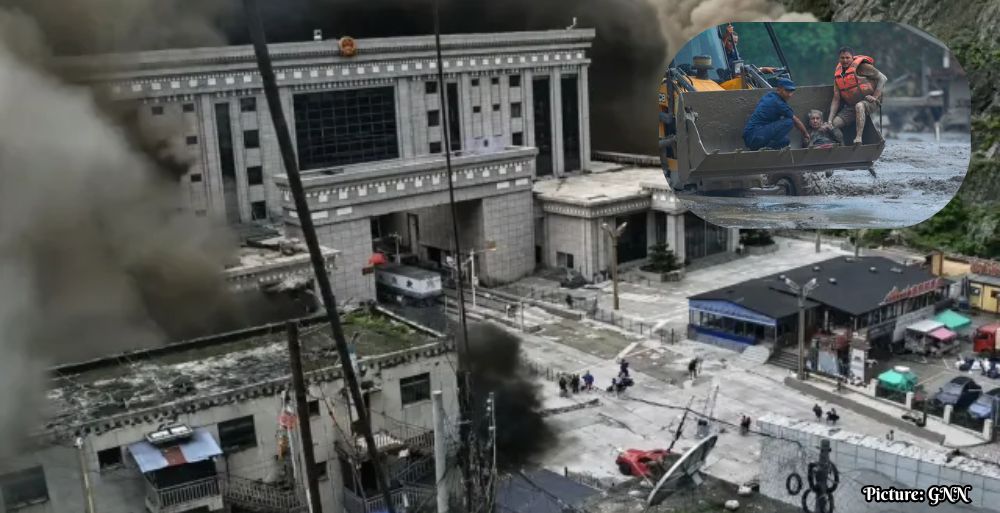
At least 157 individuals have been confirmed dead, and more than 400 are reported missing, including approximately 133 Indian nationals, following catastrophic flash floods in Nepal’s Rasuwa district, which borders Tibet. The disaster, which struck on August 26, 2026, has prompted extensive rescue operations and international relief efforts.
In a devastating natural disaster, flash floods swept through the Bhotekoshi River region in Nepal on the morning of August 26, 2026, leading to the confirmed deaths of at least 157 people. The floods, which have severely impacted several villages in the Rasuwa district—an area bordering the Tibet Autonomous Region of China—have left over 400 individuals missing, including approximately 133 Indian nationals, according to local authorities.
The Prime Minister’s Office of Nepal indicated that the situation remains critical, with officials cautioning that the death toll could rise as rescue operations continue. “Several security personnel, government officials, and employees of hydropower projects are also out of contact,” the PMO stated. The floods have caused significant infrastructural damage, destroying 19 motorable bridges and affecting 40 kilometers of roadway, further complicating rescue efforts.
Government Response and Rescue Operations
Nepal’s Prime Minister Balendra Shah expressed his condolences and vowed that the government would mobilize all available resources for rescue operations. In a social media post, he remarked, “The entire nation has been left shocked and deeply saddened by the loss of life and damage to property.” The Prime Minister assured that rescue efforts would persist through the night to locate survivors and provide necessary aid.
In light of the situation, various state governments in India have responded, given the significant number of Indian nationals believed to be stranded in Nepal. The Indian Embassy in Kathmandu has issued emergency contact numbers for families seeking information about their loved ones. Additionally, regional governments, including those in Sikkim, Rajasthan, and Tamil Nadu, have set up helplines to assist residents and tourists affected by the floods.
International and Domestic Aid
The Indian government has mobilized relief efforts swiftly. The Indian Air Force has deployed a C-130J aircraft carrying 10 tons of essential supplies, including temporary shelters, hygiene kits, and medical supplies. Additional aircraft are also on standby to transport further assistance. Defence Minister Rajnath Singh expressed India’s readiness to support Nepal in this crisis, stating, “We will provide all possible support to our friendly neighbor.” This sentiment echoed the broader regional cooperation, as the Nepalese government continues to coordinate with Indian and Chinese officials to streamline relief efforts.
In light of the humanitarian crisis, the World Bank has pledged NRs. 25 billion (approximately $190 million) in emergency financial assistance to aid in rescue, relief, and reconstruction efforts. This financial support is crucial, considering the extensive damage inflicted on key infrastructure, including hospitals, schools, and police stations, exacerbating the humanitarian crisis.
Impact on Local Communities and Infrastructure
The floods have not only claimed lives but have also caused extensive damage to vital infrastructure, complicating rescue operations and humanitarian efforts. The Nepal Police reported that 28 personnel are among those missing, which has further hampered search and rescue efforts.
The situation has prompted heightened alertness in the nearby Indian states of Bihar and Uttar Pradesh due to the potential for rising water levels in rivers that flow from Nepal. Bihar’s Chief Minister Samrat Choudhary convened emergency meetings to address potential flooding risks following the release of substantial water volumes from the Gandak River’s barrage. As of late August 26, the Gandak River’s barrage released around 1.5 lakh cusecs of water, raising concerns for communities downstream.
Community and Political Reactions
The Akhil Bharatiya Vidyarthi Parishad (ABVP) expressed its grief over the disaster, calling for intensified relief and rescue operations. Various political leaders in India, including Congress President Mallikarjun Kharge, have extended their condolences and urged the government to expedite rescue efforts for missing individuals. Prime Minister Narendra Modi has also offered humanitarian assistance and expressed his condolences to Nepal’s Prime Minister Shah, highlighting the importance of solidarity during such crises.
Additionally, Chief Ministers from various Indian states have initiated helplines and coordination centers to assist citizens who may have relatives stranded in Nepal. Kerala’s Chief Minister V.D. Satheesan confirmed that the state is actively monitoring the situation, while Tamil Nadu’s Chief Minister C. Joseph Vijay directed officials to ensure swift rescue operations for stranded residents.
The situation remains fluid as authorities continue to assess the full extent of the damage and coordinate rescue operations. As communities grapple with the aftermath of this tragedy, the emphasis on regional collaboration and support will be paramount in addressing both immediate humanitarian needs and long-term recovery strategies.
Experts have suggested that the floods may have been exacerbated by climate change factors, including glacier melt and increased rainfall patterns in the Himalayan region. As such, experts from the International Centre for Integrated Mountain Development (ICIMOD) have called for enhanced regional collaboration to develop early warning systems and disaster preparedness measures to mitigate the impacts of future natural disasters.
In summary, the flash floods in Nepal represent a significant humanitarian crisis, affecting hundreds of lives and prompting an urgent response from both national and international communities. The focus now shifts to effective rescue operations, immediate relief efforts, and long-term strategies to rebuild and recover from this devastating event.