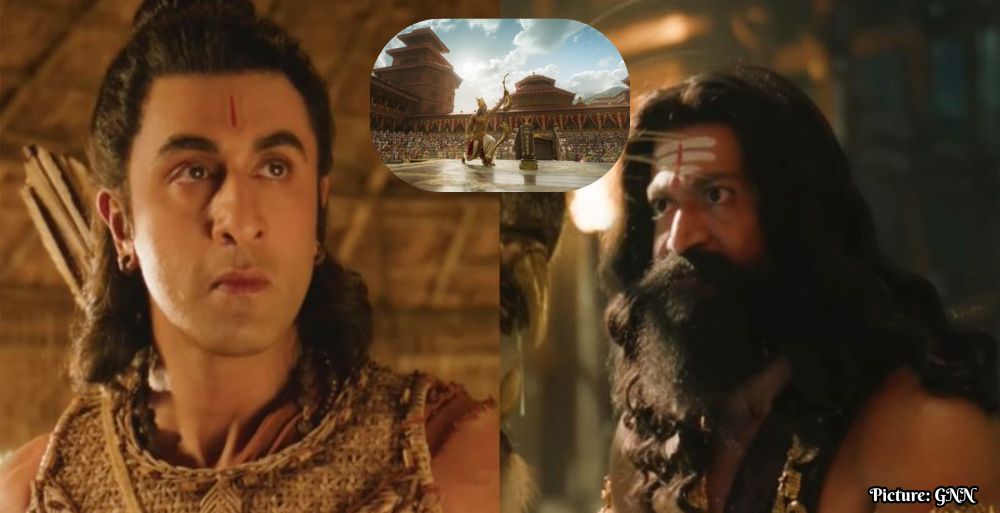
This November, a high-budget adaptation of the ancient Indian epic The Ramayana will be released, aiming to captivate global audiences and elevate Indian cinema on the world stage.
The long-anticipated adaptation of The Ramayana, one of India’s most cherished epics, is set to make its global debut this November, coinciding with the Hindu festival of Diwali. This two-part film, produced with a staggering budget estimated between $200 million and $250 million, is designed to resonate not only with Indian audiences but also with viewers worldwide.
Originally composed by the sage Valmiki around the 4th century BCE, The Ramayana comprises approximately 24,000 verses that narrate the journey of Prince Rama, an avatar of the Hindu god Vishnu, who embarks on a quest to rescue his wife, Sita, from the demon king Ravana. The tale’s blend of morality, duty, and devotion has made it an integral part of Indian culture, with more than two billion people globally familiar with its narrative.
As the first installment prepares for release, it faces high expectations, especially given its unprecedented financial backing—far surpassing that of previous Indian films. The sequel is scheduled for release in November 2027, with both films collectively representing a level of investment not seen before in the Indian film industry.
Global Ambitions and Cultural Significance
In an interview with the BBC, producer Namit Malhotra emphasized the film’s global aspirations, stating, “This was always conceived to be for the world. From India, for the world.” His vision extends beyond mere entertainment; he seeks to showcase India’s rich cultural heritage through a format that can engage a diverse international audience.
The significance of The Ramayana in Indian culture cannot be overstated. Malhotra likened the stories told within it to familiar tales like those of Santa Claus or Jesus Christ, underscoring their foundational place in the collective memory of Indian society. Cultural studies expert Rajinder Dudrah noted that “anybody who’s grown up on Indian popular culture—Indians primarily, but also South Asians across the board—will have watched variations of films which take root in the Ramayana story.”
The narrative has inspired countless adaptations across various mediums, from ancient poetry to modern cinema, each contributing to its enduring legacy. Notably, the 1987-88 television series Ramayan captivated audiences across India, demonstrating the story’s immense cultural resonance. Its impact was so profound that it created a nationwide phenomenon, with millions tuning in weekly, highlighting the narrative’s deep emotional connection with the Indian populace.
Technological Innovations in Filmmaking
In addition to its compelling narrative, the upcoming adaptation promises to utilize groundbreaking technology in filmmaking. DNEG, a leader in visual effects and technology, has introduced an AI-assisted post-dubbing system that ensures characters’ lip movements match the translated dialogue across multiple languages. Malhotra expressed ambition for the film’s reach, stating, “If we pick English, Mandarin, Spanish and a few Indian languages, you’ve already covered five, six billion people on the planet.”
This investment in technology reflects a broader trend in Indian cinema, as filmmakers increasingly aim to capture international audiences. Nitesh Tiwari, the director of The Ramayana, pointed to the success of recent Indian films like RRR and Animal, which have performed well globally. He noted, “More Indian films have started to find acceptance with audiences globally. This has encouraged our filmmakers to aim bigger.”
The integration of advanced visual effects and technology is not merely a marketing strategy; it is a reflection of the evolving landscape of Indian cinema, which is increasingly recognized for its narrative depth and visual sophistication. This adaptation of The Ramayana aims to position itself alongside major global cinematic productions, demonstrating the potential for Indian stories to resonate universally.
Future Prospects and Cultural Impact
As the film prepares for its release, anticipation grows not only for its narrative and visual spectacle but also for its potential impact on the international film landscape. Malhotra, who founded Prime Focus at age 19 and later merged with DNEG, has positioned himself at the forefront of cinematic innovation. He aims to create a legacy akin to that of George Lucas or Stan Lee, although he remains focused on the present project. “What I’m excited about is what we’re doing right now, which is some of the oldest IP [intellectual property] in the world,” he remarked.
This adaptation of The Ramayana is poised to be more than just a film; it represents a concerted effort to bridge cultural divides and celebrate the richness of Indian storytelling. Tiwari highlighted the film’s underlying themes, stating, “Ramayana is ultimately about moral values, relationships, and the emotions that come with them.”
The narrative’s exploration of themes such as love, honor, and duty resonates across cultures, making it a universal story that can engage audiences worldwide. This endeavor also seeks to honor the epic’s historical and cultural significance, aiming to present it in a way that is both authentic and appealing to contemporary viewers.
Furthermore, the ambitious scope of both films and the potential for a franchise suggest that The Ramayana could pave the way for future adaptations of Indian epics, potentially setting a new benchmark for Indian cinema on the global stage. With a substantial marketing campaign and strategic release timing, the film aims to capture not only the Indian diaspora but also mainstream audiences across various demographics.
As anticipation builds for its release, The Ramayana stands as a testament to the evolving nature of Indian cinema and its capacity to resonate on a global scale while remaining rooted in its rich cultural heritage. The film is not just a retelling of an ancient story; it is a bold statement of intent from Indian filmmakers to assert their place in the international cinematic landscape.