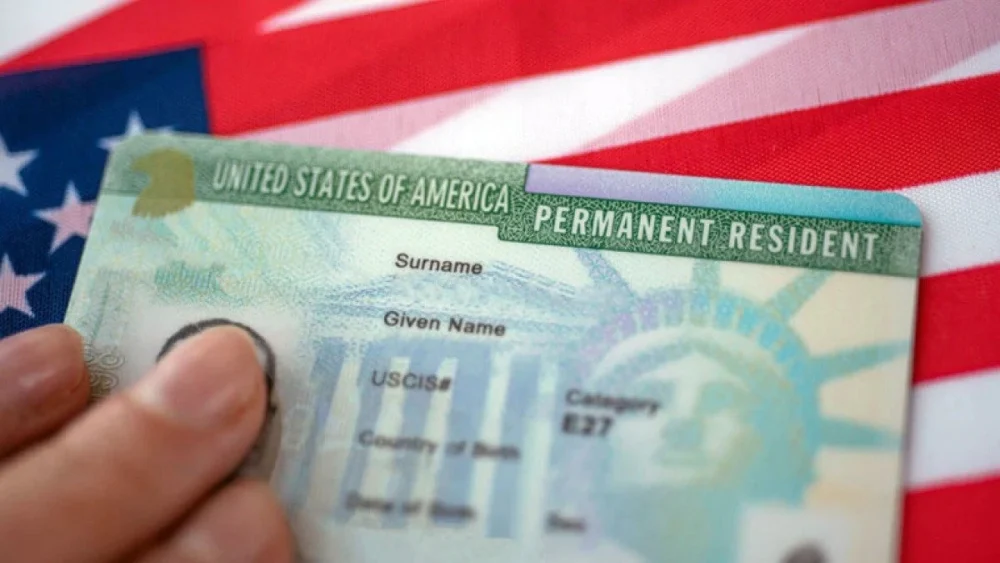
New U.S. immigration guidance effective September 18 will impose stricter financial scrutiny on Indian nationals applying for green cards, potentially impacting their eligibility based on public benefits usage.
Washington — The U.S. Citizenship and Immigration Services (USCIS) is set to implement new immigration guidance on September 18 that introduces heightened scrutiny of the financial circumstances of Indian nationals applying for green cards. This change follows the Department of Homeland Security’s decision to rescind the public charge regulations established during the Biden administration in 2022. The announcement of this final rule occurred on July 16 and was published in the Federal Register shortly thereafter on July 20.
Overview of the New Immigration Guidance
The upcoming policy will apply specifically to Form I-485 applications for permanent residence or adjustment of status that are either postmarked or electronically submitted on or after September 18. Notably, applications submitted between December 23, 2022, and September 17, 2026, will continue to be evaluated under the earlier 2022 regulations and related guidance. This shift could significantly affect the thousands of Indian applicants pursuing permanent residency through both family and employment-based categories.
Expanded Considerations for Public Benefits
Under the new guidance, USCIS officers are mandated to consider a broader range of public benefits when assessing whether an applicant is likely to become a public charge. This includes not only cash assistance for income maintenance and government-funded long-term institutional care but also housing assistance, food benefits, college financial aid, and other means-tested programs. The implications of this expanded scrutiny are profound, as it may lead to a more rigorous evaluation of an applicant’s financial stability and reliance on government support.
Who is Affected?
Most family-sponsored applicants are subject to this public charge assessment. This group includes spouses, children, and parents of U.S. citizens, as well as spouses and children of lawful permanent residents. Additionally, adult children and siblings of U.S. citizens, fiancé(e)s of citizens, and widows or widowers of citizens are also included in the revised review process.
Employment-based applicants who will be affected by this new scrutiny include priority workers, professionals with advanced degrees, individuals of exceptional ability, skilled workers, investors, and religious workers. USCIS officers are tasked with considering five statutory factors in their evaluations: the applicant’s age, health, family status, assets and financial resources, and education and skills. The affidavit of support, Form I-864, which serves as a commitment from a sponsor to provide financial assistance to the immigrant, will be a critical component of the evaluation.
Assessment of Public Benefits
USCIS has clarified that receiving a covered public benefit will not automatically lead to the denial of an application. Evaluations will be conducted based on the totality of circumstances pertaining to each applicant. Notably, no single factor will determine the outcome of an application, except for cases where an adequate affidavit of support is not submitted, which could lead to an assumption that the applicant is likely to become a public charge.
Exemptions from Public Charge Requirements
Several humanitarian and special immigration categories are exempt from the public charge requirement. These exemptions include refugees, asylees, Temporary Protected Status applicants, certain victims of human trafficking or qualifying crimes, and some applicants under the Violence Against Women Act. Furthermore, special immigrant juveniles, certain Afghan and Iraqi nationals who have worked for the U.S. government, and applicants under the Cuban Adjustment Act are also excluded from these considerations.
Potential Financial Implications for Applicants
For applicants found inadmissible solely on public charge grounds, there may be opportunities to post a cash or surety bond as a means to overcome the denial. USCIS has indicated that applicants can submit Form I-945 for such a bond only after receiving a Notice of Intent to Deny that specifically invites them to do so. This provision is designed to provide a pathway for individuals who might otherwise face rejection due to adverse financial assessments.
Demographics of Indian Green Card Recipients
Recent data from the Department of Homeland Security indicates that approximately 66,800 immigrants born in India received U.S. green cards during fiscal year 2024. This figure represents 4.9 percent of the total 1.36 million individuals granted lawful permanent residence in that year. Notably, around 61 percent of these Indian recipients secured their permanent residence through adjustment of status while already residing in the United States, reflecting the significant role that Indian nationals play in the U.S. immigration landscape.
Implications of the New Guidance
This new guidance signifies a substantial shift in the evaluation process for green card applicants, particularly for Indian nationals who have historically comprised a significant portion of green card recipients in the United States. The potential for increased scrutiny based on public benefits usage raises questions about the future immigration landscape and the challenges that applicants may face in demonstrating their financial stability and independence.
As the September 18 implementation date approaches, immigration advocates and legal experts are closely monitoring the developments surrounding this policy change. The implications of the new guidance could reverberate throughout the immigration system, prompting concerns about its potential impact on family reunification, labor market participation, and the overall diversity of immigrant demographics in the United States.