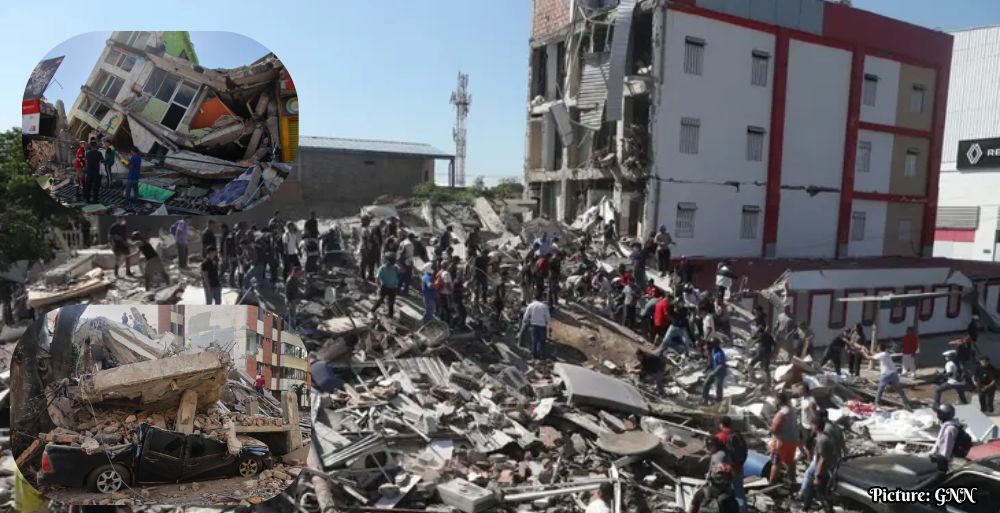
A powerful 7.4 magnitude earthquake struck western Colombia on August 10, 2026, resulting in at least 111 fatalities, significant structural damage, and ongoing rescue efforts in various cities, including Cali and Pereira.
CALI, Colombia (AP) — A devastating 7.4 magnitude earthquake struck western Colombia on August 10, 2026, killing at least 111 people and injuring over 87 others. Occurring in the vicinity of the town of San Jose Del Palmar in the Choco region, the earthquake has left hundreds of buildings damaged, with many individuals feared trapped beneath the rubble. The U.S. Geological Survey reported that the epicenter was approximately 250 miles (400 kilometers) west of Bogotá, the capital of Colombia.
Rescue operations are underway in Colombia’s third-largest city, Cali, and surrounding areas, where emergency responders and civilians have mobilized to sift through debris. Álvaro López, a local resident, described the scene as chaotic, stating, “Our building has basically been left in ruins, and the building next to ours? Completely collapsed.” His sentiments reflect the widespread devastation experienced throughout the region.
Extent of Damage and Emergency Response
The earthquake has impacted several cities, including Pereira, Quibdo, and Manizales, with tremors felt as far away as neighboring Ecuador and Panama. Following the disaster, President Abelardo de la Espriella declared a state of emergency to expedite recovery efforts, assuring the public, “We aren’t going to leave people alone. They are in our hearts and we are going to tend to people with our full determination.” This declaration comes on the heels of previous seismic events that have left many in the region anxious, especially after two major earthquakes struck Venezuela in late June, resulting in over 6,300 deaths.
According to local authorities, the death toll includes at least 40 individuals in the Risaralda region and 27 in Valle del Cauca, as well as nine in Choco. The president’s office reported around 1,600 buildings were damaged, with at least 61 completely collapsed. The ongoing search for survivors has led to the creation of digital databases for missing persons, with over 1,400 individuals reported missing as of Monday afternoon, many from Cali and Pereira. Photos of the missing included a young mother and her baby in Pereira, and an 80-year-old woman in Cali whose family was desperately looking for details after her building collapsed.
Seismic Context and Historical Significance
Colombia’s Geological Service noted that this earthquake is the most powerful recorded in the 21st century for the nation, accompanied by 21 aftershocks of lesser magnitude. The Pacific region, particularly the Choco department, lies along the Pacific Ring of Fire, which is known for frequent seismic activity. This area is characterized by its economic challenges and inaccessibility, complicating rescue and recovery efforts. Much of Choco is only reachable by boat or plane, which may hinder authorities’ ability to assess the broader toll of the disaster.
Historically, Colombia has experienced devastating earthquakes, including a 1999 event near Armenia that resulted in more than 1,100 fatalities. The current earthquake poses a significant challenge to President de la Espriella, who has only recently taken office. His administration is now tasked with managing the aftermath of this disaster while ensuring effective governmental response. As a newly inaugurated leader, his handling of this crisis will be scrutinized both domestically and internationally.
Rescue Efforts and Humanitarian Aid
As rescue teams continue to search for survivors, reports indicate that many residents remain trapped in damaged structures. Jorge Moncayo, a 64-year-old taxi driver in Cali, described witnessing dust clouds rising as buildings collapsed around him. The local government reports that approximately 380 buildings have sustained damage, with many requiring urgent attention. The situation has sparked fears of another humanitarian crisis akin to that experienced in Venezuela just weeks prior.
In Pereira, images circulated on social media showed pieces of the airport ceiling falling as travelers sought safety. Mayor Mauricio Salazar confirmed that at least 15 buildings in the city have collapsed, heightening concerns for those potentially trapped inside. Meanwhile, in Manizales, significant damage was reported, including the collapse of a tower at the neo-Gothic cathedral. Mayor Jorge Eduardo Rojas urged residents to remain outside in case of aftershocks, and local airports suspended flights to assess damage and ensure safety.
In the wake of the disaster, offers of assistance have poured in from across the Americas. Leaders from El Salvador and Mexico have expressed readiness to provide aid, including rescue personnel and medical supplies. Chilean President José Antonio Kast also pledged support, acknowledging the common challenges faced by earthquake-prone nations in the region. Bukele stated, “From El Salvador, we are in communication and ready to provide immediate support with our rescue teams, medical personnel, paramedics, supplies, or any other assistance that our Colombian brothers and sisters deem necessary.” Such gestures of solidarity highlight the regional commitment to disaster response.
As the situation continues to develop, authorities are working tirelessly to assess the full extent of the damage and coordinate recovery efforts. The impact of this earthquake on communities, infrastructure, and emergency services will require ongoing monitoring and support as Colombia begins to heal from this tragedy. The scale of the response will likely define the effectiveness of President de la Espriella’s government in navigating this critical juncture.